Annual Events of Aizu

About Nanukamachi-dori  Cashless  Nozawa Mingei   Use advanced search, or ask the chatbot in the lower-right corner.

You may also like

三菱UFJ銀行第一生命neobankUI銀行habittorakutenbankみずほ銀行SBIVCトレードコイントレード
なぬかまち.com オリジナルトートバッグ
View details
[PR] Advertise with us: Contact

When using image data, please check the Terms of use.

Material information

Related page: -

Publication year: Unknown
Item type: Postcard
Number of images: 13
Image contents: Aizu Annual Events

Images

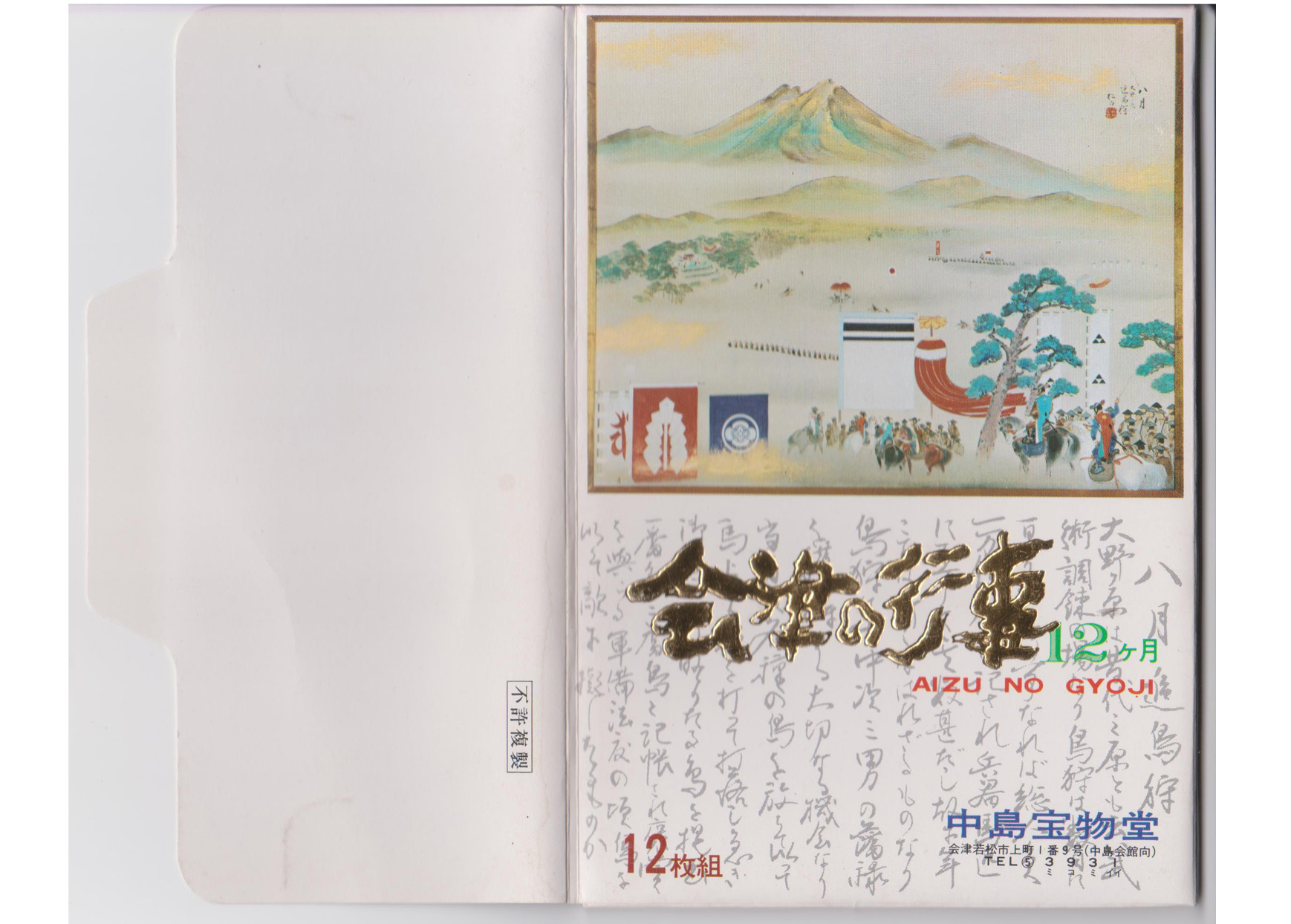
Aizu Annual Events (Cover)

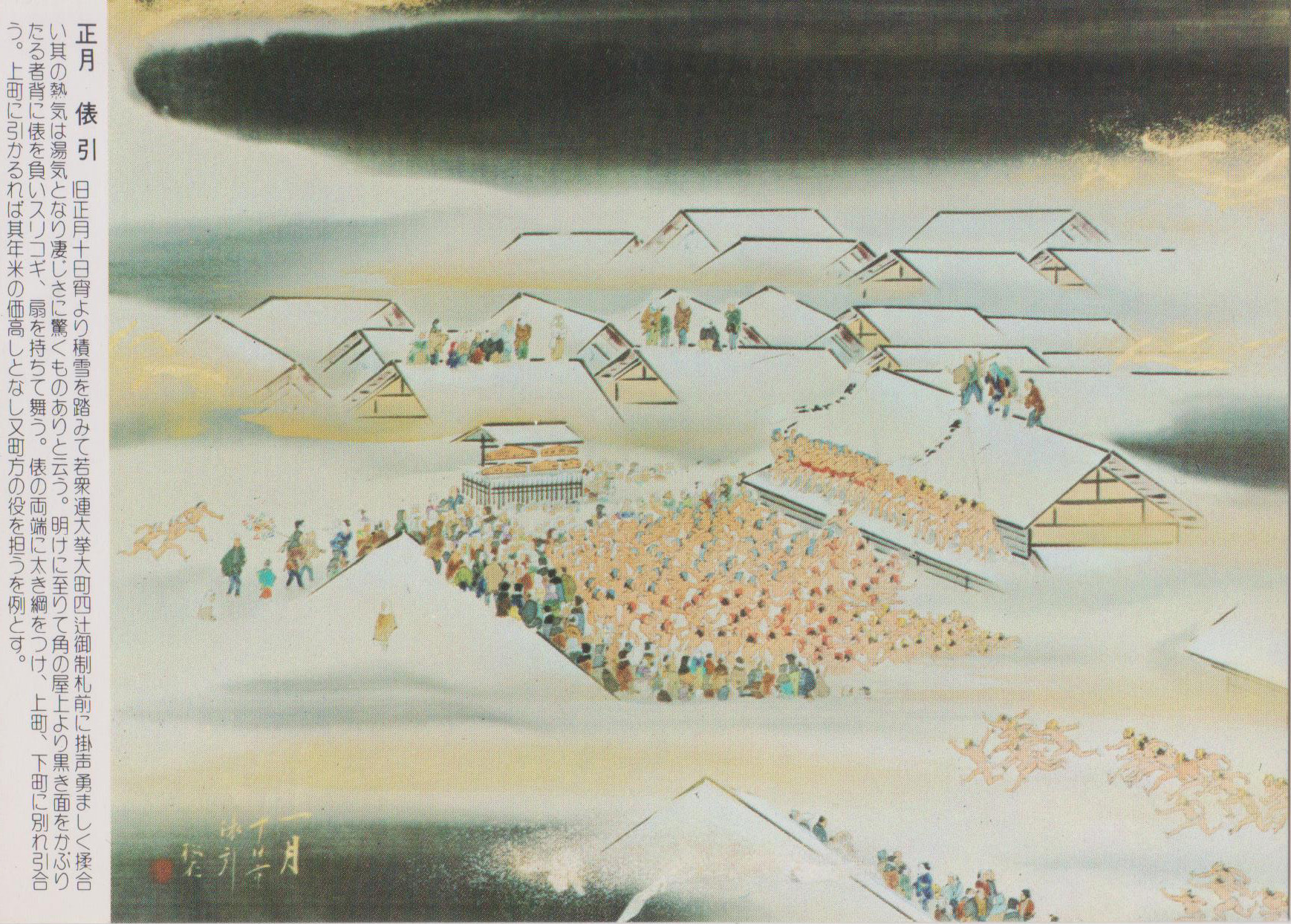
First Month: Tawara-hiki (Straw-Bale Pull). From the tenth day of the old New Year, the young men tramped through the accumulated snow in a great crowd to the Omachi crossroads, where they struggled over the straw bale before the notice board with brave shouts; their excitement turned to steam, and people were astonished at the ferocity. At dawn, a figure wearing a black mask appeared on the rooftop corner, carrying a bale on his back and dancing with a mallet and fan. Large ropes were attached to both ends of the bale, and the upper town and lower town divided and pulled against each other. If the upper town pulled it over, rice prices that year were said to be high, and by custom the upper town also took on the town duties.

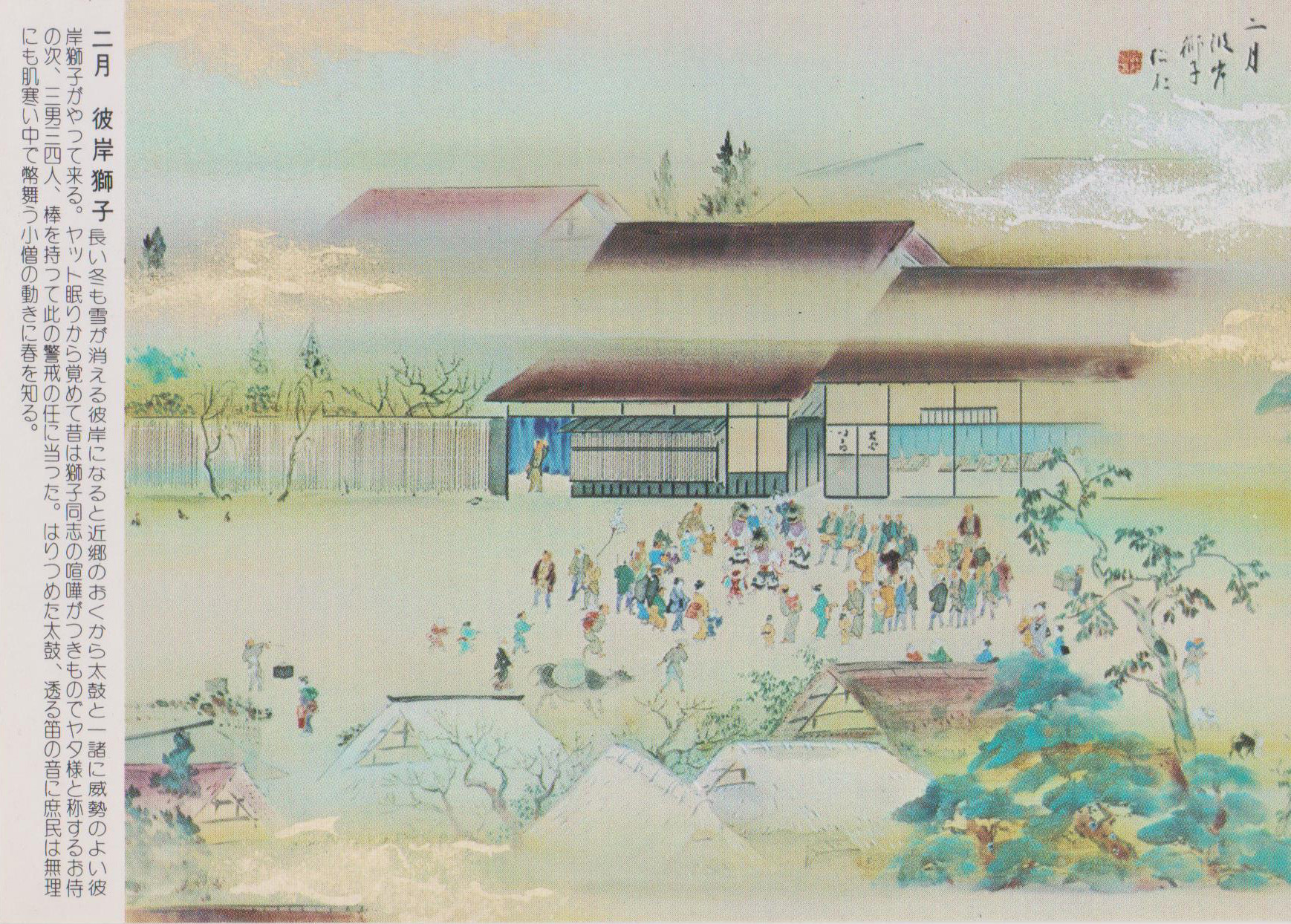
Second Month: Higan Shishi (Equinox Lion Dance). When the long winter ends and the snow melts at the equinox, lively lion dancers come from the depths of the neighboring villages together with drums. At last awakening from sleep, in the old days fights between lion troupes were inevitable; after the leader called Yata-sama came the second and third sons, three or four men carrying staves to take charge of guarding. To the tense drums and piercing flutes, the common people, even in the lingering cold, knew spring had come from the movements of the boys dancing with sacred staffs.

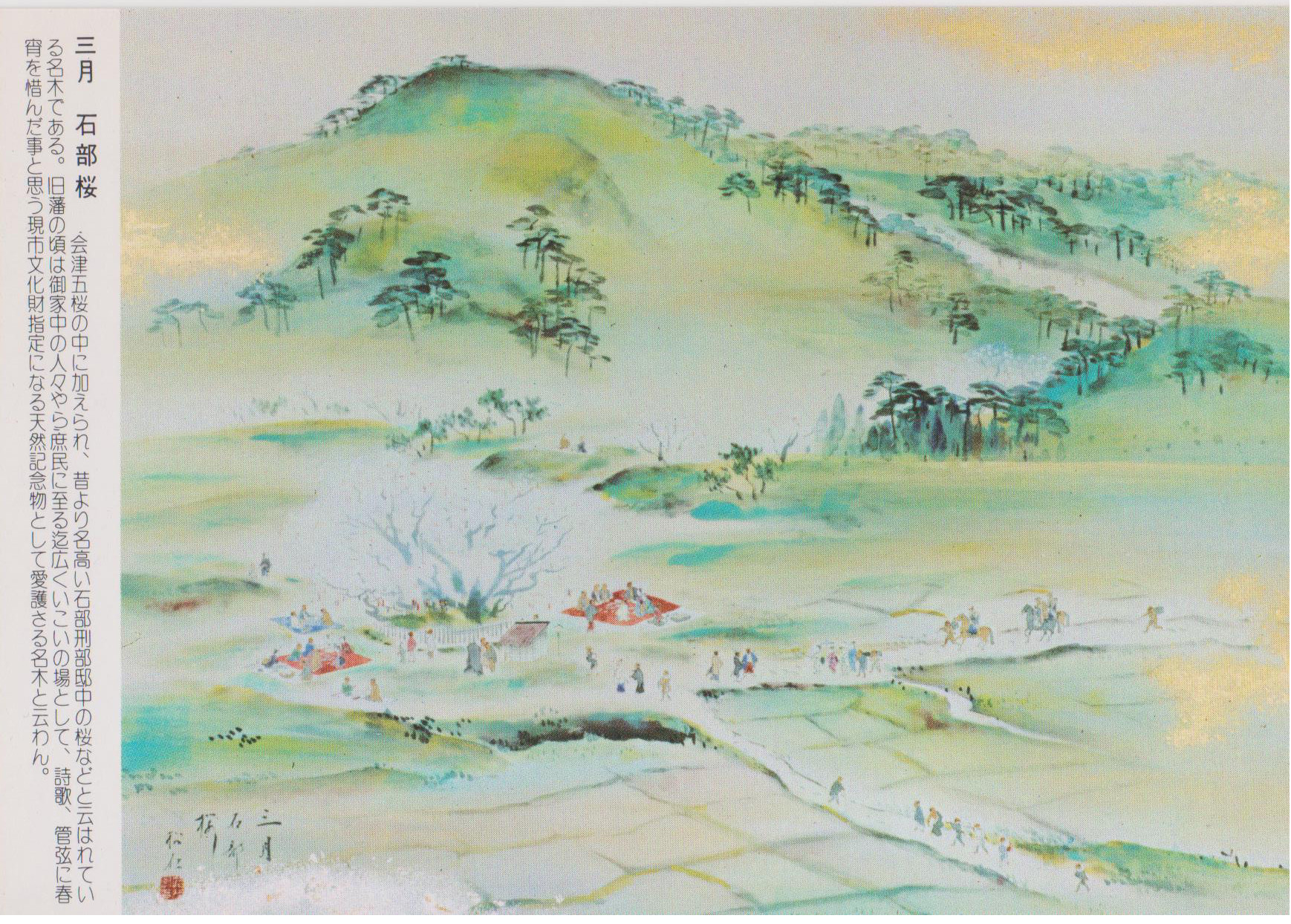
Third Month: Ishibe Cherry. Counted among the Five Cherry Trees of Aizu, it is a famous tree long known as the cherry tree in the residence of Ishibe Gyobu. In the old domain era it was widely used as a place of rest by everyone from retainers to commoners, and people are said to have regretted the spring evenings with poetry and music. It may be called a famous tree cherished as a natural monument designated as a city cultural property.

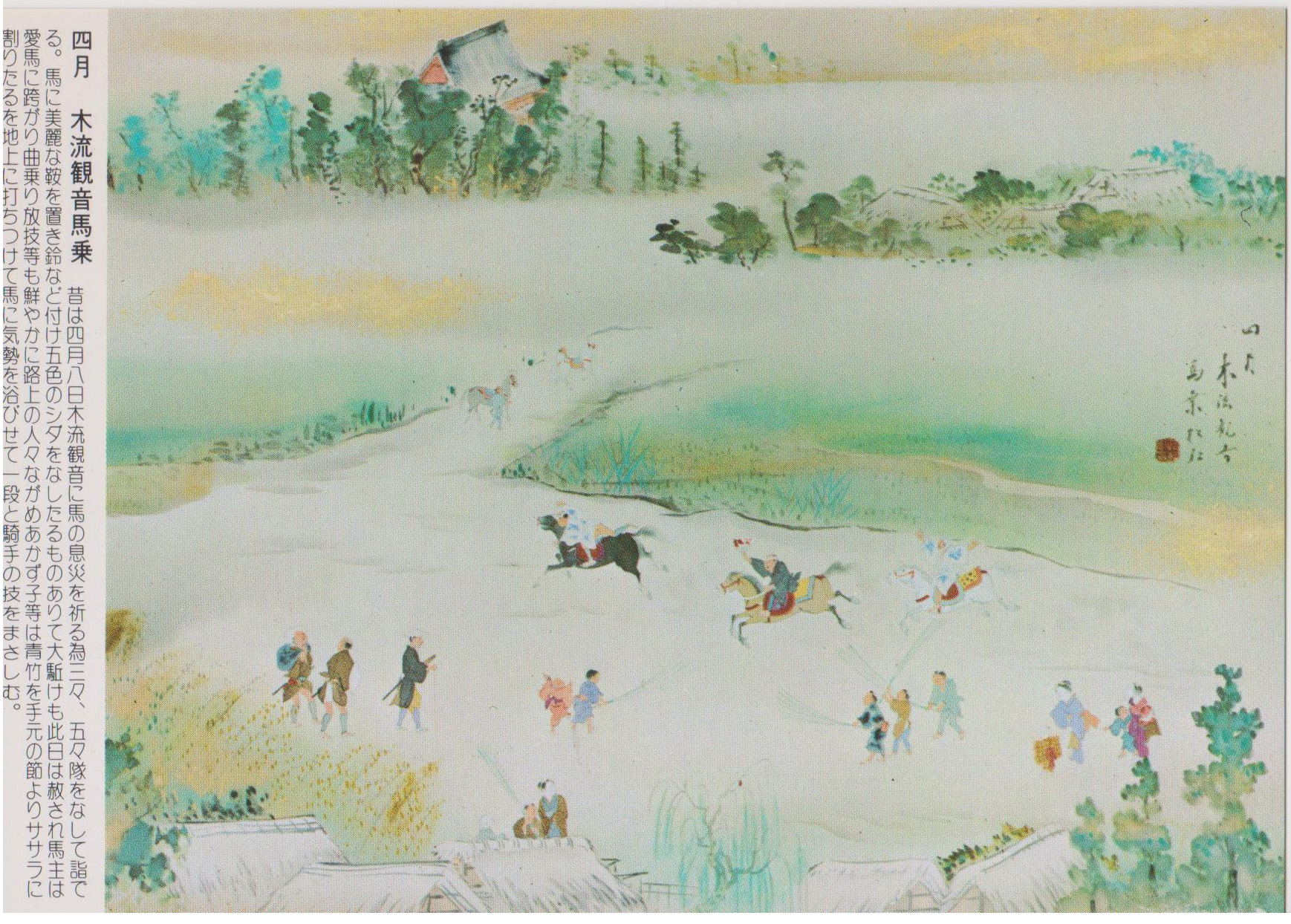
Fourth Month: Koryu Kannon Horse Riding. In the old days, on April 8, people formed groups of three and five and visited Koryu Kannon to pray for the health of their horses. Horses were fitted with beautiful saddles and bells and decorated with five-colored fern fronds; on this day galloping was permitted, and the owners rode their beloved horses, showing off trick riding and horsemanship so skillfully that people on the road never tired of watching. Children split green bamboo from the joints into brushes and struck the ground with them to urge the horses on, making the riders' skills all the more impressive.

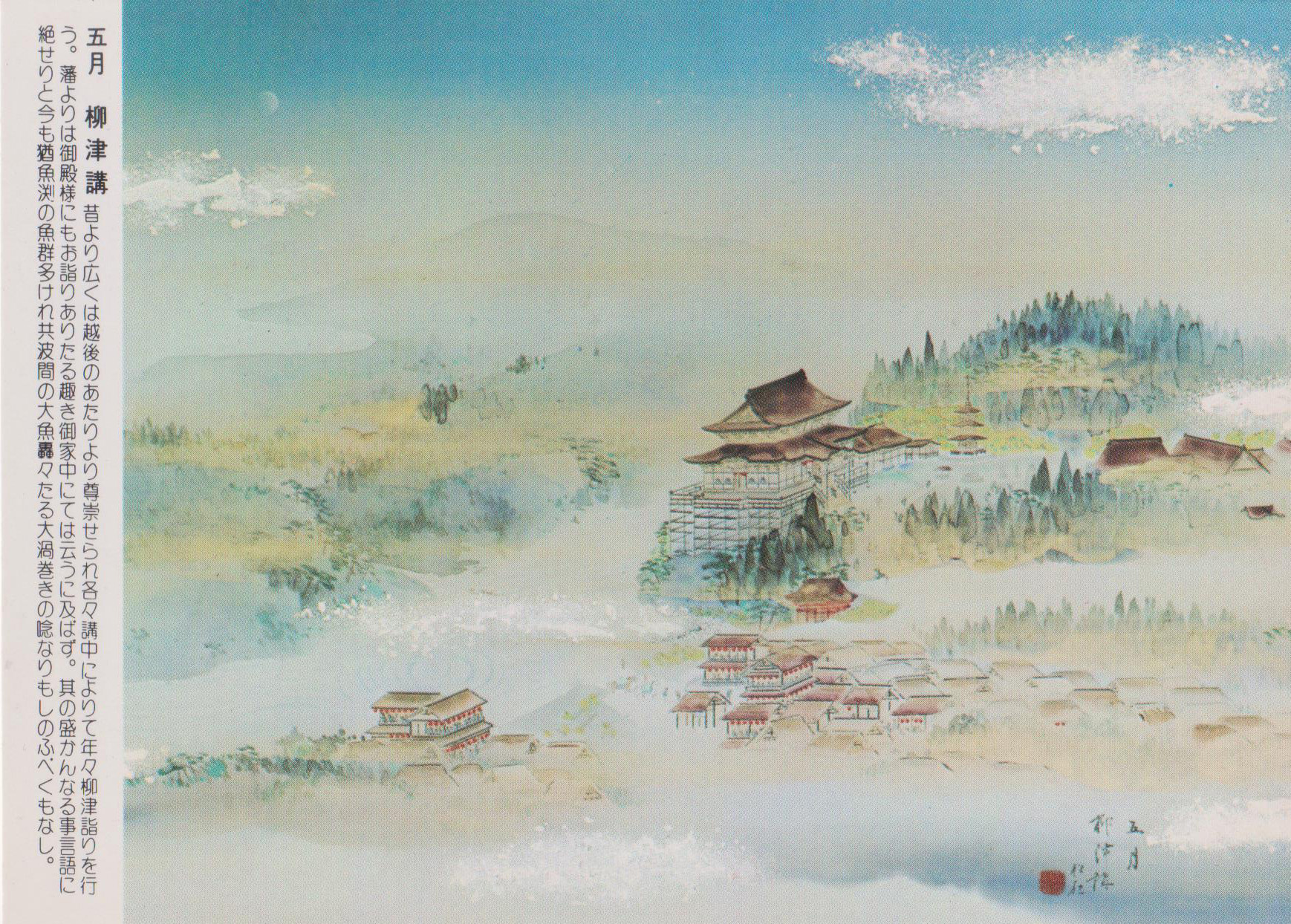
Fifth Month: Yanaizu Ko. Since ancient times the Yanaizu pilgrimage has been widely revered, even from the Echigo region, and each confraternity has made the journey to Yanaizu every year. The domain lord himself is said to have visited, and needless to say the retainers did as well. Its prosperity was beyond words. Even now many fish gather at the Uobuchi pool, but the roar of the great whirlpools and the large fish among the waves can hardly be imagined.

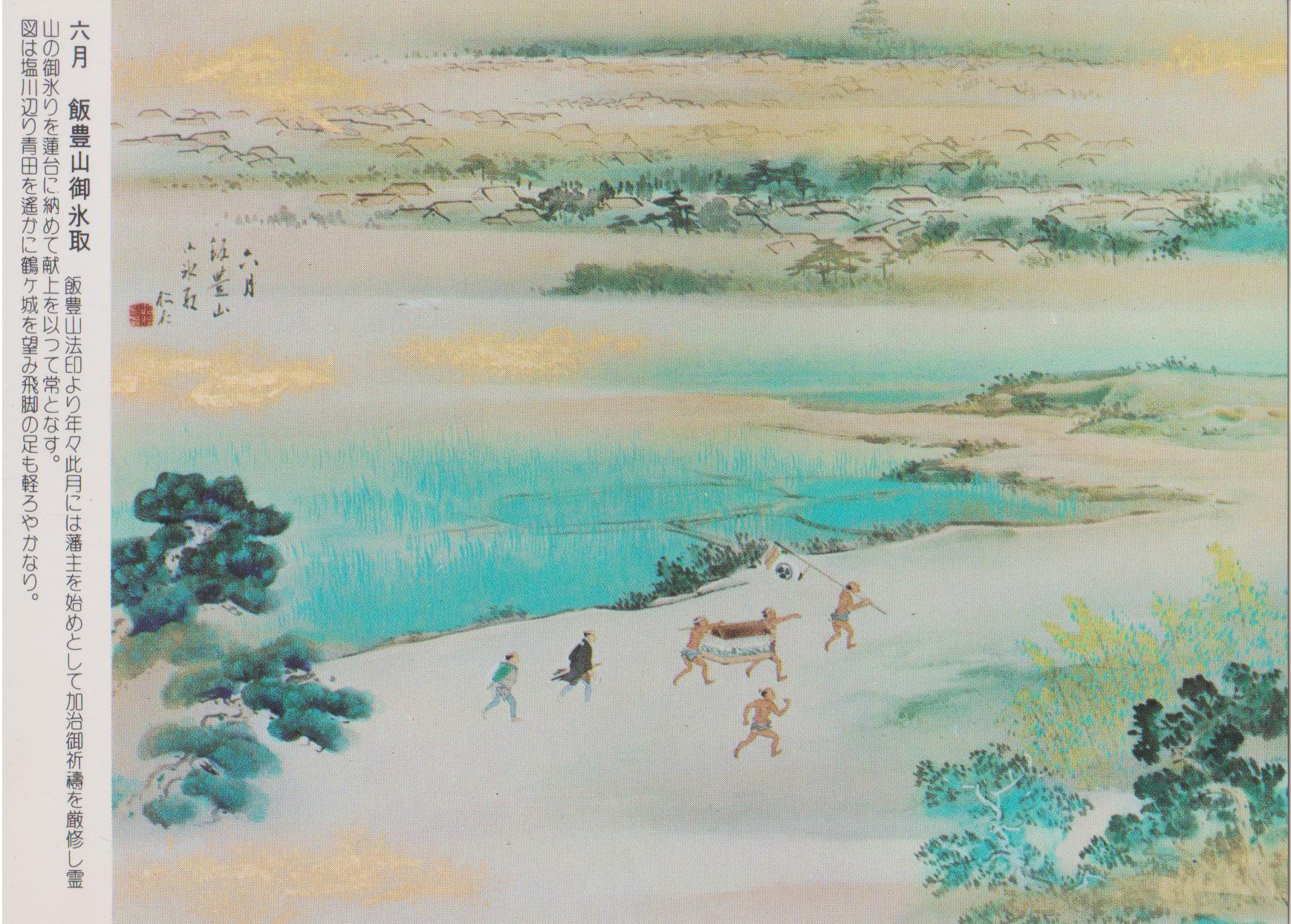
Sixth Month: Iide-san Ice Offering. Every year in this month, the Iide-san priest solemnly performed prayers for the lord and others, placed sacred ice from the holy mountain on a lotus stand, and presented it as a regular offering. The picture shows a messenger near Shiokawa, with green rice fields and Tsuruga Castle in the distance, his feet light as he runs.

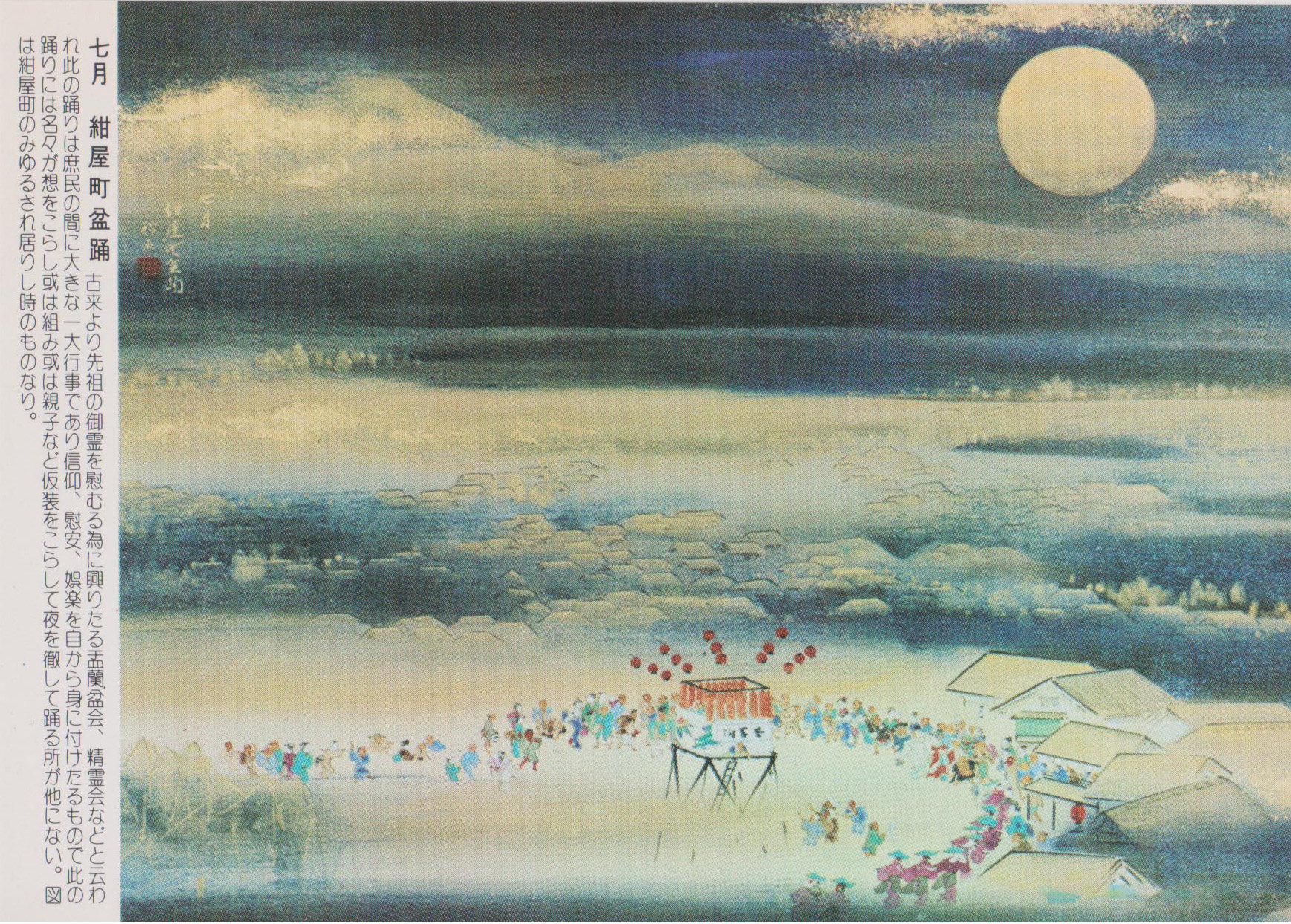
Seventh Month: Konya-machi Bon Dance. The Bon dance arose from ancient times to comfort the spirits of ancestors, and is called the Urabon-e or Shoryo-e; for the common people it was a major event that naturally combined faith, consolation, and entertainment. In this dance each person devised costumes, sometimes in groups or as parent and child, and danced through the night—something found nowhere else. The picture shows the dance when it was still permitted in Konya-machi.

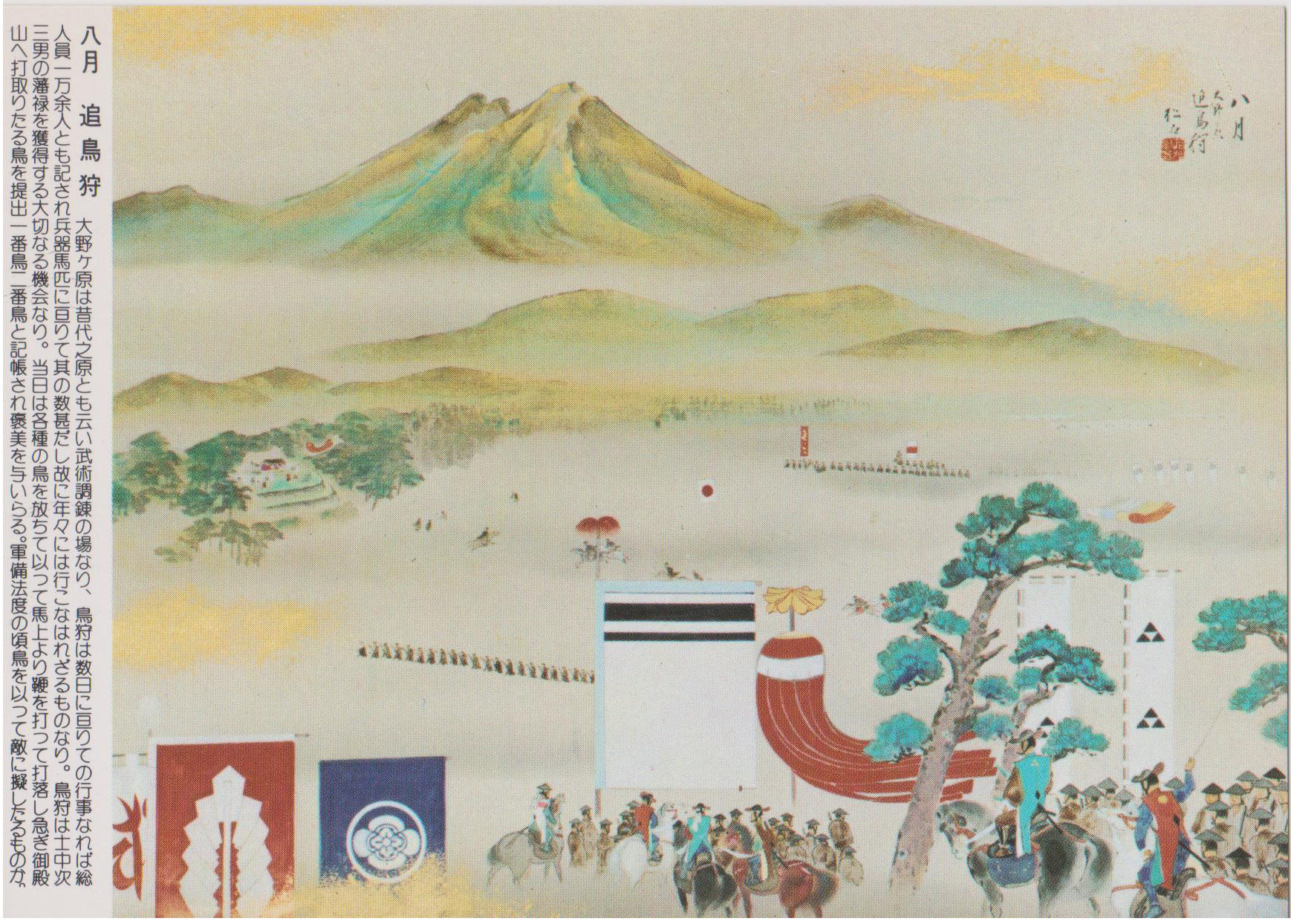
Eighth Month: Oitorigari (Bird Hunt). Onogahara, also called Mukashi-dai-no-hara, was a place for martial training. The bird hunt lasted several days, and the total number of people is recorded as more than ten thousand; because the numbers of weapons and horses were so great, it was not held every year. The bird hunt was an important opportunity for second and third sons of samurai to obtain a domain stipend. On the day, various birds were released, struck down from horseback with a whip, and hurriedly taken to Goten-yama; the birds taken were recorded as first bird, second bird, and so on, and rewards were given. Perhaps in the age of military regulations birds were used to represent the enemy.


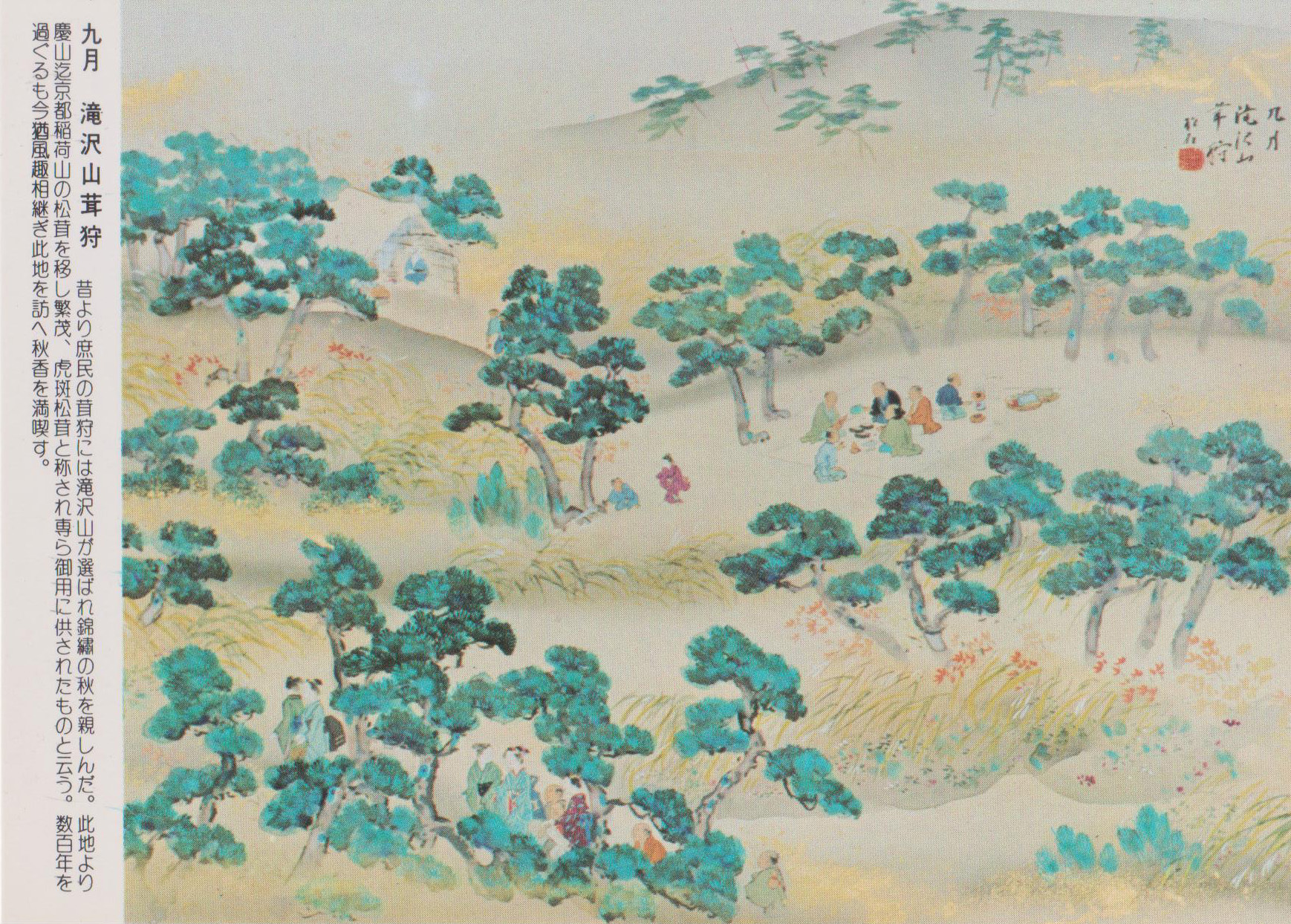
Ninth Month: Takizawa-san Mushroom Gathering. Since ancient times Takizawa-san was chosen for the common people's mushroom hunt, and they enjoyed the brocade of autumn. Matsutake from Inariyama in Kyoto was transplanted from this place to Keizan and flourished, and was called 'tiger-striped matsutake,' said to have been reserved exclusively for official use. Even after several hundred years the tradition continues, and visitors to this place can still fully enjoy the fragrance of autumn.

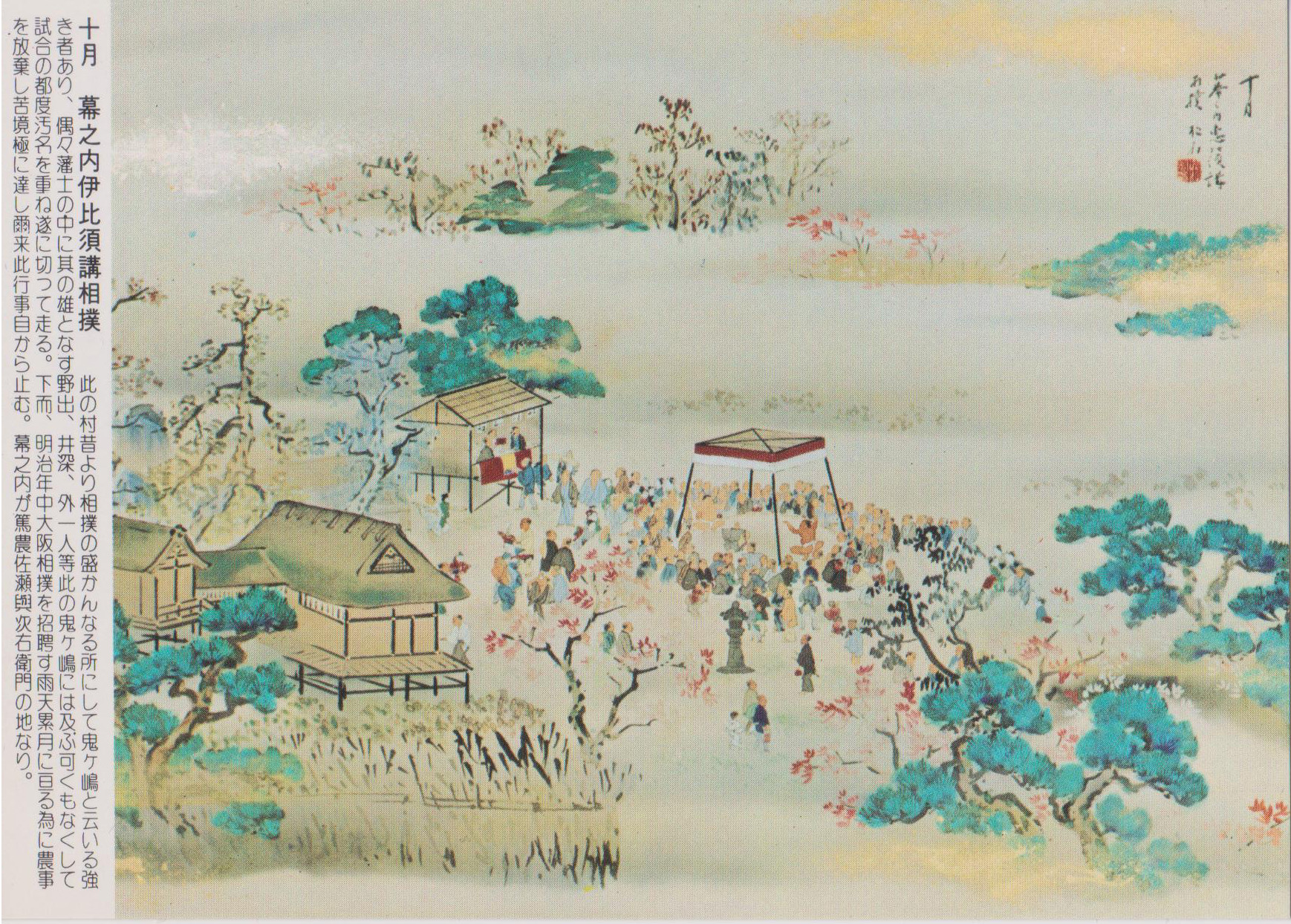
Tenth Month: Makunouchi Ibitsu-ko Sumo. This village had long been a place where sumo flourished, and there was a strong wrestler called Onigashima. Among the domain retainers, Noide, Ibuka, and one other were the champions, but they could not match Onigashima; at every match they piled up disgrace and finally fled. Later, in the Meiji era, Osaka sumo was invited, but because rain continued for months the farmers abandoned their work and reached an extreme predicament, and thereafter the event ceased of itself. Makunouchi was the land of the diligent farmer Sase Okujiemon.

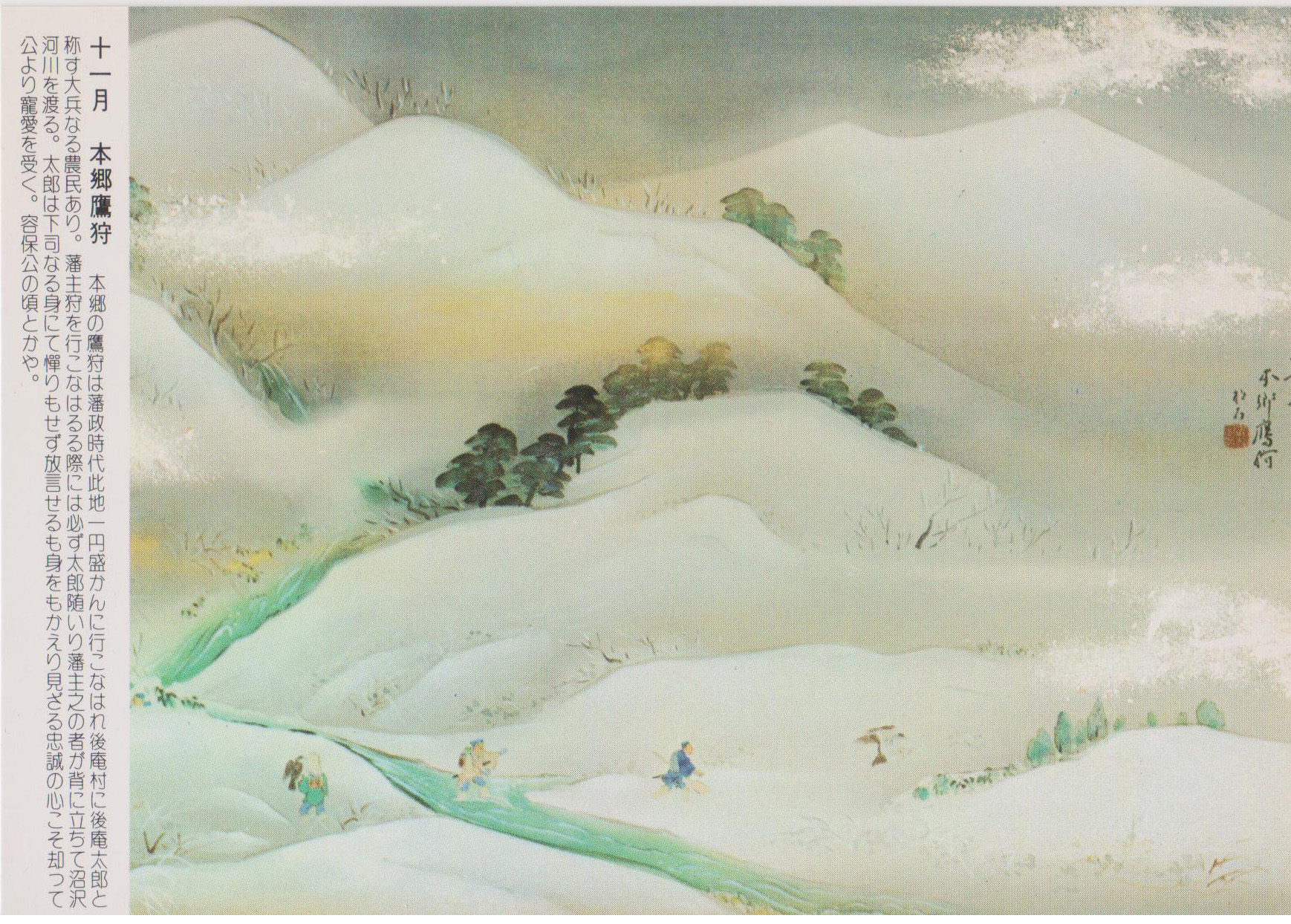
Eleventh Month: Hongo Falconry. Falconry at Hongo was actively practiced throughout this area during the domain era. In Gono-mura there was a large farmer named Gono Taro. Whenever the lord went hunting, Taro always accompanied him, and the lord would stand on Taro's back to cross the Numazawa River. Although Taro was of low rank and spoke bluntly without reserve, his selfless loyalty earned him the lord's favor all the more. This is said to have been in the time of Lord Katamori.

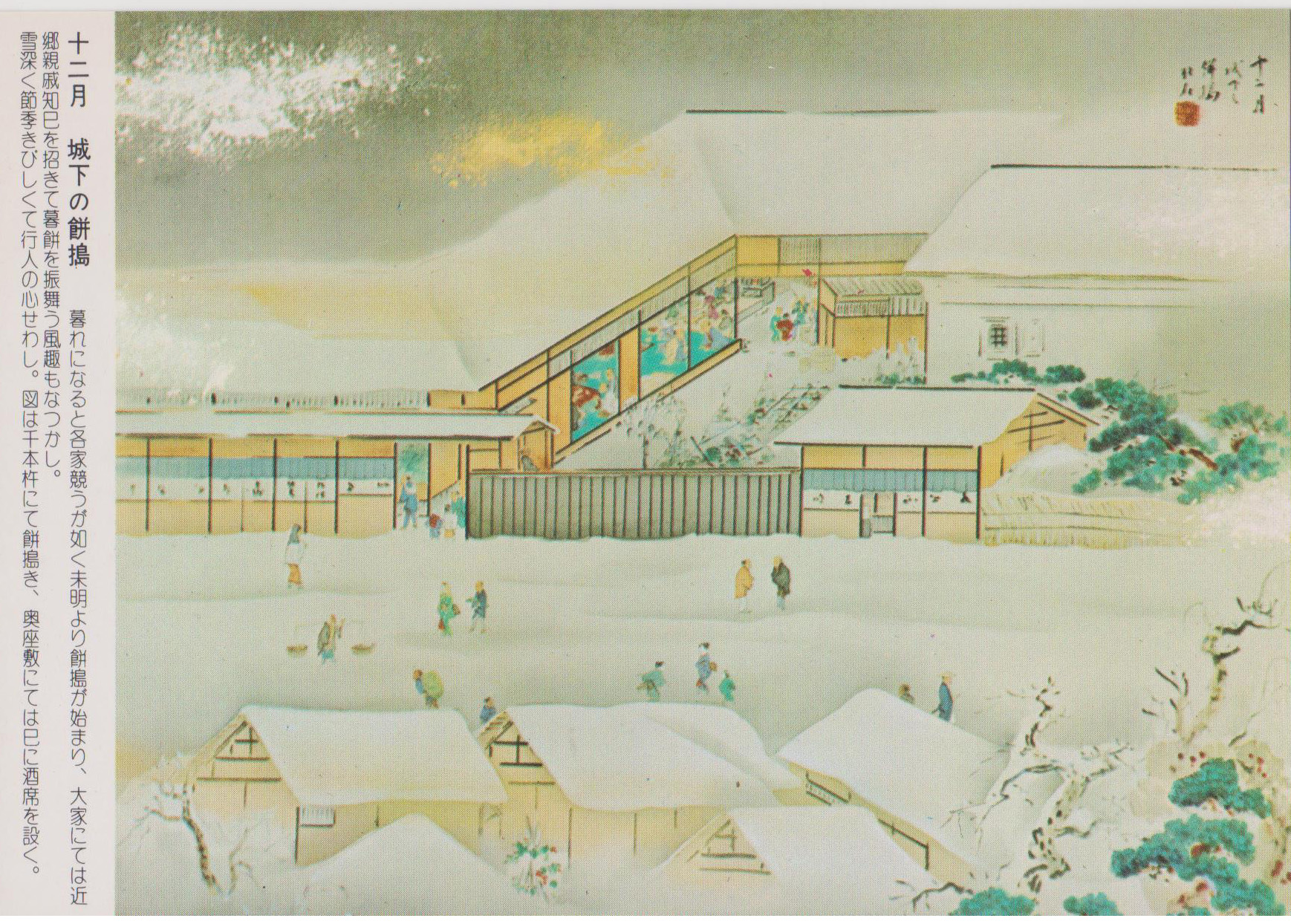
Twelfth Month: Mochi Pounding in the Castle Town. When the year end approaches, every household begins pounding mochi before dawn as if competing, and wealthy families invite relatives and acquaintances from nearby villages to share the year-end mochi—a nostalgic custom. The snow lies deep and the season is severe, and travelers hurry. The picture shows mochi being pounded with a thousand-pound pestle, while in the inner room a drinking party has already been set up.

Related pages

Back to Digital Archives