Aizu Tsuruga Castle Before Its Demolition in 1874








When using image data, please check the Terms of use.
Material information
Related page:
Publication year: Unknown
Item type: Postcard
Number of images: 13
Image contents: Aizu Tsuruga Castle Before Its Demolition in 1874
Images
Cover
Aizu Tsuruga Castle Before Its Demolition in 1874
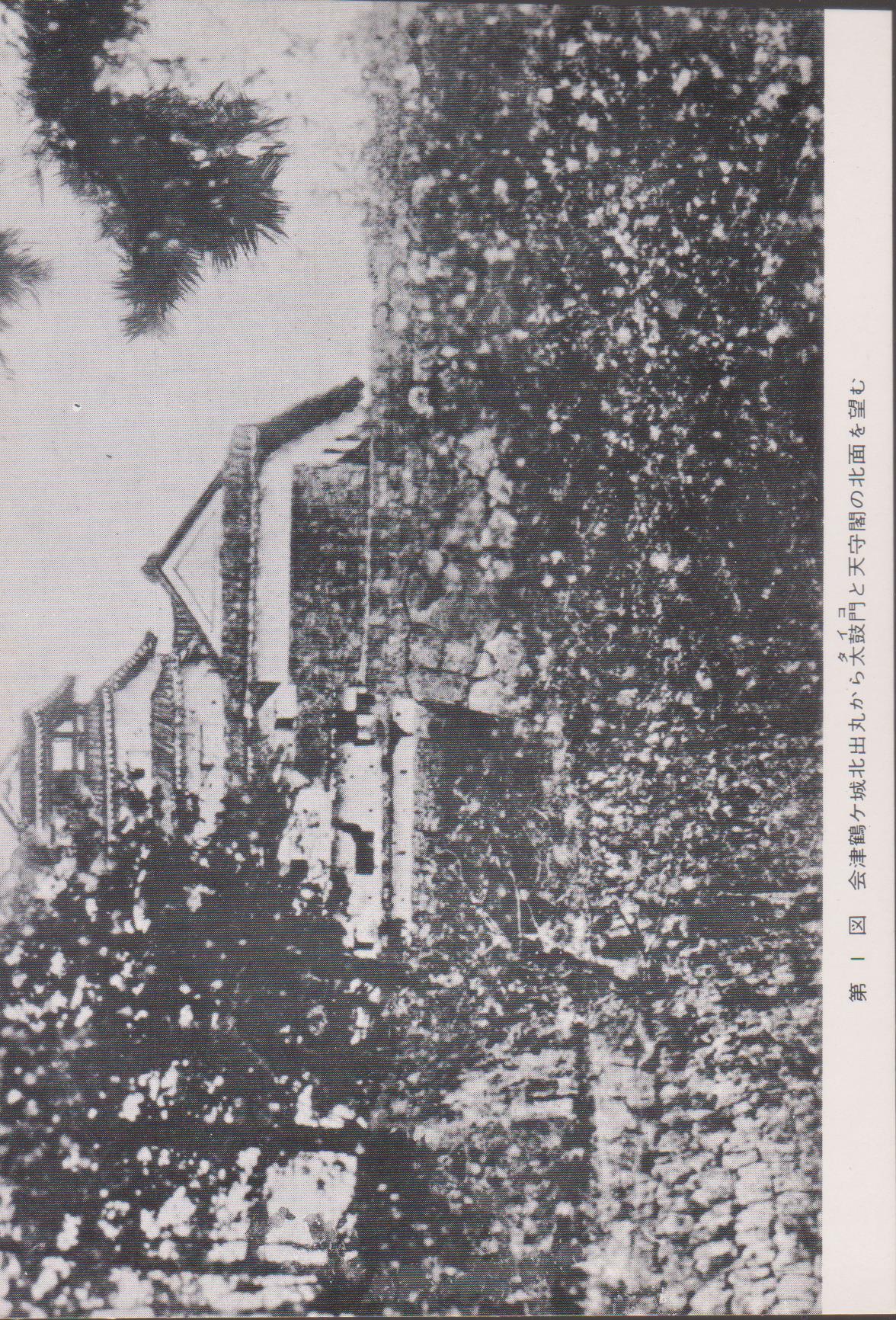
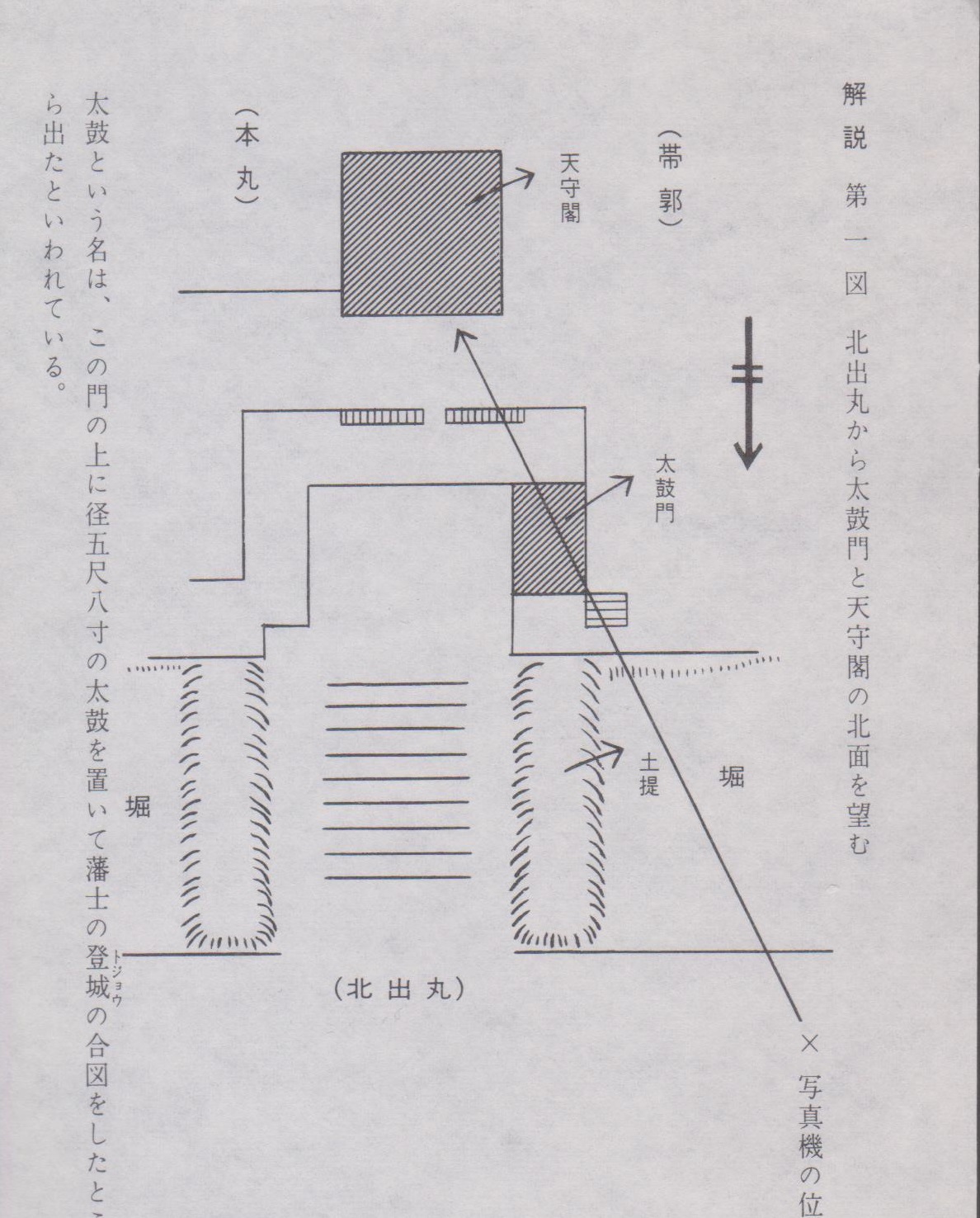
Fig. 1 Explanation
Explanation of Fig. 1: View of Taiko Gate and the north side of the keep from Kitademaru. The name Taiko (drum) is said to come from a drum about 5 shaku 8 sun in diameter placed above this gate to signal retainers to enter the castle.
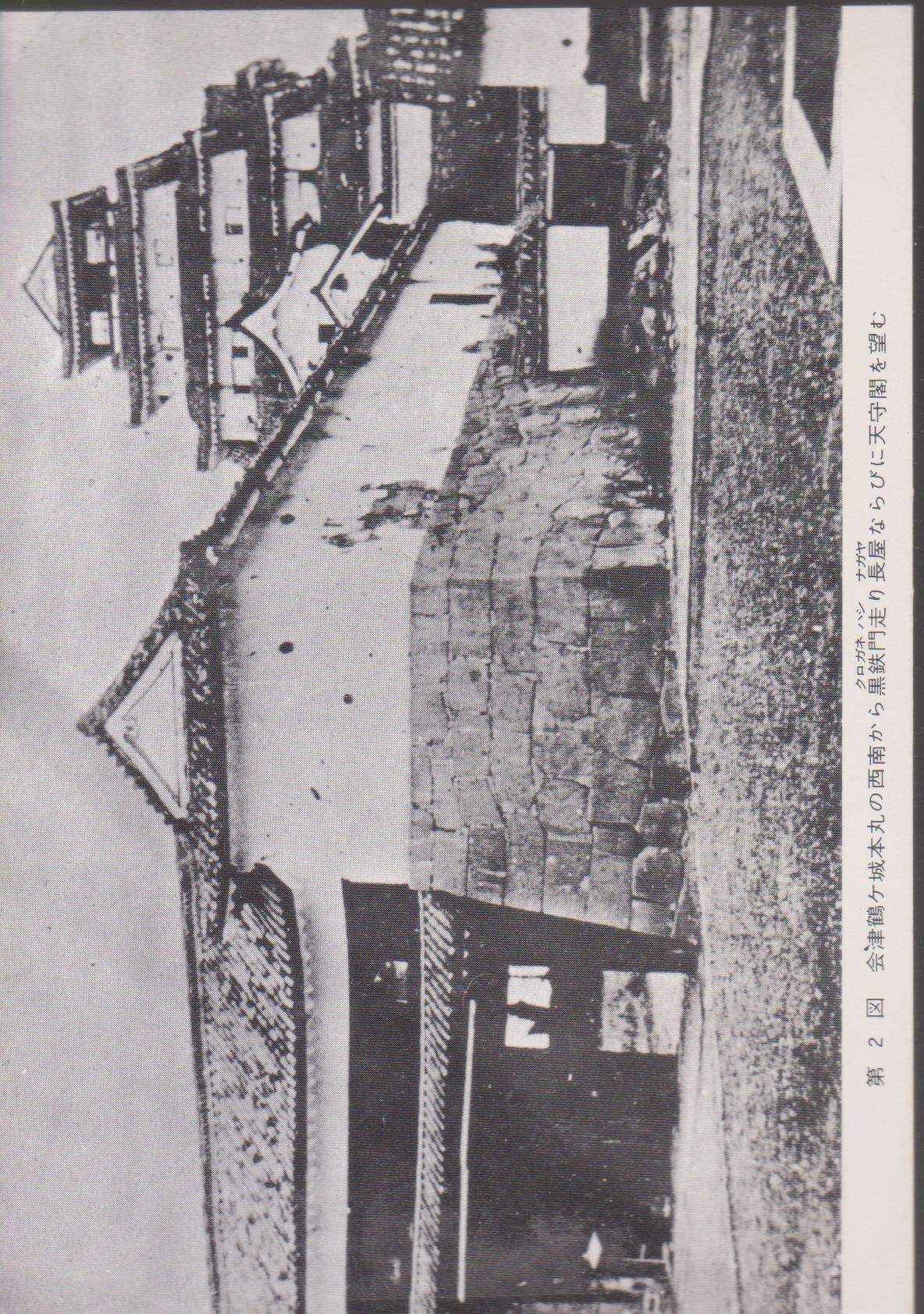
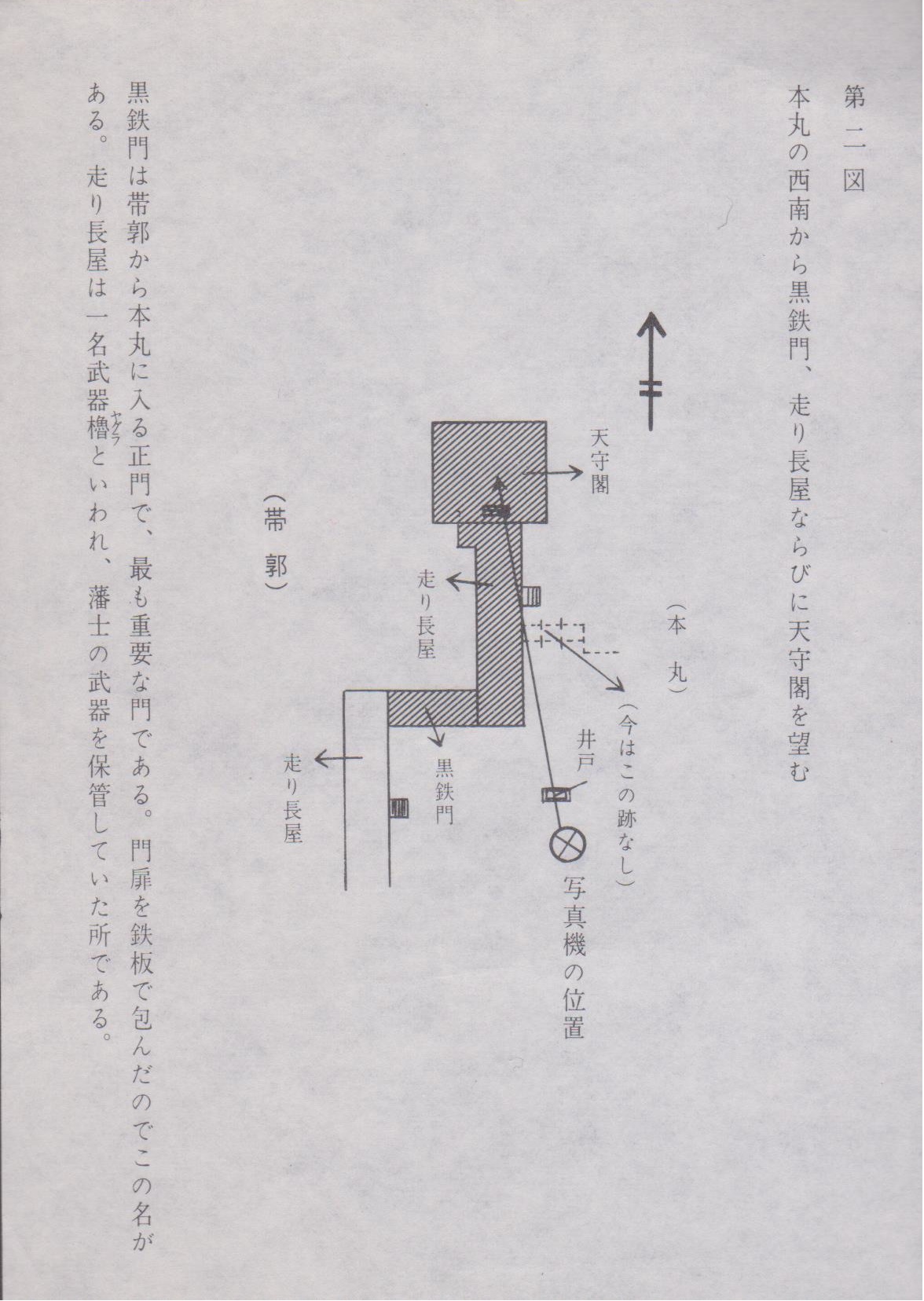
Fig. 2 Explanation
Fig. 2: View of Kurogane Gate, the nagaya, and the keep from the southwest of the honmaru. Kurogane Gate was the main gate leading from the obi-kuruwa into the honmaru and the most important gate; it is named for its iron-plated doors. The nagaya, also called the armory turret, stored the retainers' weapons.
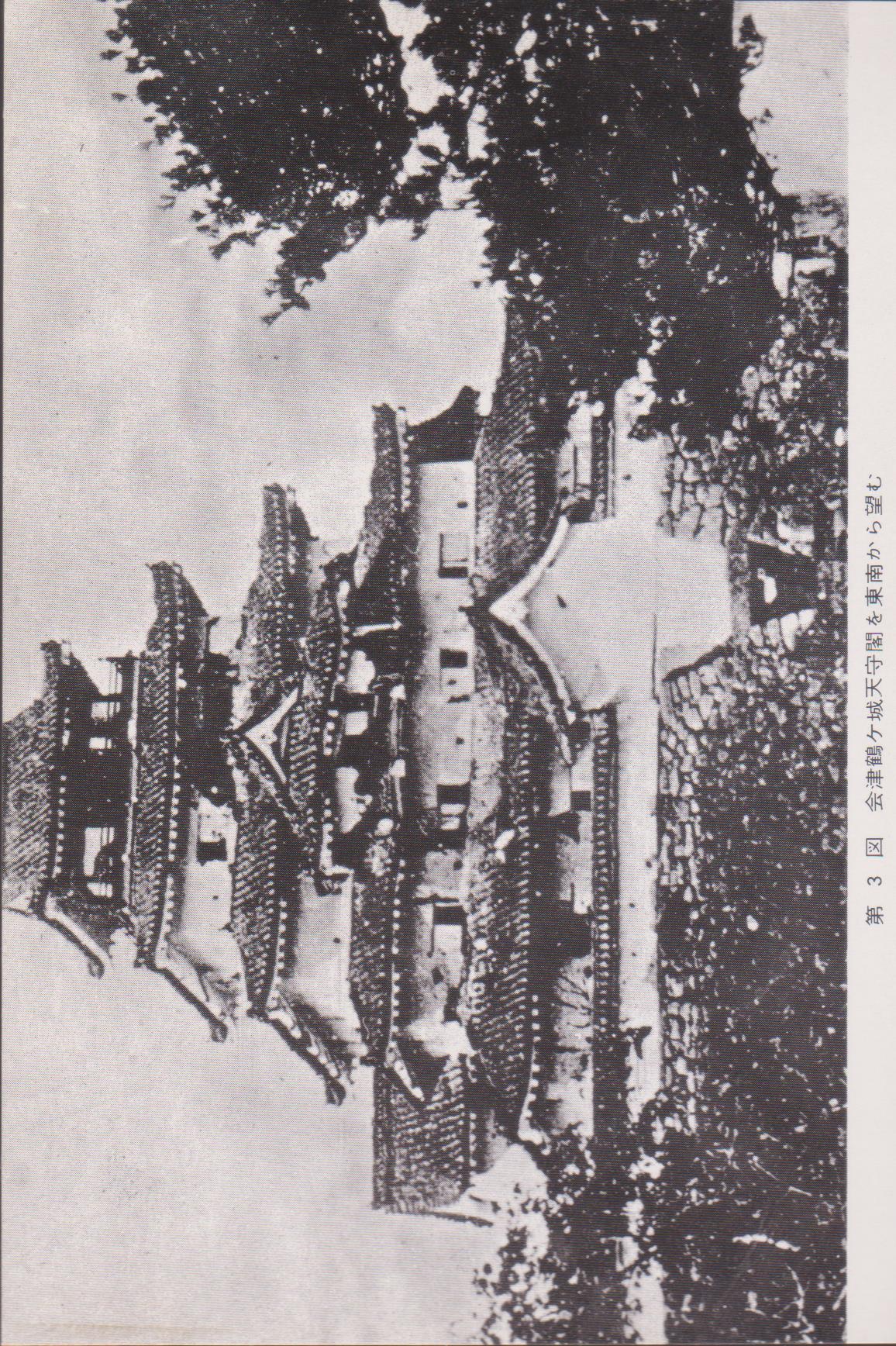
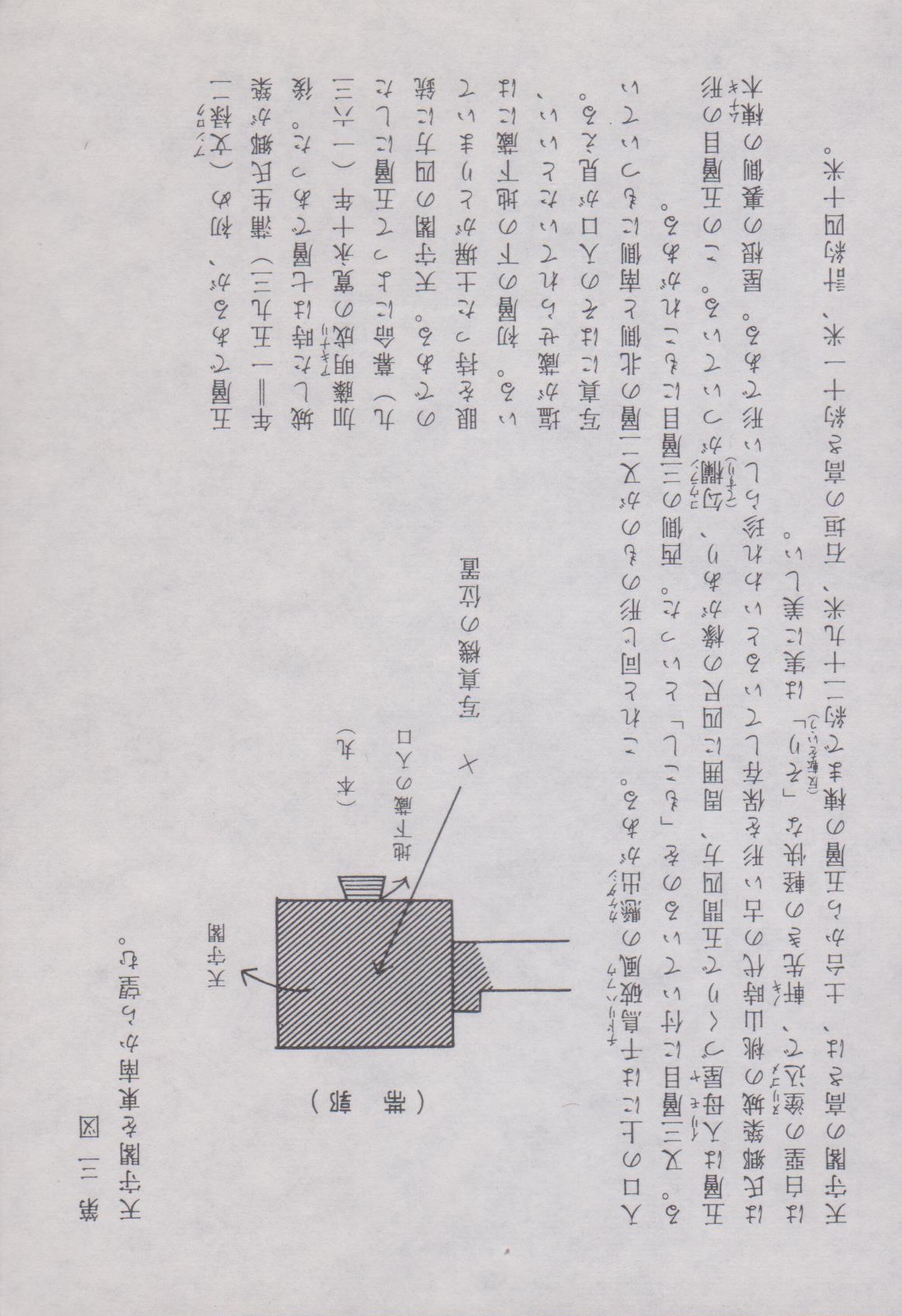
Fig. 3 Explanation
Fig. 3: View of the keep from the southeast. It has five stories, but when Gamo Ujisato built the castle in 1593 (Bunroku 2) it had seven; later Kato Akishige reduced it to five in 1639 (Kanei 10) by order of the shogunate. Earthen walls with gun ports surround the keep on all four sides. The underground store below the first floor is said to have held salt, and its entrance is visible in the photograph. Above the entrance is a projecting chidori-hafu gable; the same shape appears on the north and south sides of the second story, and the one on the third story is called a 'mokoshi'; the west side of the third story also has one. The fifth story is irimoya-style, five bays square, with a four-shaku veranda and a railing around it. This fifth-story form is said to preserve the old Momoyama style of Ujisato's castle and is a rare shape. The ridge beam on the back of the roof is finished in white plaster, and the light, graceful curve of the eaves is truly beautiful. The height of the keep is about 29 m from the base to the ridge of the fifth story, and the stone walls are about 11 m high, for a total of about 40 m.
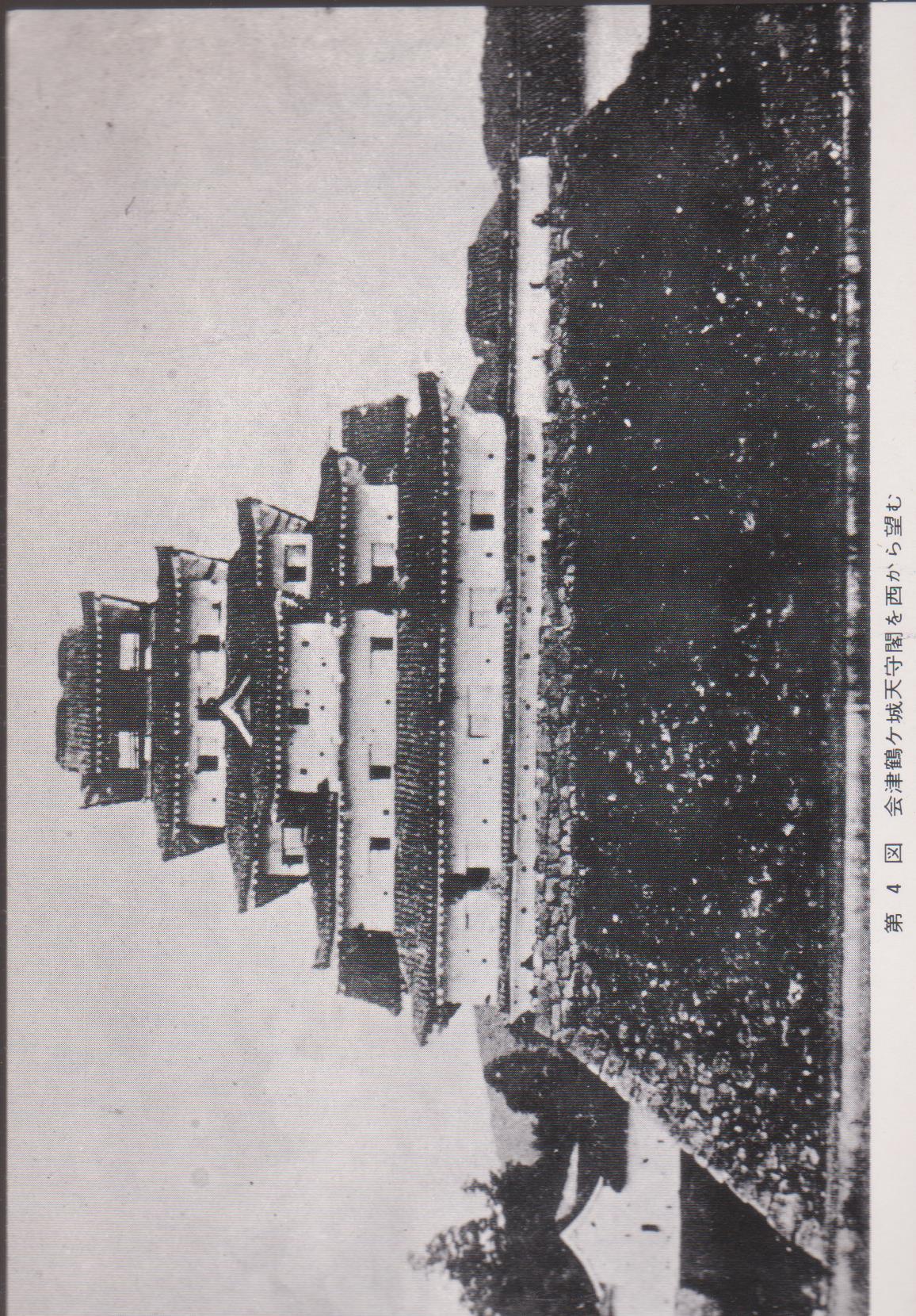
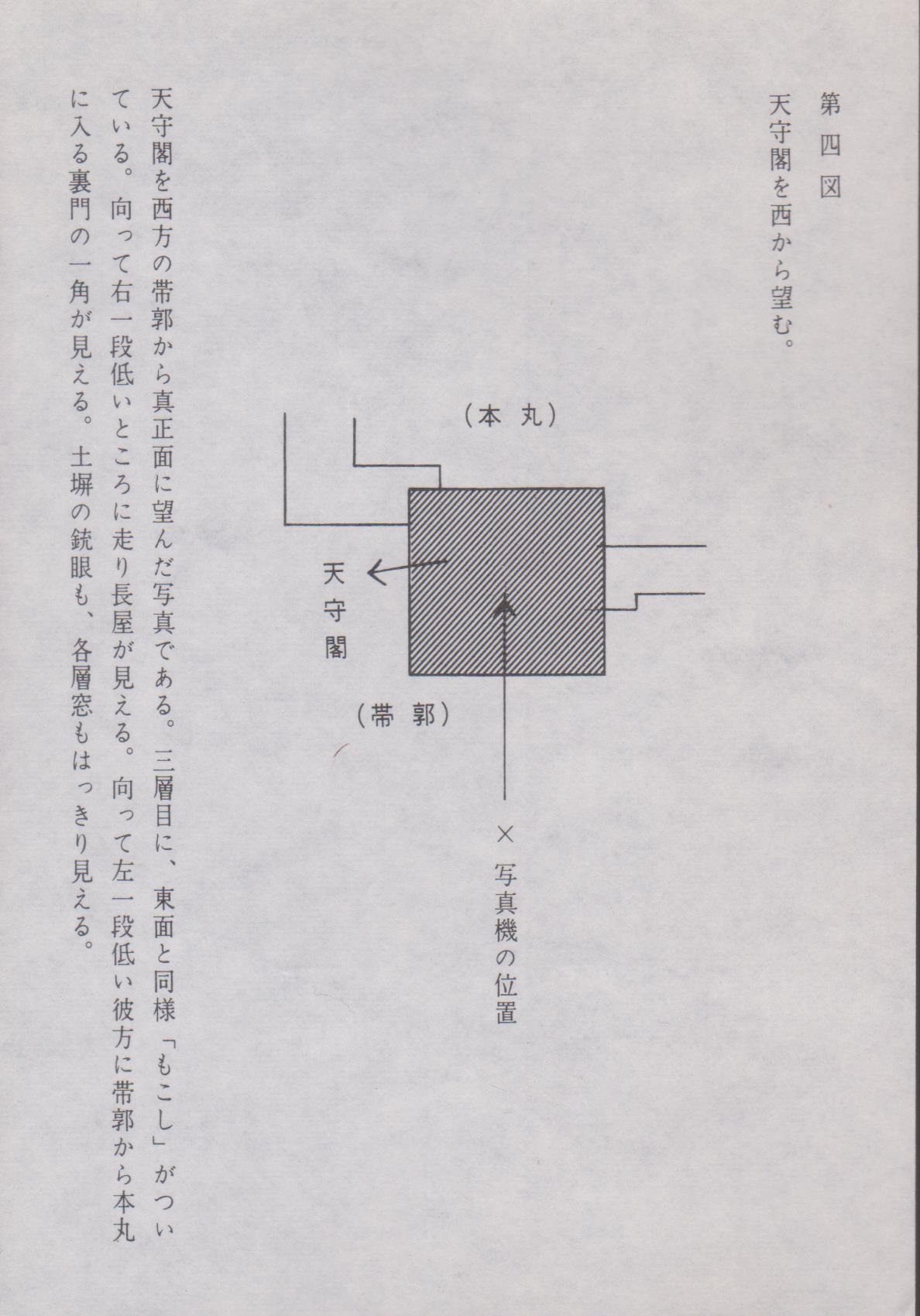
Fig. 4 Explanation
Fig. 4: View of the keep from the west, seen straight on from the western obi-kuruwa. The third story has a 'mokoshi' like the east side. To the right and one level lower is the nagaya; to the left and lower still is part of the rear gate leading from the obi-kuruwa into the honmaru. The gun ports in the earthen walls and the windows of each story are clearly visible.
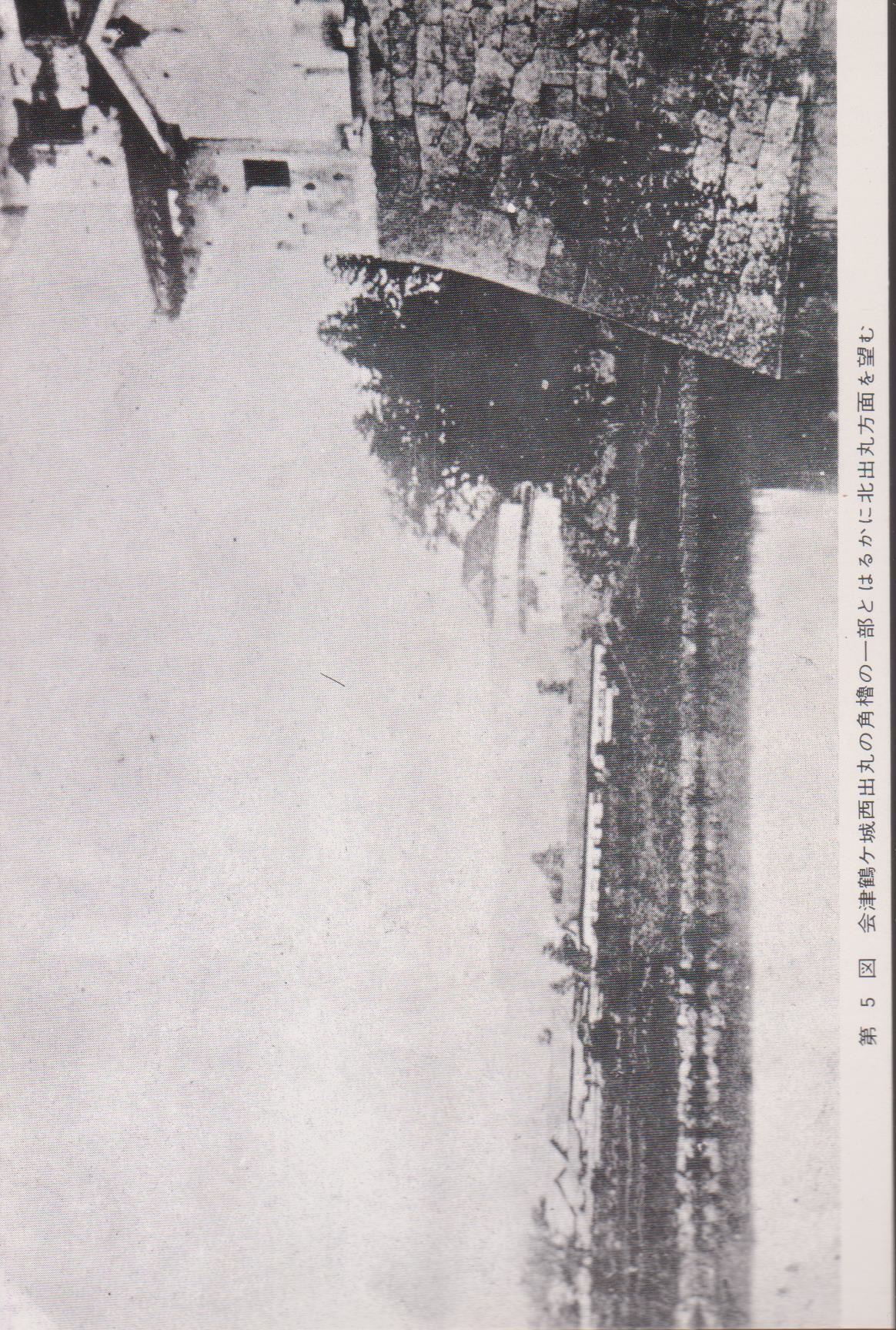
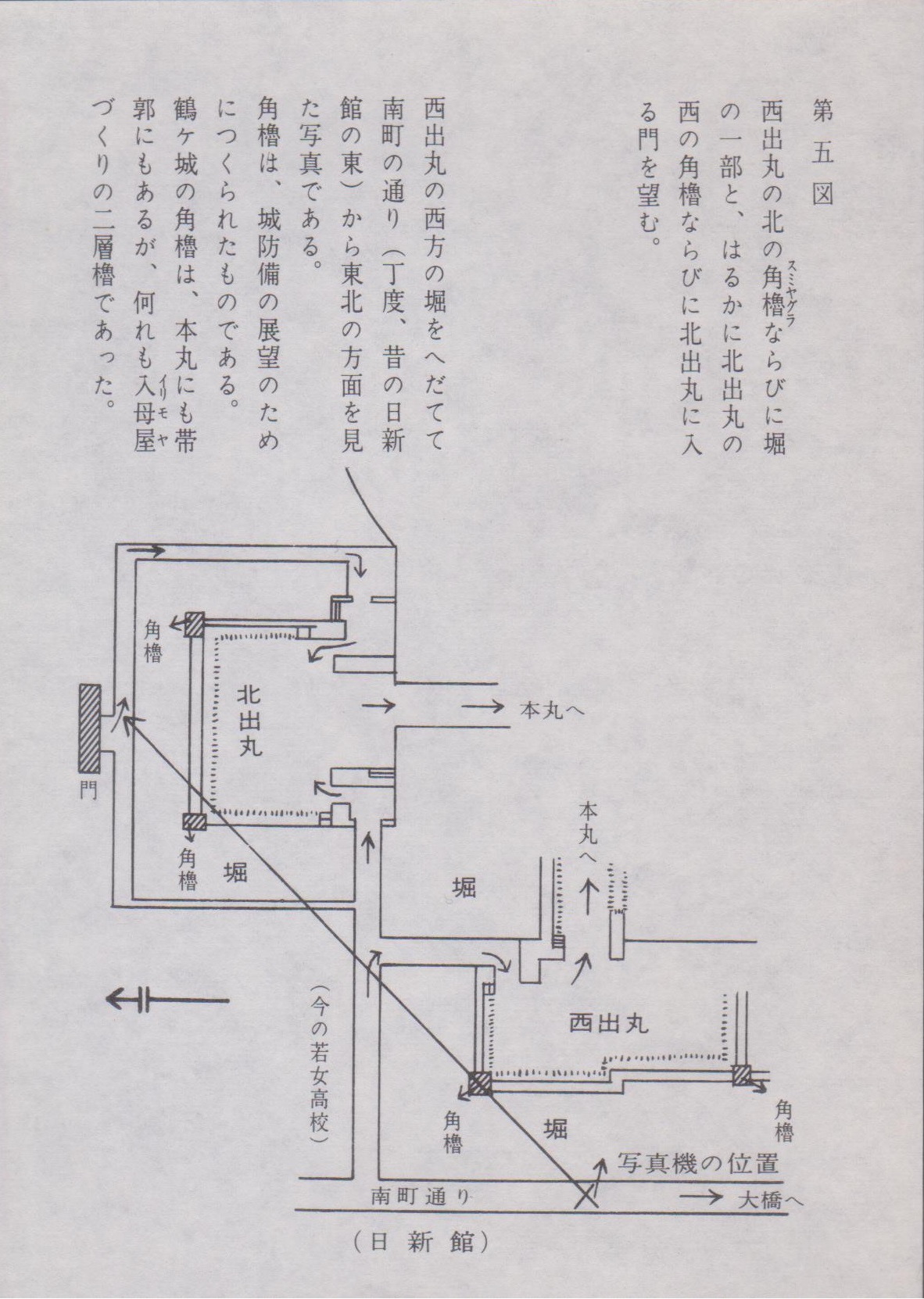
Fig. 5 Explanation
Fig. 5: The north corner turret and part of the moat at Nishidemaru, with the west corner turret and the gate into Kitademaru in the distance. This photograph looks northeast from the Minamimachi street (just east of the former Nisshinkan), across the western moat of Nishidemaru. Corner turrets were built for defense and observation; the turrets of Tsuruga Castle, in both the honmaru and the obi-kuruwa, were two-story irimoya-style structures.
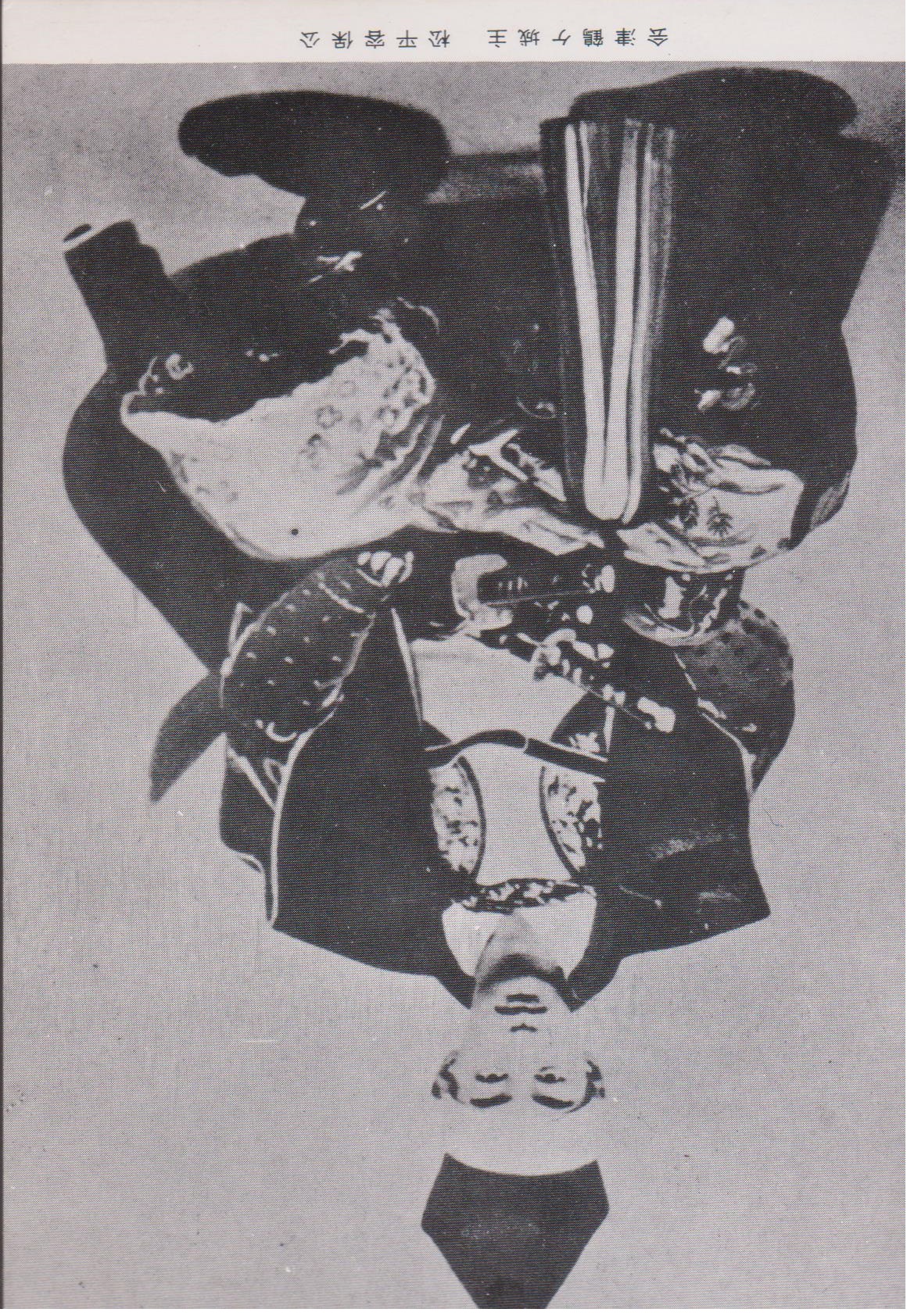
Explanation: Katamori Matsudaira, Lord of Aizu Tsuruga Castle
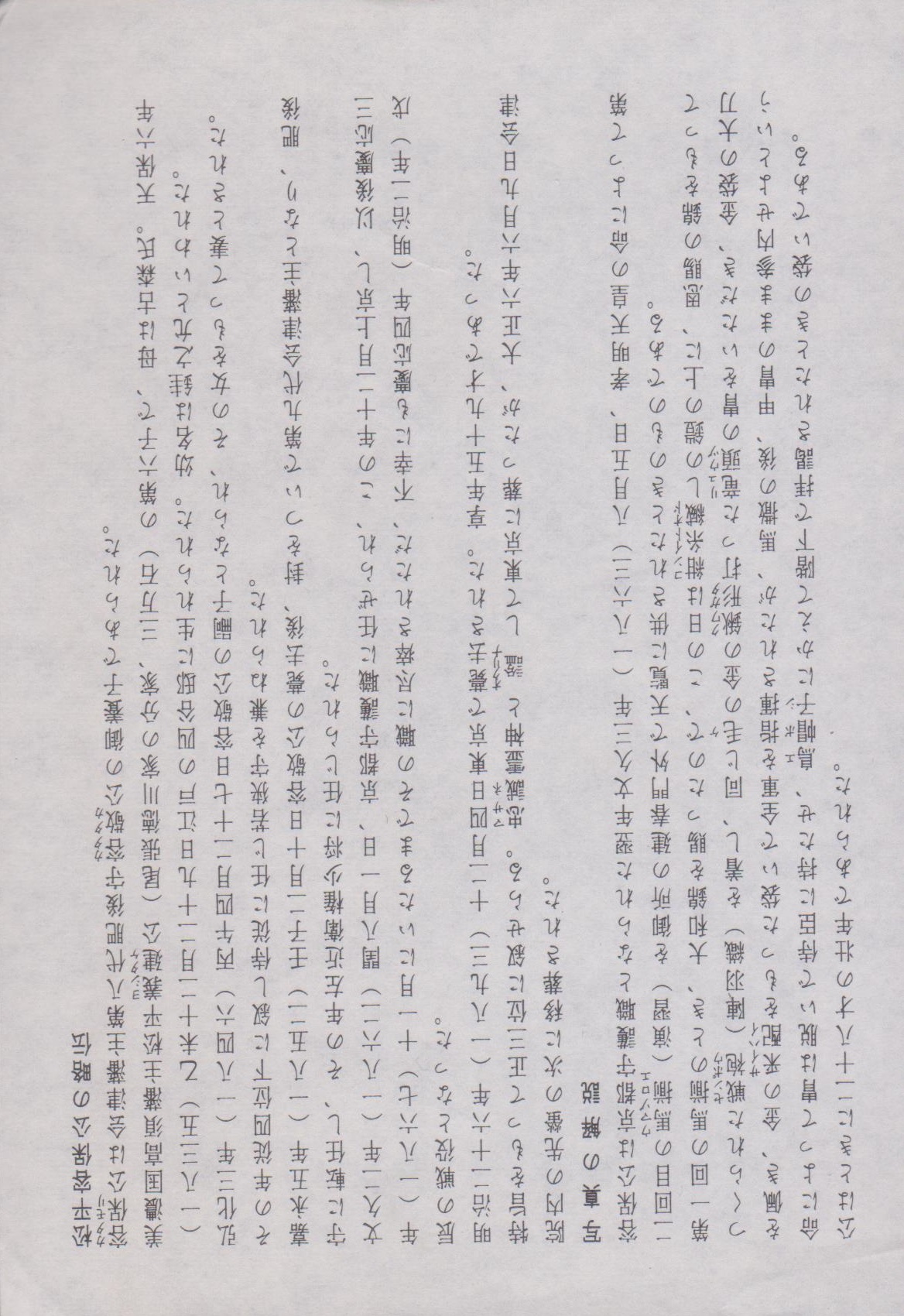
Brief Biography of Lord Katamori Matsudaira. Lord Katamori was the adopted son of the eighth lord of Aizu, Higo-no-kami Kataaki. He was the sixth son of Matsudaira Yoshitake, lord of Takasu Domain in Mino (a branch of the Owari Tokugawa, 30,000 koku); his mother was from the Komori family. He was born on December 29, 1835 (Tenpo 6), at the Yotsuya residence in Edo, and his childhood name was Keinosuke. In 1846 (Koka 3), on April 27, he became Kataaki's heir and married Kataaki's daughter. That year he was granted junior fourth rank, appointed chamberlain, and concurrently governor of Wakasa. After Kataaki's death on February 10, 1852 (Kaei 5), he inherited the domain as ninth lord of Aizu, was transferred to Higo-no-kami, and was appointed provisional minor captain of the Left Guards. On the first day of the intercalary eighth month of 1862 (Bunka 2), he was appointed Kyoto Shugoshoku; he went to Kyoto that December and served in the post until November 1867 (Keio 3). Unfortunately, in 1868 (Keio 4 / Meiji 1) came the Boshin War. He died in Tokyo on December 4, 1893 (Meiji 26) at the age of 59, and by special imperial favor was raised to junior third rank and given the posthumous name Chusei Reishin. He was buried in Tokyo, and on June 9, 1917 (Taisho 6) was reinterred at Aizu-in next to his ancestors. Explanation of the photograph: This shows Lord Katamori on August 5, 1863 (Bunka 3), the year after he became Kyoto Shugoshoku, when by order of Emperor Komei he presented the first horse parade (military review) for imperial inspection outside the Kenshun Gate of the palace. At the first parade he had been granted a Yamato brocade, so on this day he wore a battle surcoat made from the imperial gift over armor laced with dark blue thread, a dragon-head helmet with gold kuwagata ornaments, a gold-mounted sword, and a gold baton in a bag, and commanded the whole army. After the parade, ordered to enter the palace in armor, he removed his helmet, gave it to an attendant, and was received below the throne wearing an eboshi. He was then 28 years old.