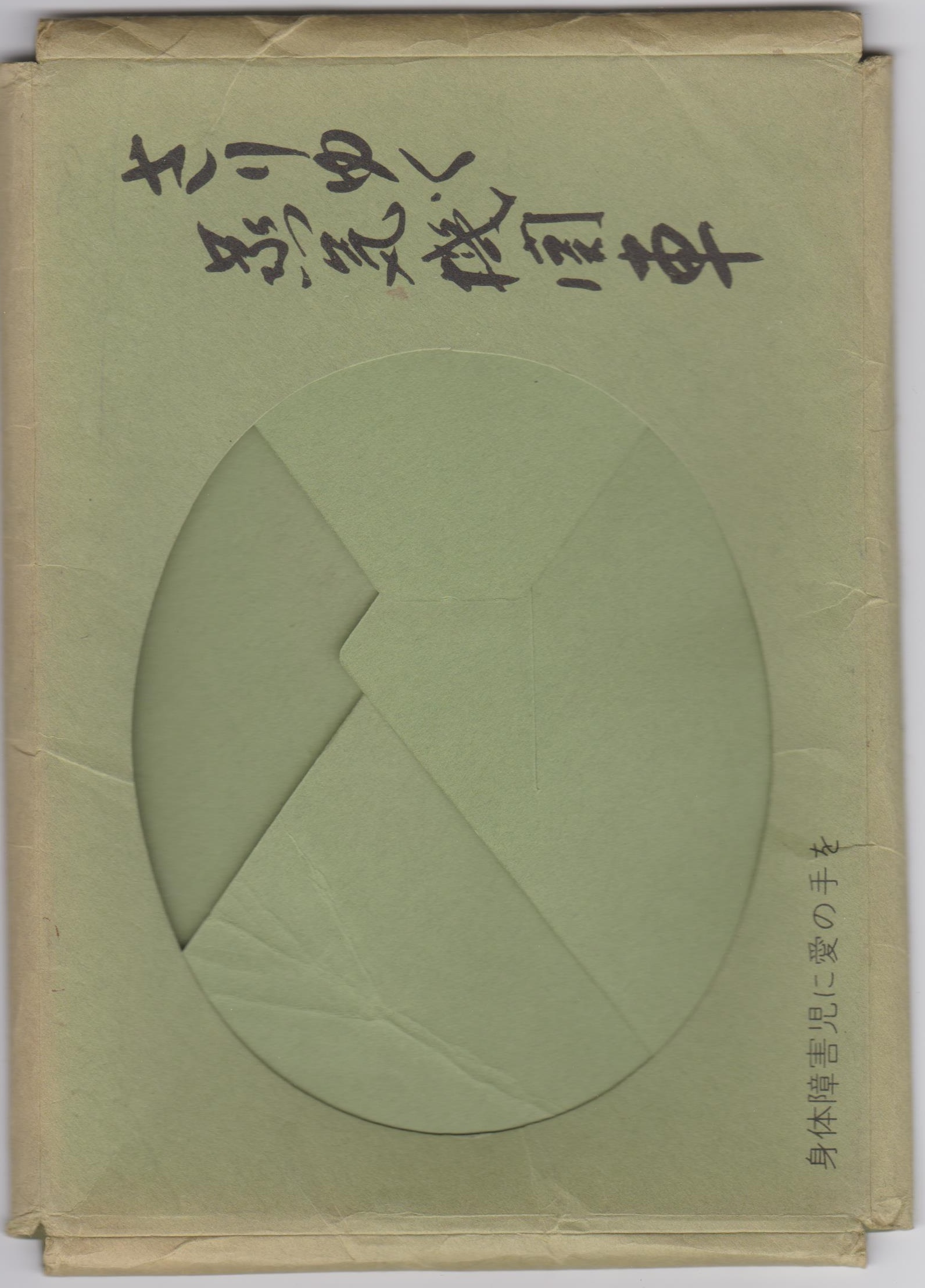
Departing Steam Locomotives: A Hand of Love for Children with Disabilities







When using image data, please check the Terms of use.
Material information
Related page:
Publication year: Unknown
Item type: Postcard
Number of images: 21
Image contents: Departing Steam Locomotives: A Hand of Love for Children with Disabilities
Images
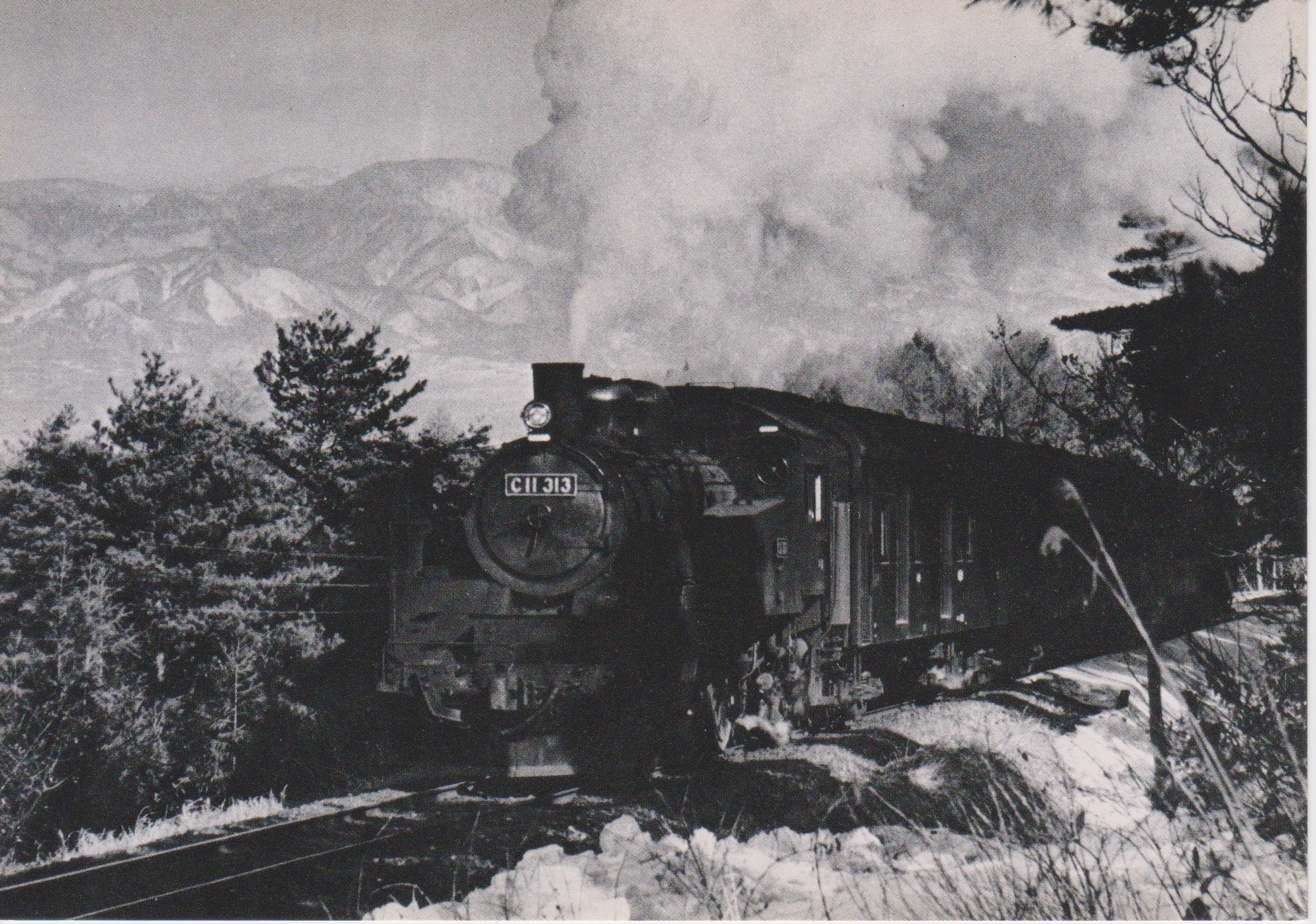
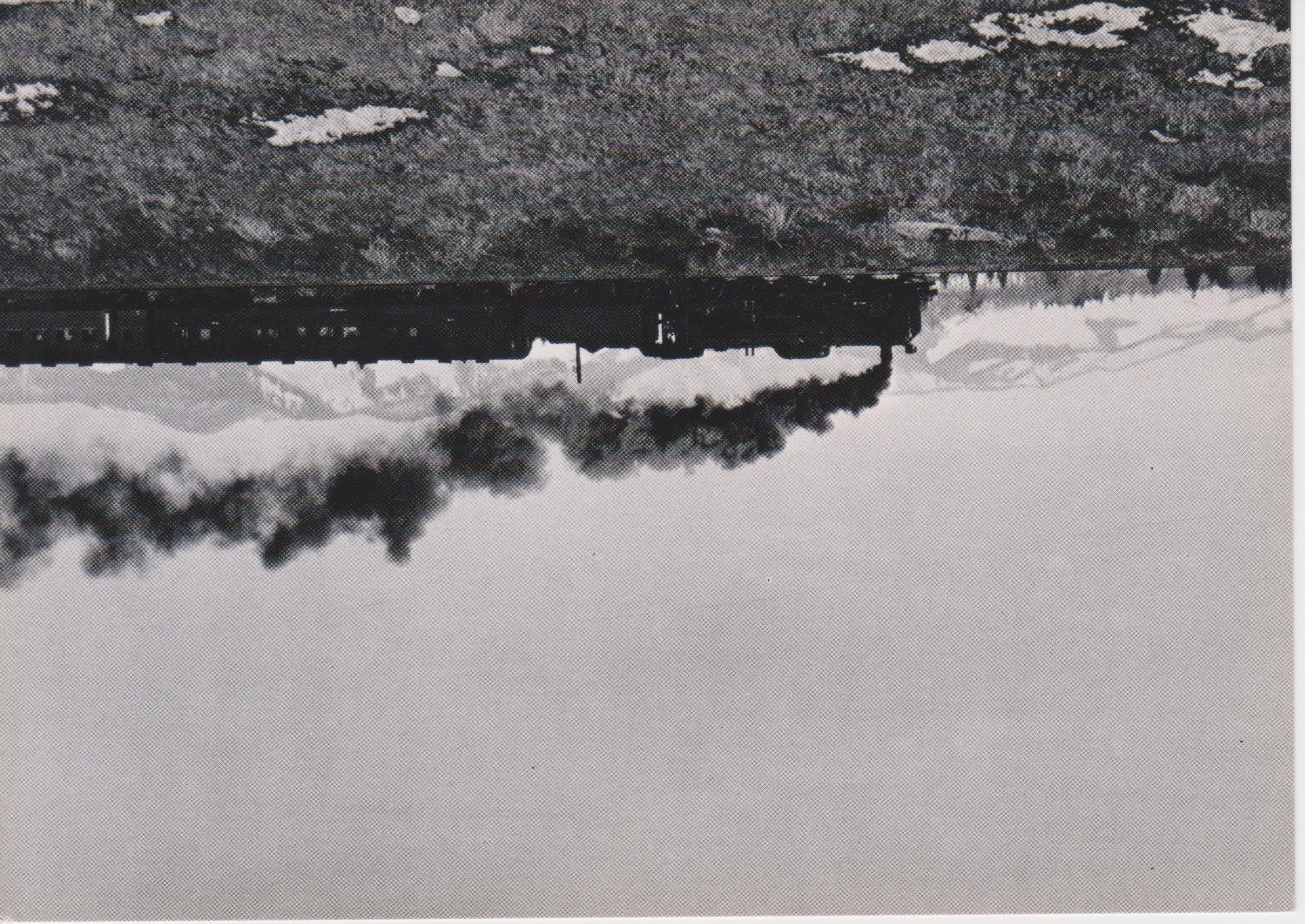
Aizu Line, Aizu-Bange to Tera-dera (C11)
A mixed train running through Aizu with Mount Bandai and its remaining snow in the background. The C11, not often noticed elsewhere, suits the Aizu Line as it runs through mountains and valleys.
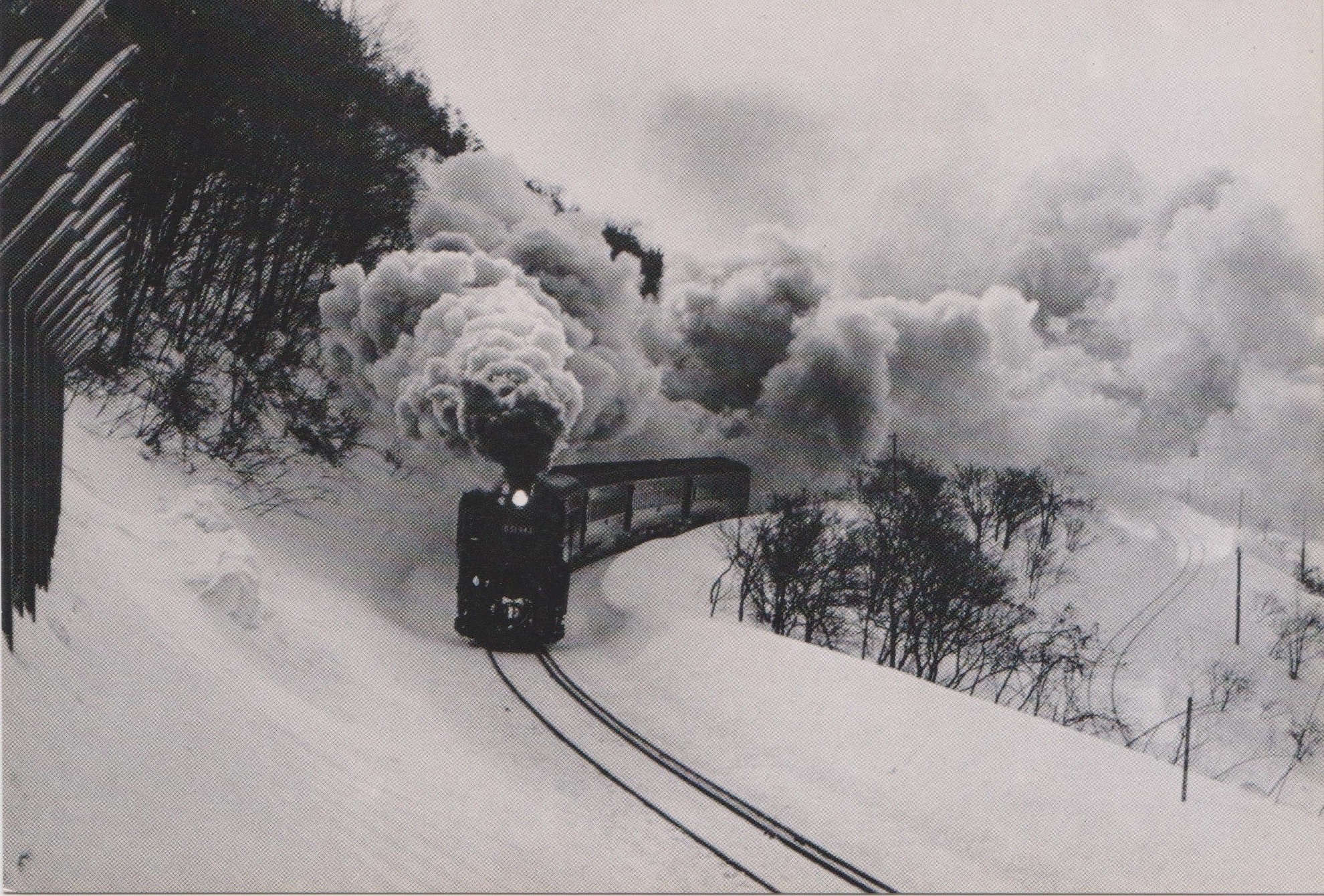
Tohoku Main Line, Senbiki to Noheji (C61)
Until recently the Tohoku Main Line was a steam paradise, but electrification of the double track has erased all trace. The Senbiki-Noheji section, built as a separate alignment, kept its old appearance to the end.
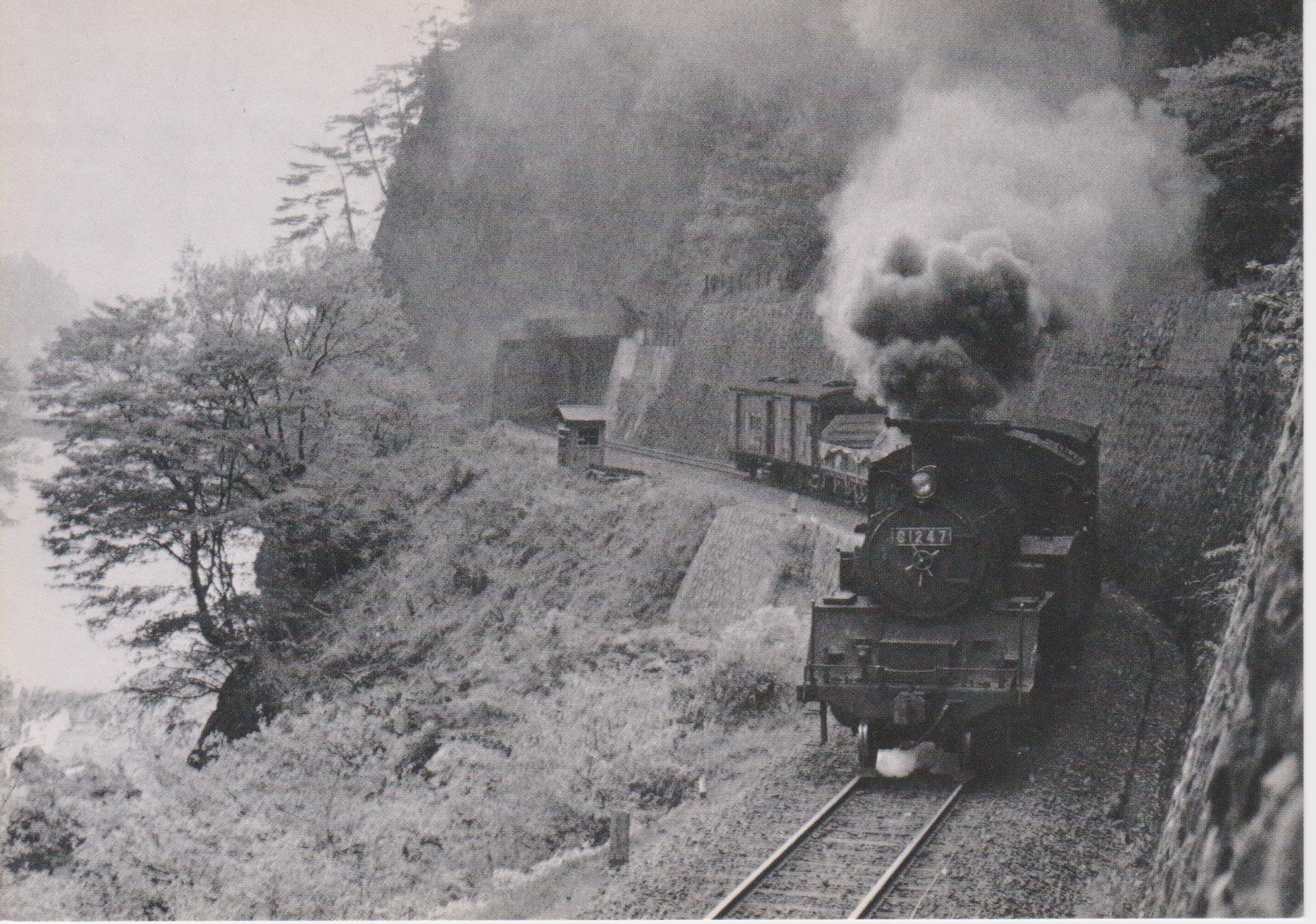
Hakodate Main Line, Ozawa to Ginzan (D51)
A D51 climbing the mountain pass at dawn. The main route to Sapporo is via the Muroran and Chitose lines; the mountainous Oshamambe-Otaru section feels like a back road. The track at lower right is the Iwanai Line.
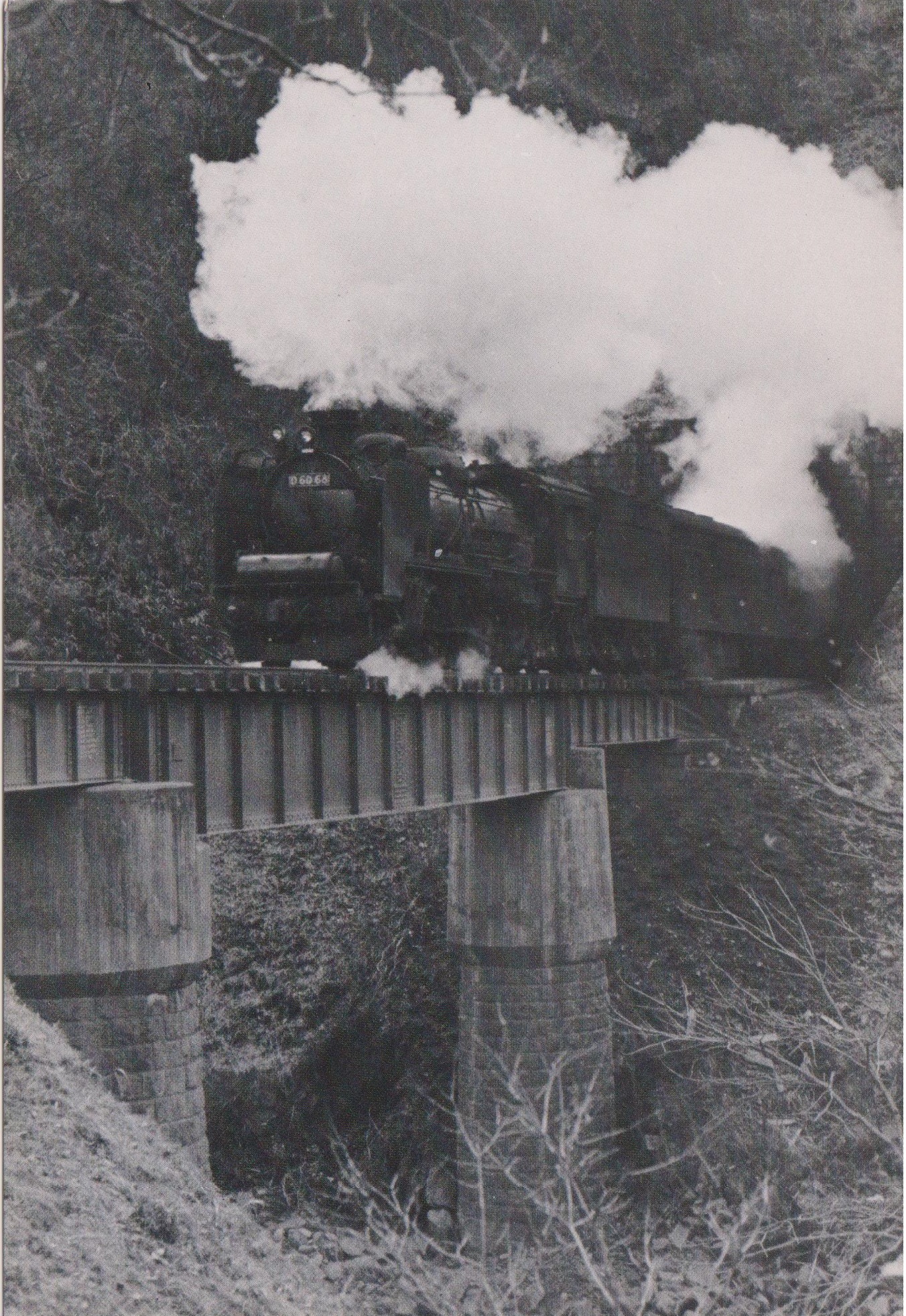
Ashio Line, Gando to Kusaki (C12)
The Ashio Line runs along the Watarase Gorge with continuous sharp curves and steep grades, and the small C12 struggles valiantly. Beyond Gando, double-headed C12 trains are common.
Banetsu East Line, Kawamae to Natsui (D60)
A D60 fighting along the Natsui Gorge. It was made smokeless in October 1968, and this sight is gone.
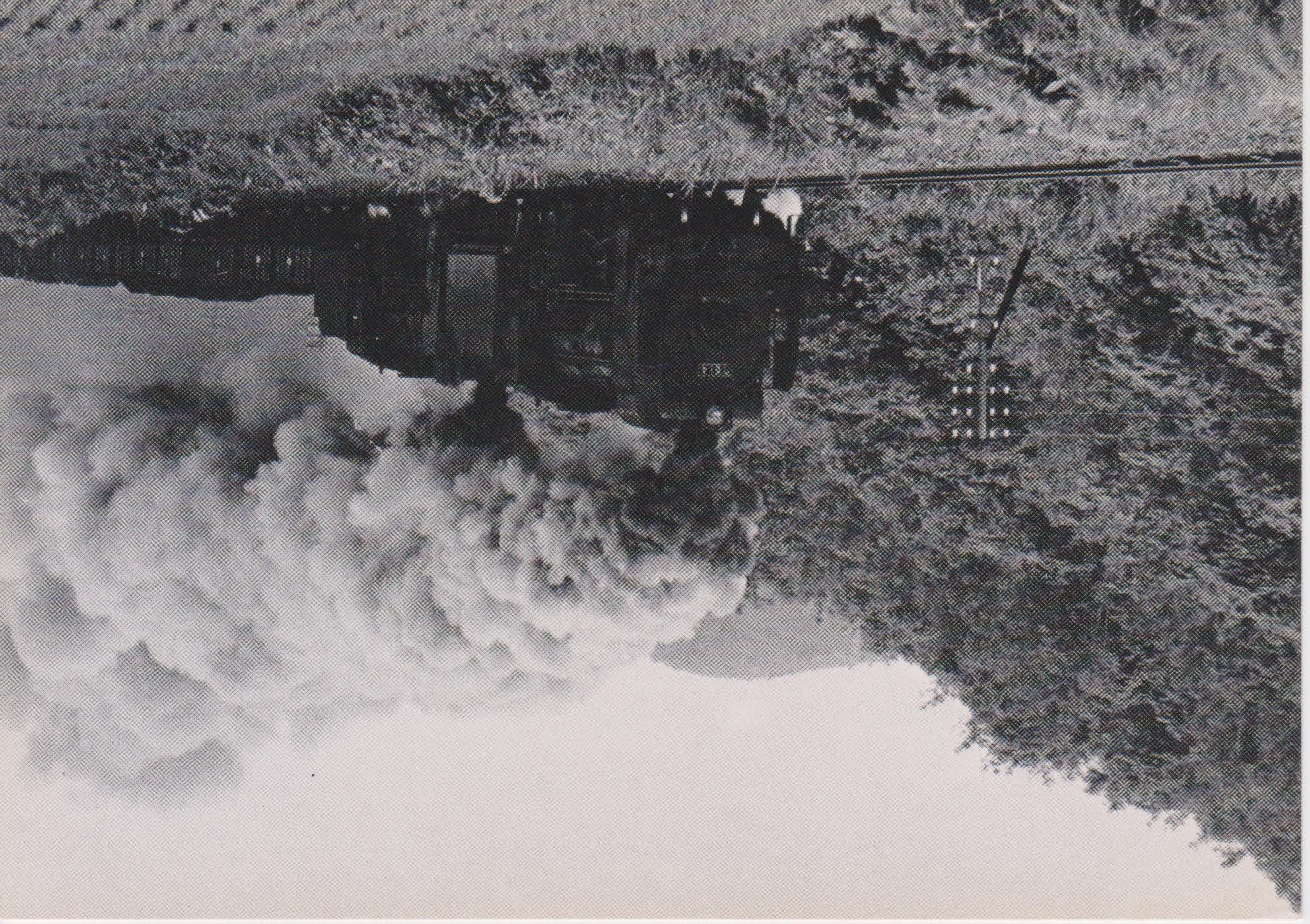
Haboro Line, Rikibiru to Kotanbetsu (D61)
The Haboro Line is the only line in Japan operating the D61 type. It was created by modifying the D51 to reduce axle load, with a two-axle trailing truck, and exists only at Rumoi Depot nationwide.
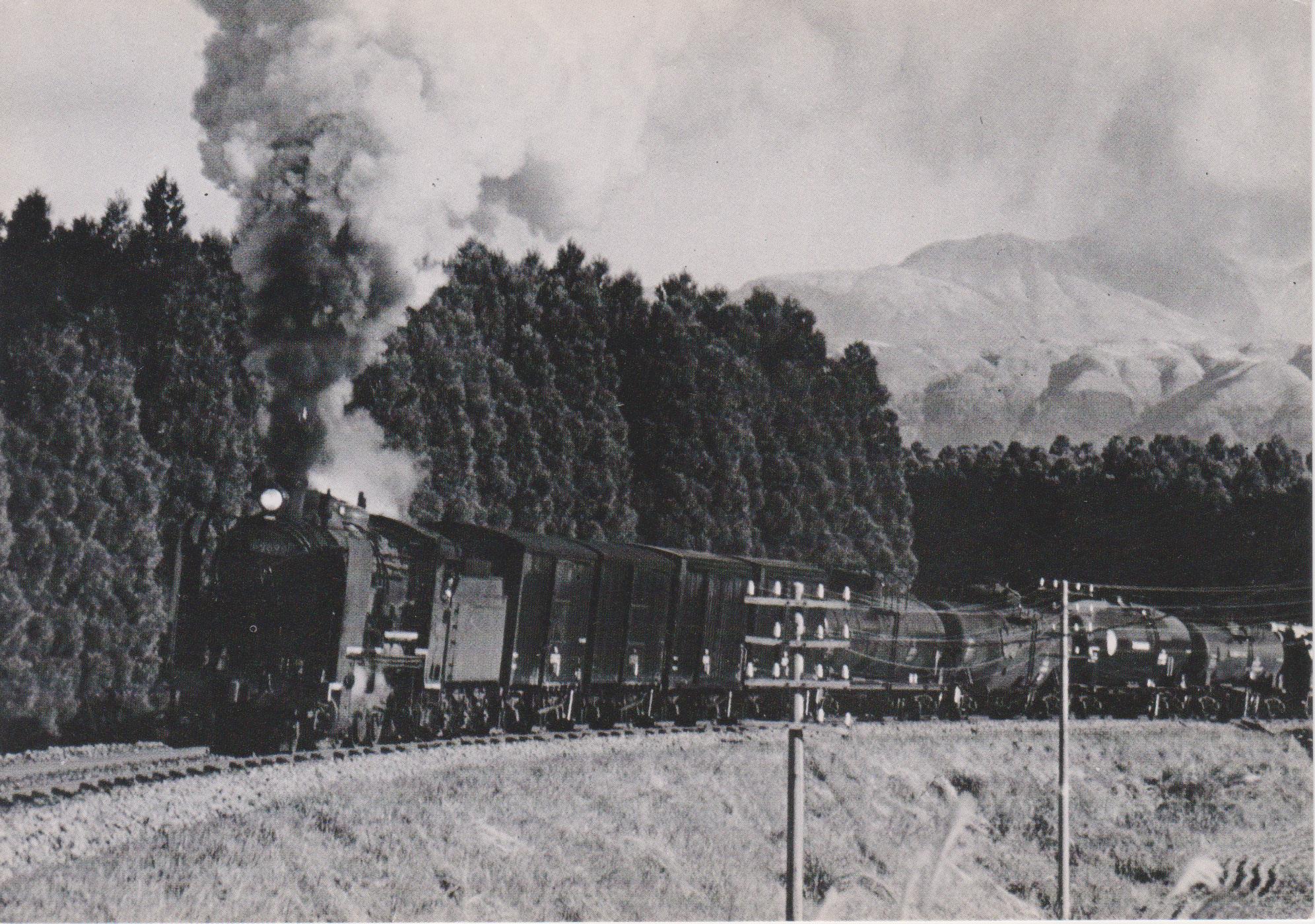
Hohi Main Line, Miyaji to Nokono (9600)
A 9600 climbing the vast slopes of Mount Aso with the sound of its blast pipe. Passenger trains run as local services, but the only through steam-hauled train is this one round-trip freight.
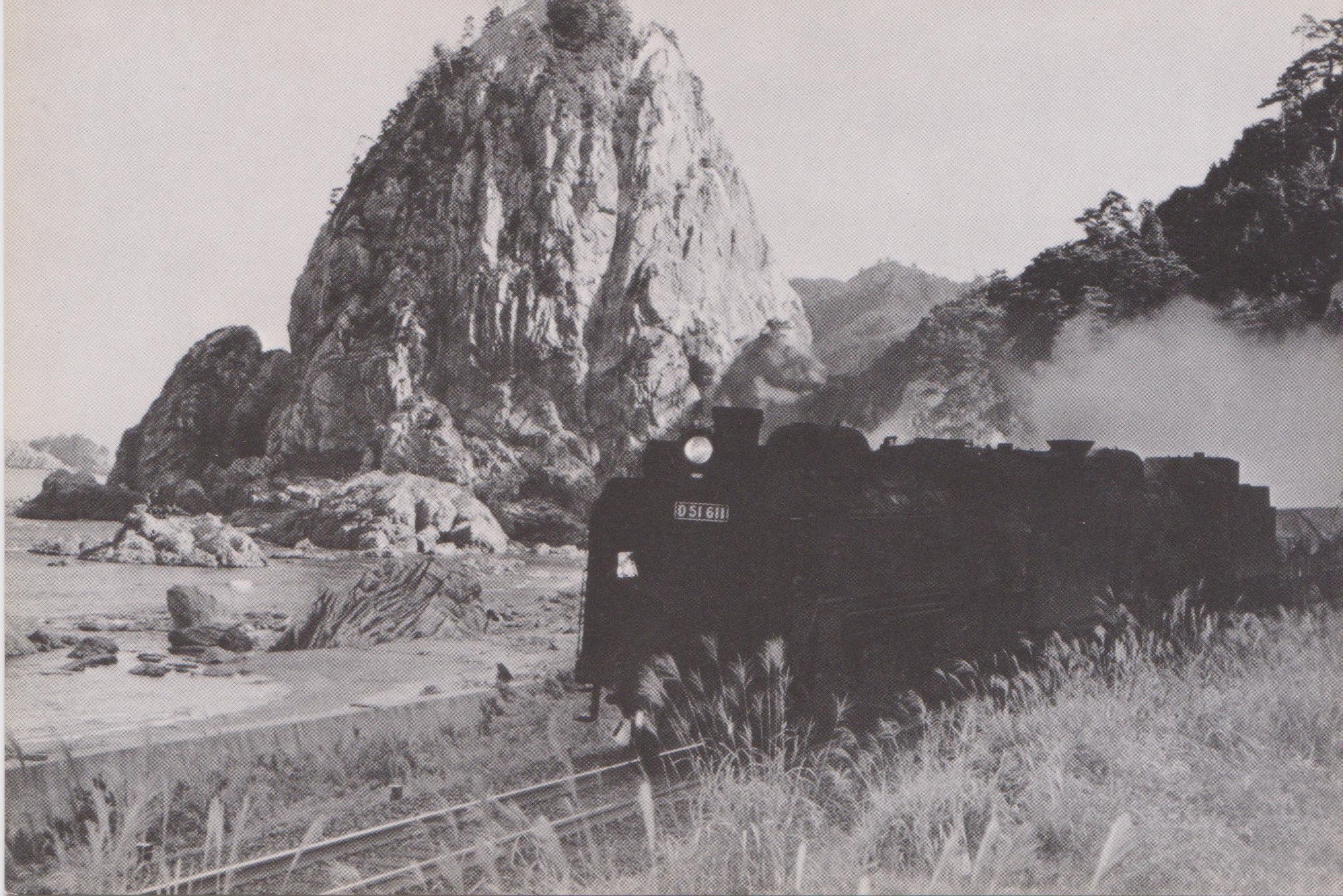
Uetsu Main Line, Imagawa to Echigo-Samukawa (D51)
On clear days the beautiful coastline here even shows Sado Island. On the Uetsu Main Line, steam locomotives remain north of Niitsu, but full electrification is planned for 1971.
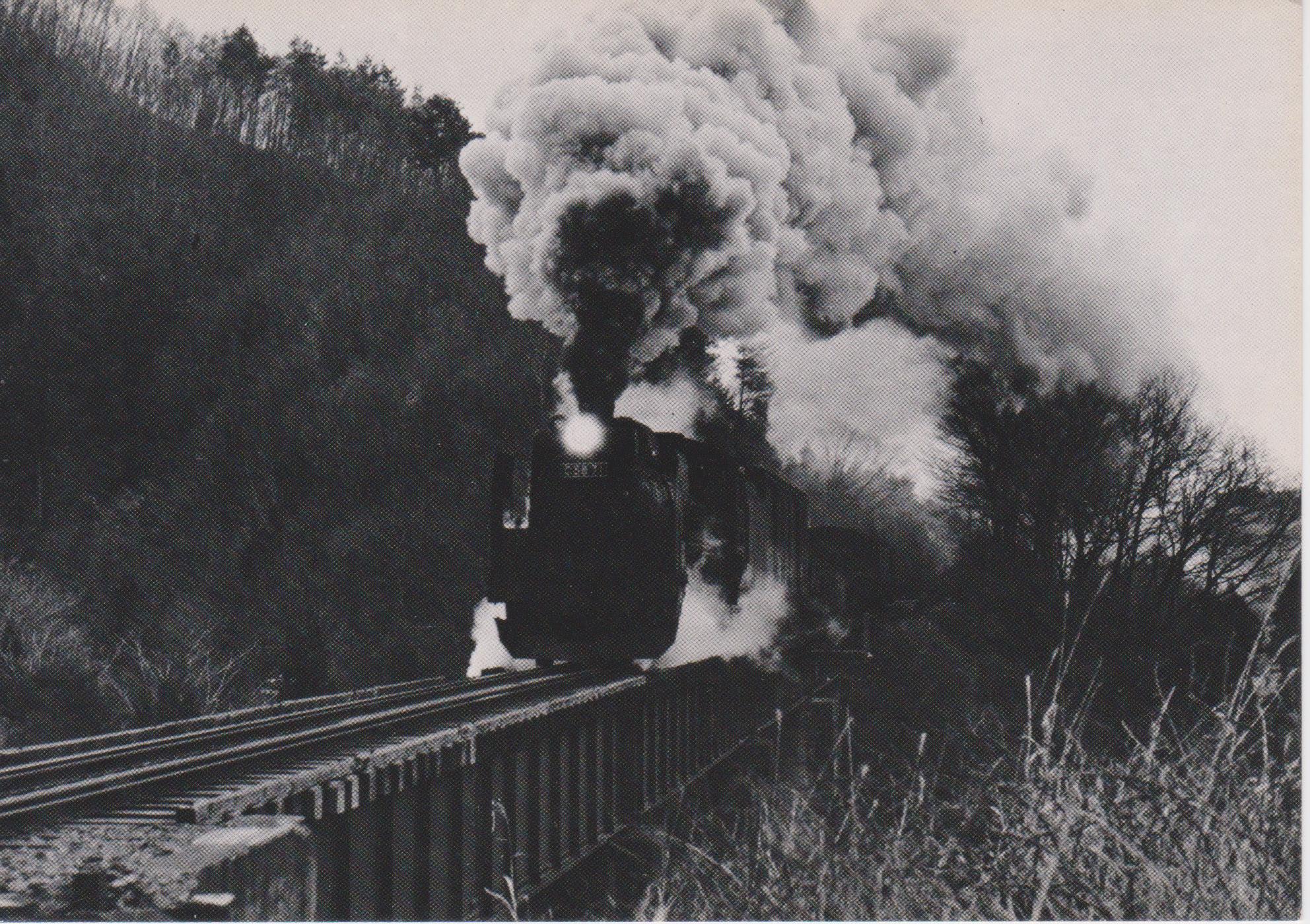
Ofunato Line, Kami-Shishiori to Rikuzen-Yahagi (C58)
A steam locomotive struggling up the mountain pass at dawn on the Miyagi-Iwate border; it has now disappeared entirely from this line.
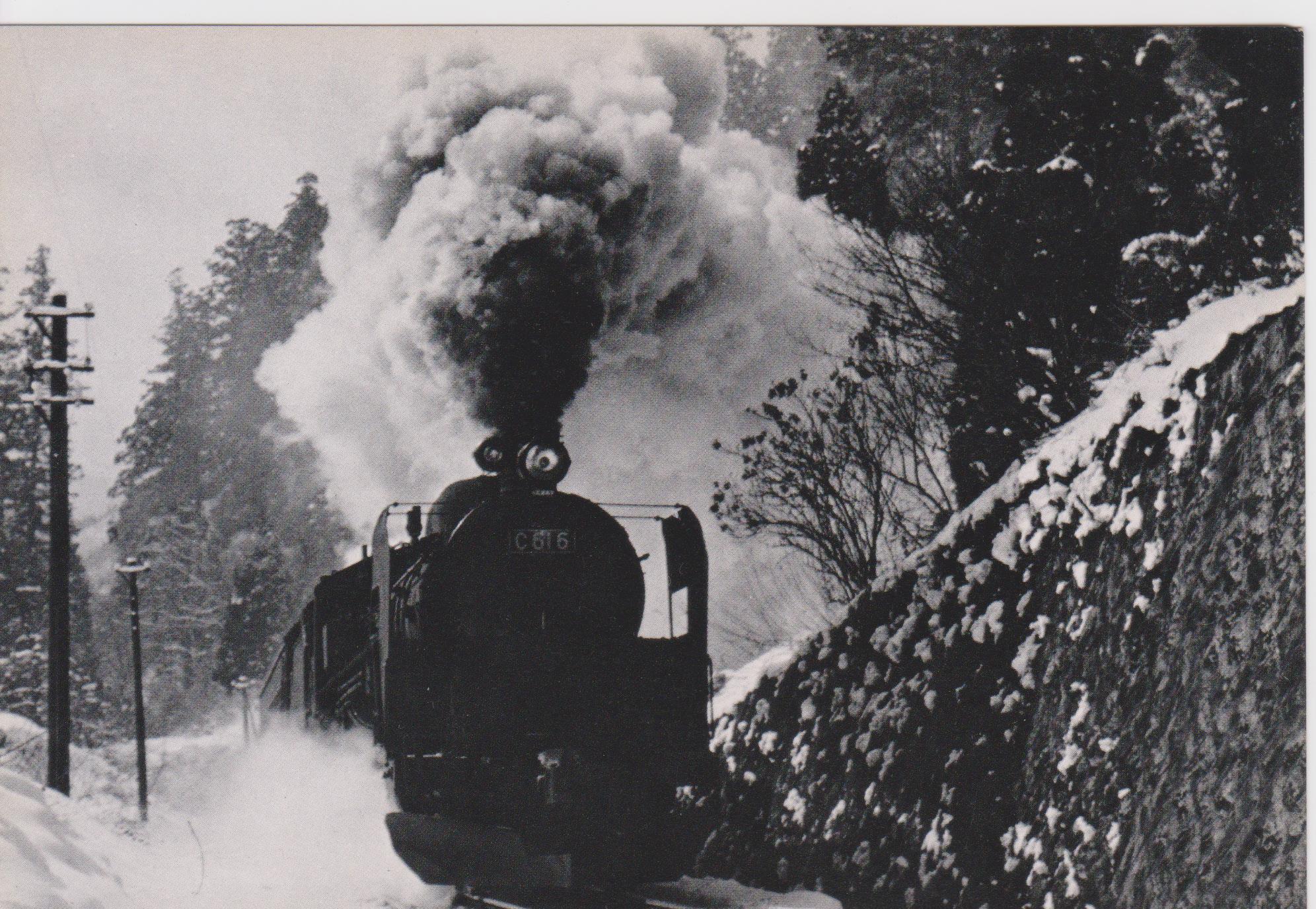
Ou Main Line, Jinba to Tsugaru-Yunosawa (C61)
A C61 crossing Yatate Pass, the last difficult section of the Ou Main Line. This type now runs only south of Kumamoto on the Kagoshima Main Line and between Aomori and Akita on the Ou Main Line.
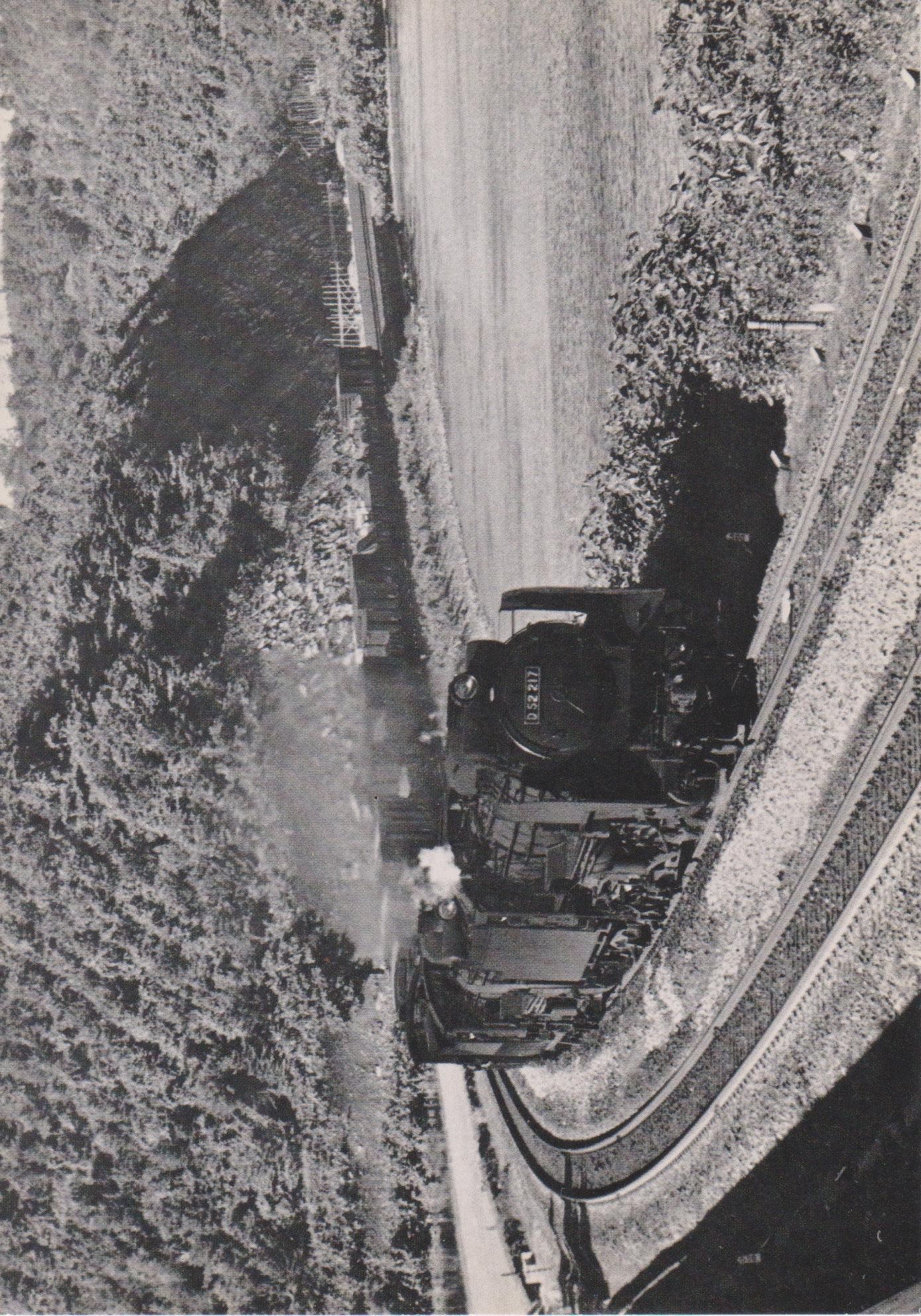
Hakodate Main Line, Niyama to Onuma (D52)
Now that the D52 has disappeared from Honshu, this type remains only on the Hakodate Main Line and part of the Muroran Main Line.
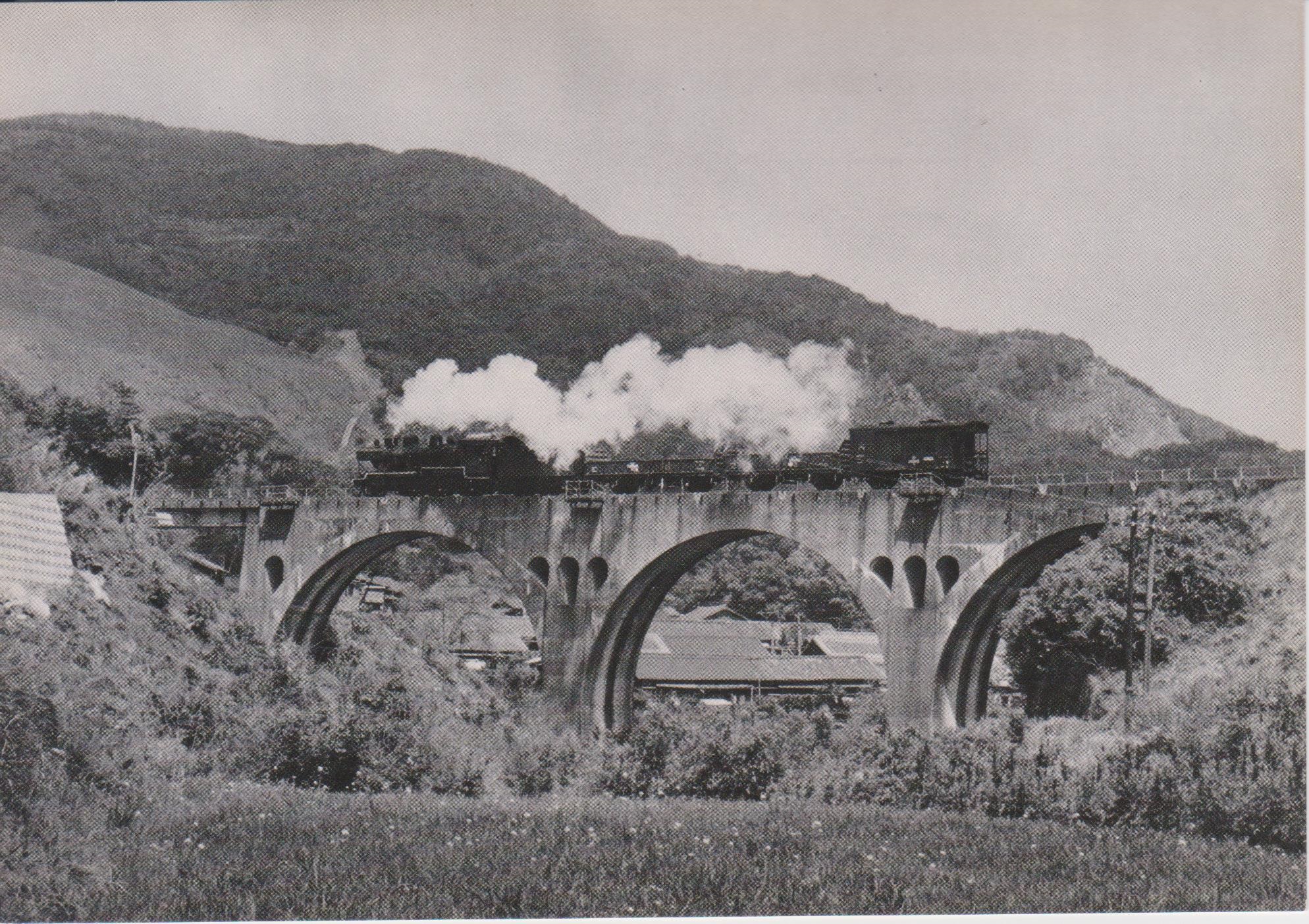
Matsuura Line, Hizen-Yoshii to Senryu (8620)
A modest local line, but still a steam paradise where C11 and the 8620 run. An 8620 with a Monji-type deflector hauls freight cars across an arch bridge.
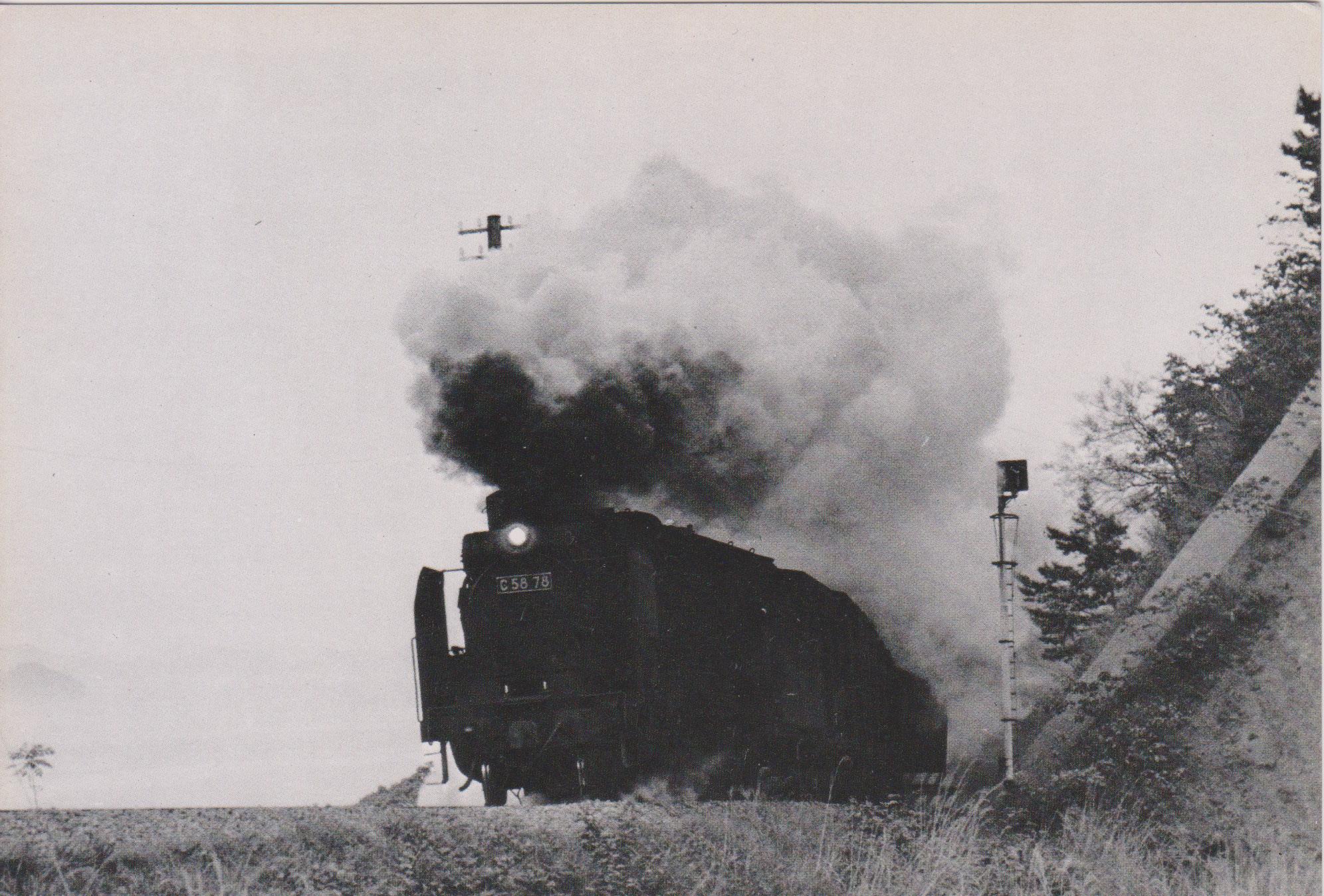
Yosan Line, Iyo-Yoshida to Takamitsu (C58)
A C58 climbing a 33/1000 grade with the Bungo Channel behind it. The Yawatahama-Uwajima section has many steep grades and was dieselized early, so steam no longer runs.
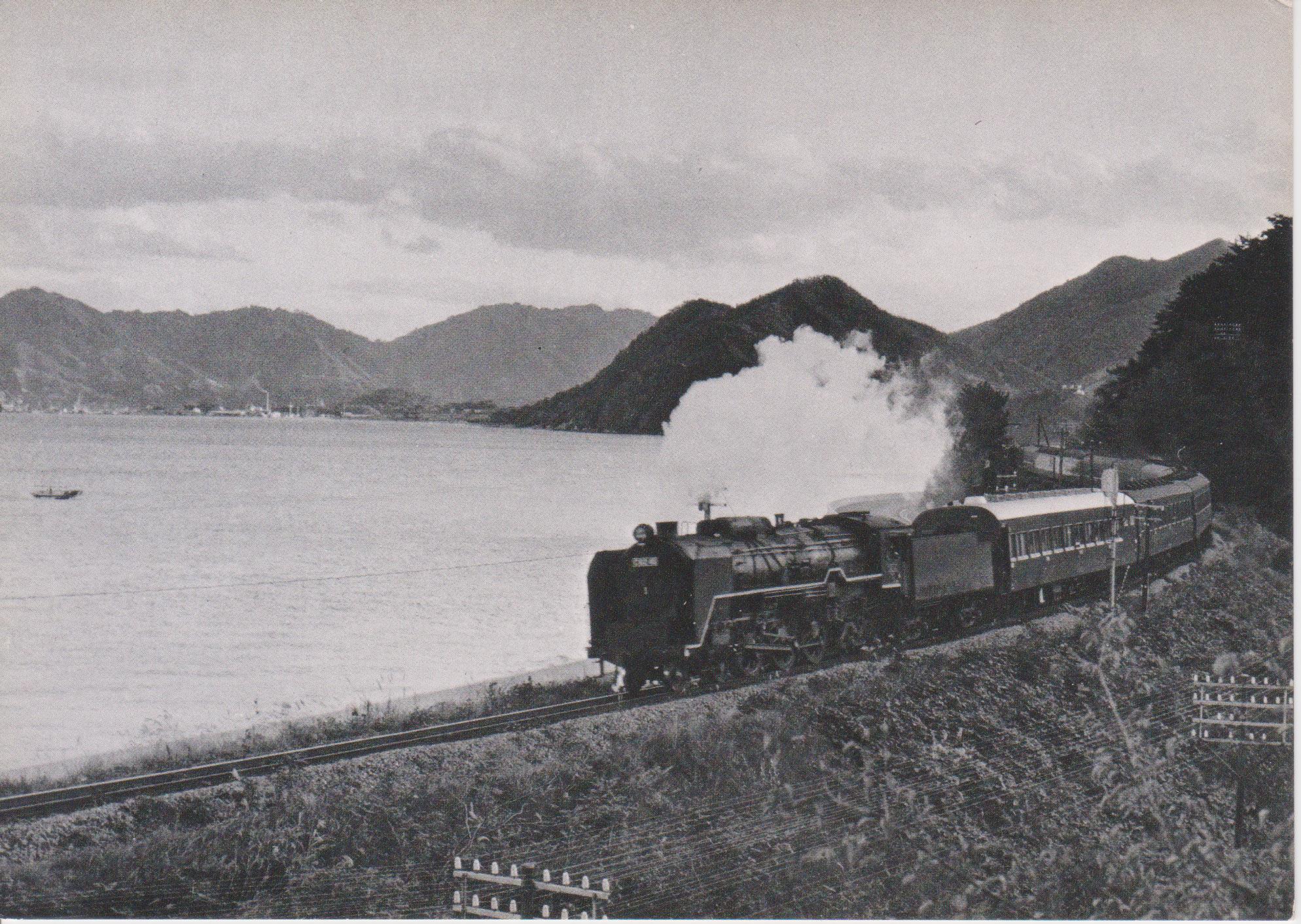
Kure Line, Sunami to Aki-Saizaki (C62)
Electrification work has already begun, but the Kure Line along the beautiful Seto Inland Sea is a favorite with fans, especially for C62 and C59.
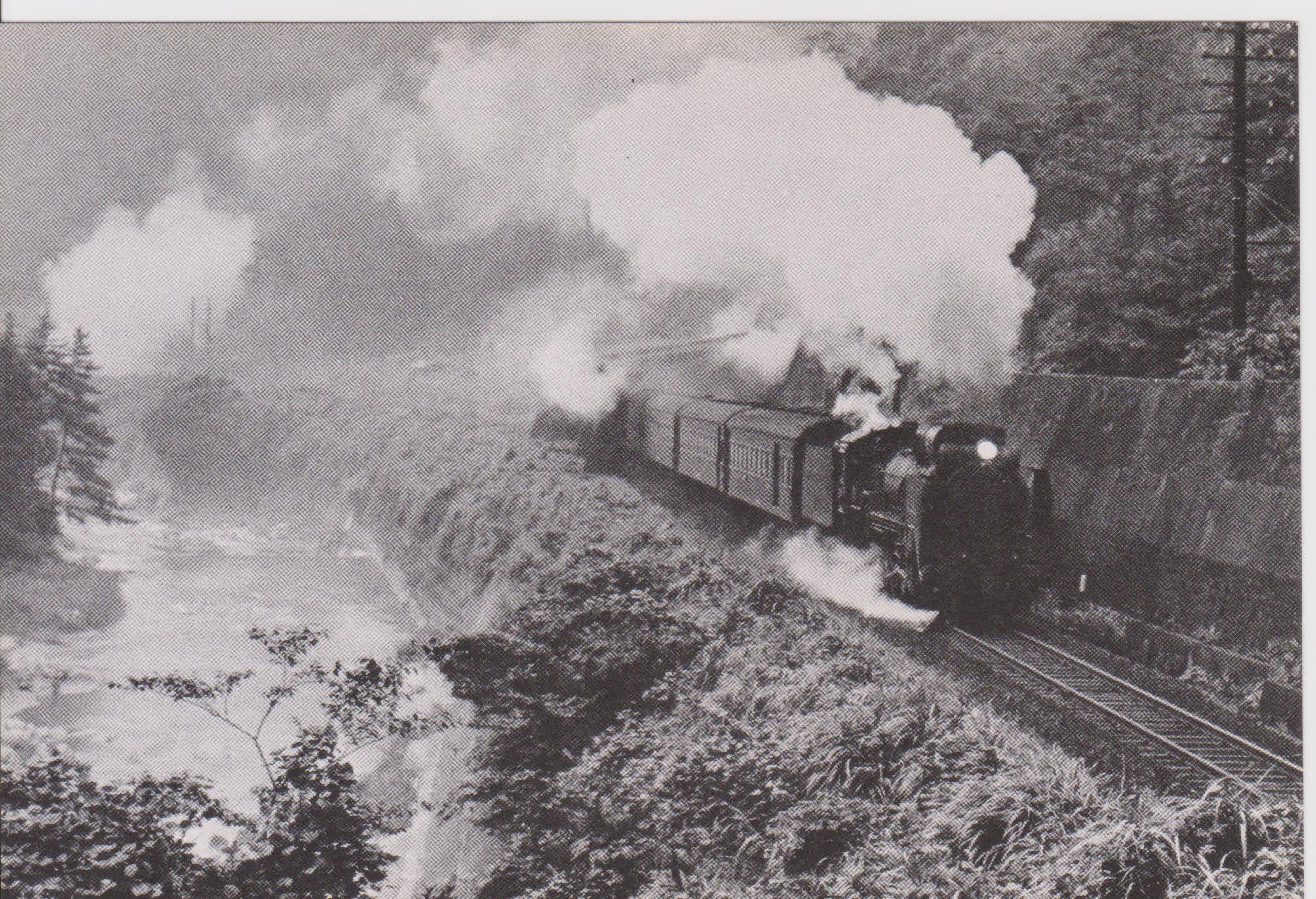
Kansai Main Line, Seki to Kabuto (D51)
A D51-hauled passenger train running along a misty valley. Steam-hauled trains crossing Suzuka, one of the main line's difficult sections, can still be seen in numbers.
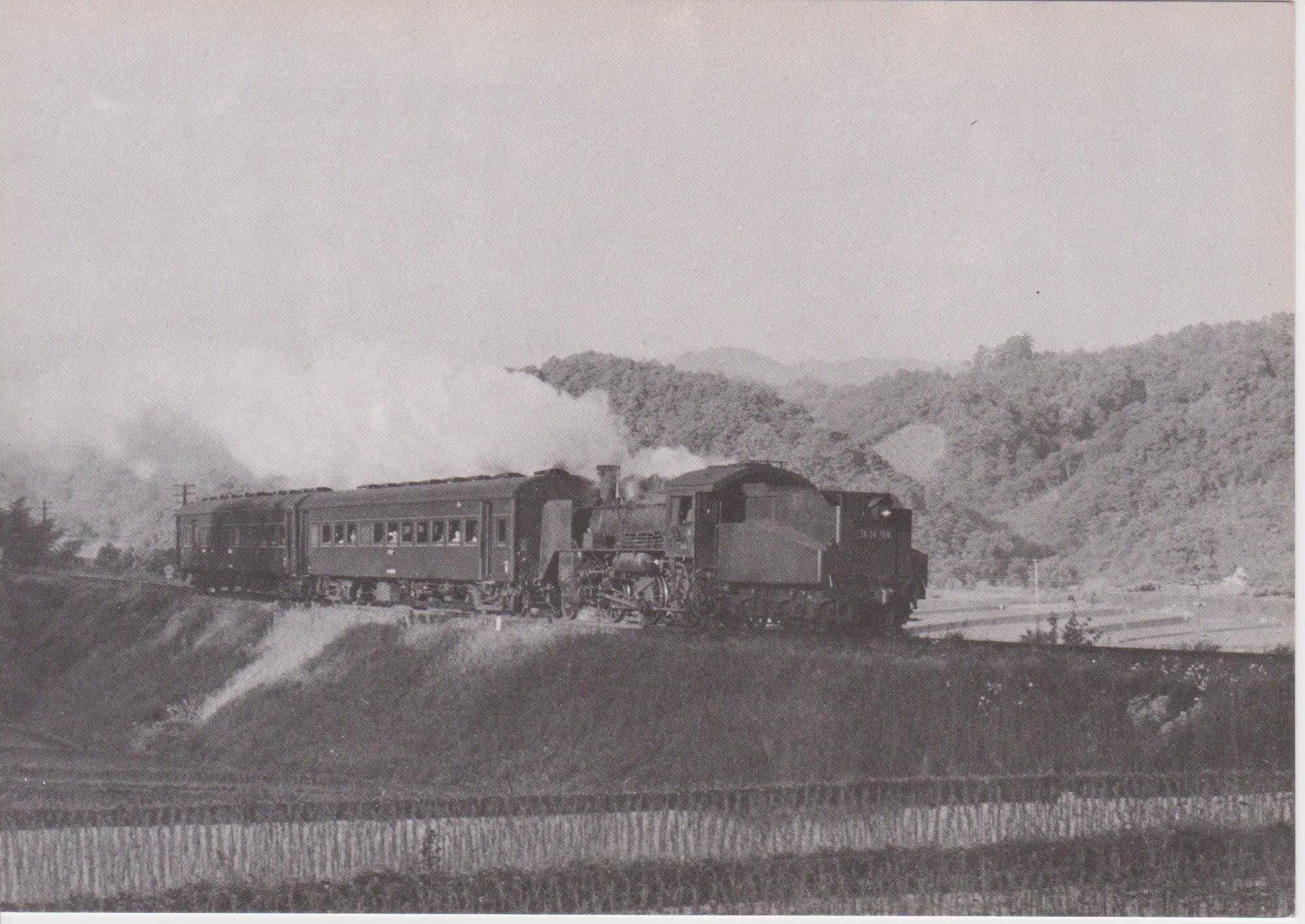
Kisuki Line, Izumo-Mitsunari to Izumo-Yashiro (C56)
A commuter train running through Izumo in the morning sun. Steam-hauled passenger trains have all disappeared.
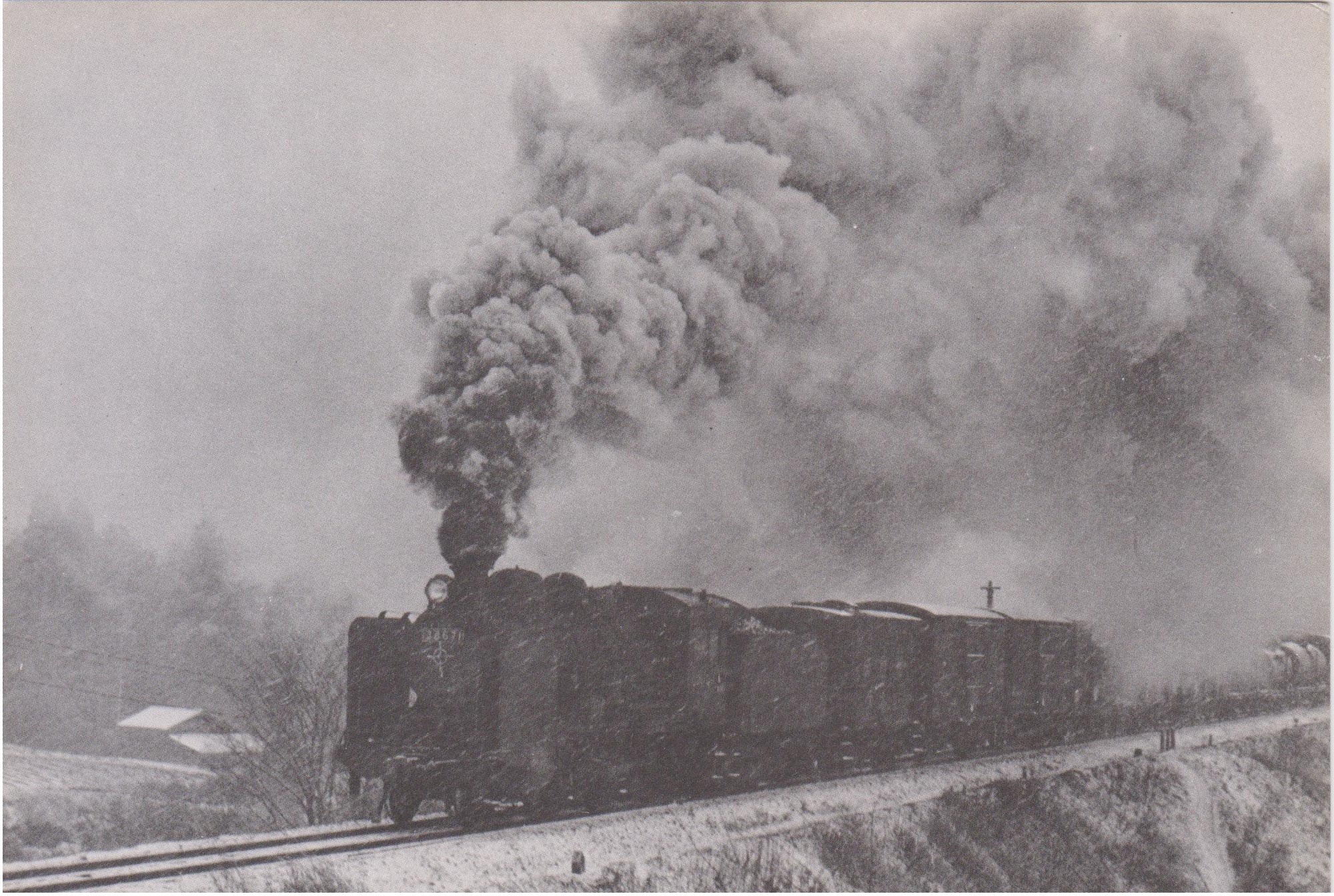
Sobu Main Line, Minami-Shisui to Enokido (8620)
In the Chiba area, successive dieselization removed many C57s and C58s, but the Taisho-born 8620 still hauls heavy loads through snowstorms.
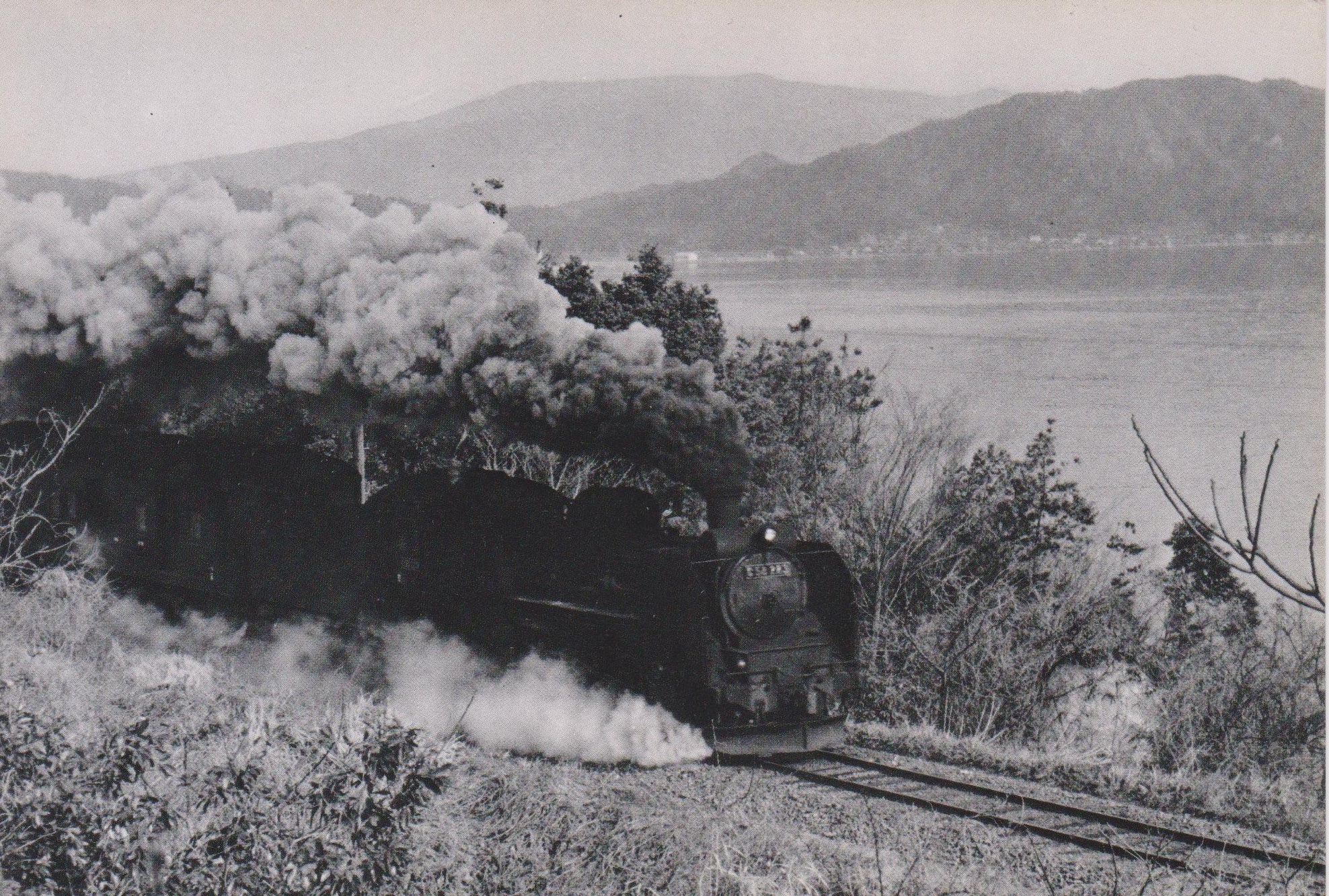
Miyazu Line, Tango-Yura to Kurita (C58)
This line runs near the scenic Amanohashidate, and the view in this section is especially spectacular. Besides the C58, freight trains hauled by the 9600 also remain.
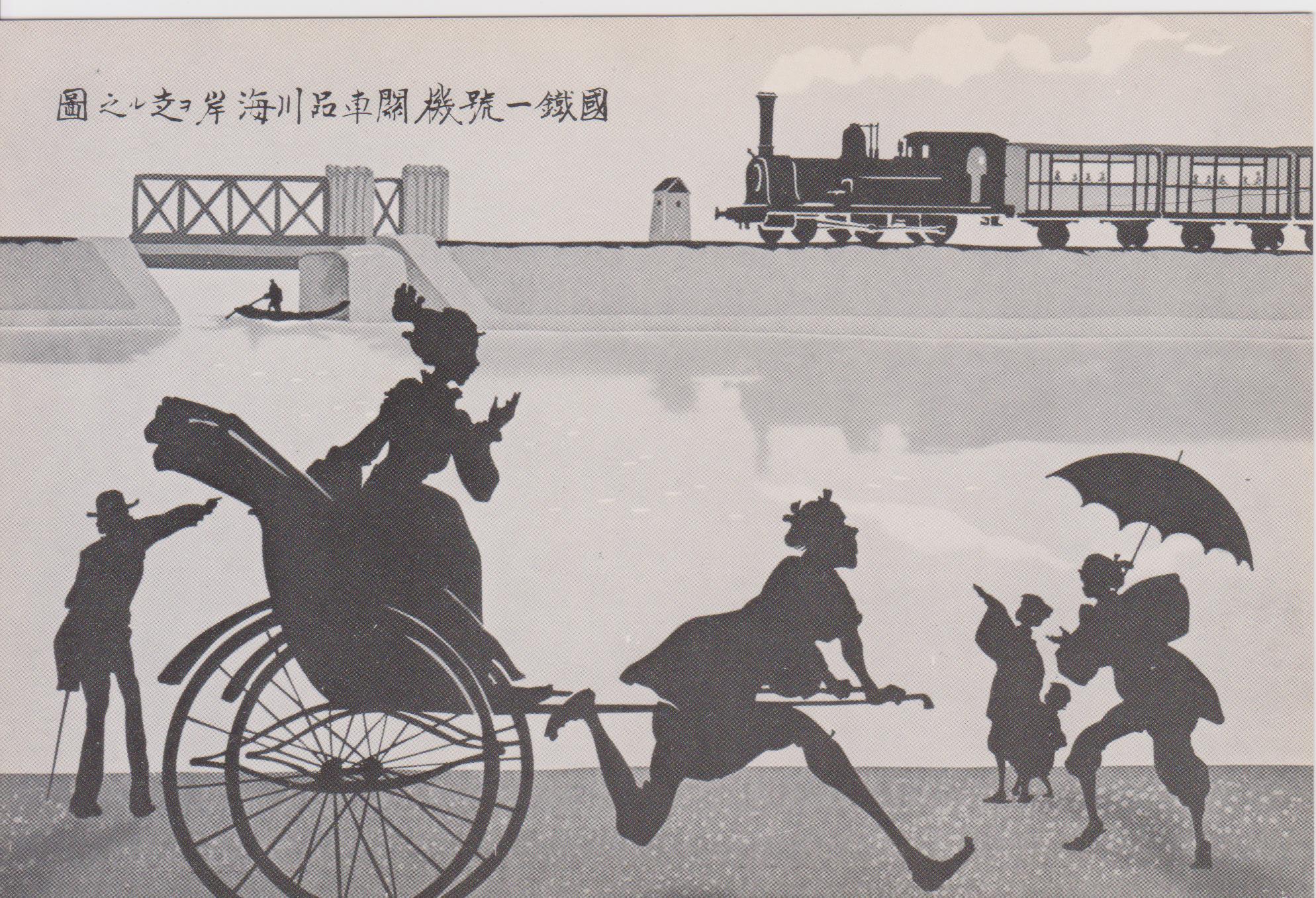
Shadow Picture: Steam Locomotive, composed by Kakashi-za and Yasutaka Fuji
The Japan National Railways No. 1 locomotive running along Shinagawa Beach.
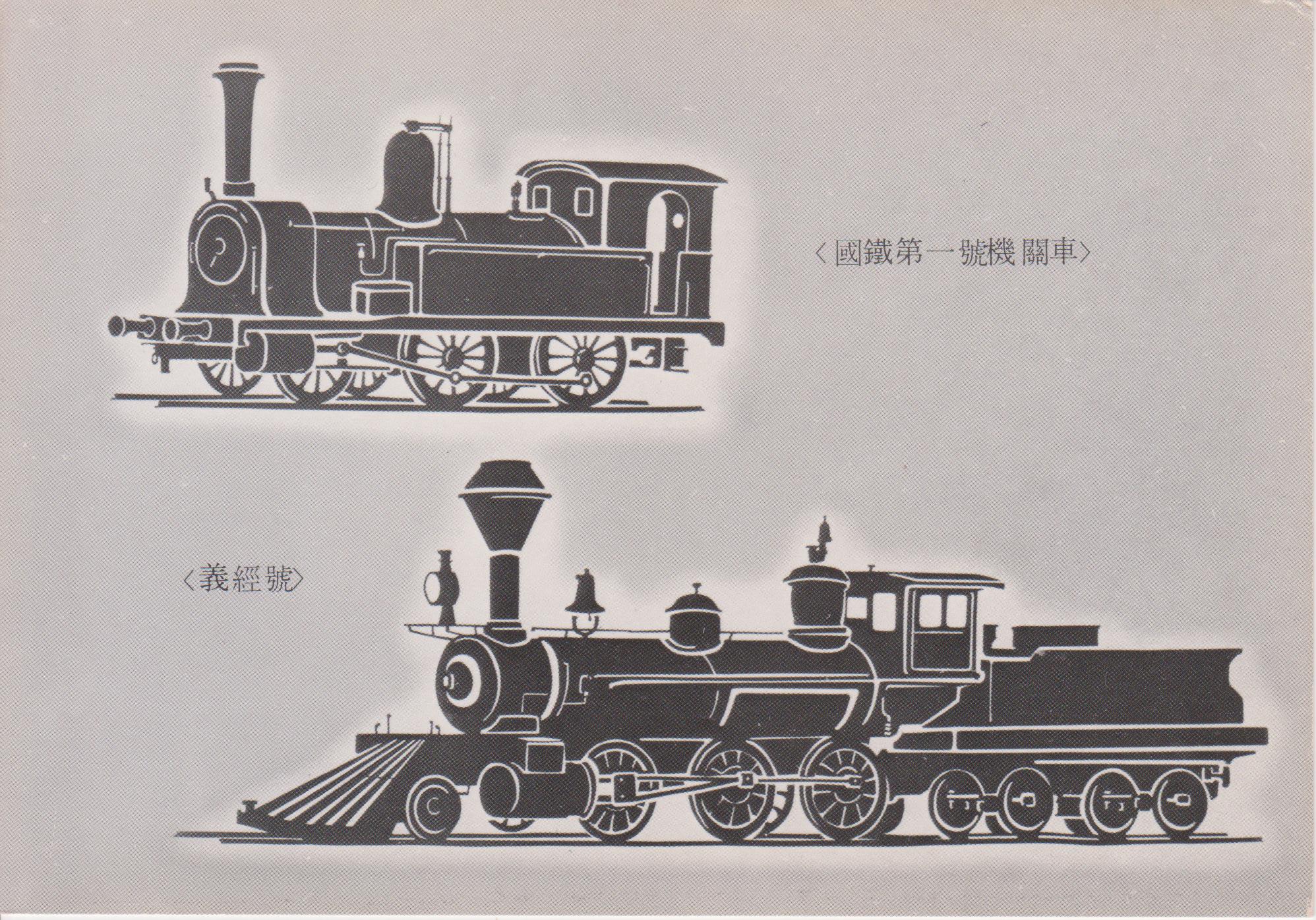
Shadow Picture: Steam Locomotive, composed by Kakashi-za and Yasutaka Fuji
Japan's first railway locomotive. On October 14, 1872 (Meiji 5), a 29 km railway was laid from Shimbashi to Yokohama, and British-built tank locomotives ran on it. The Yoshitsune was bought from the United States in 1880 (Meiji 13) and, together with the same type Benkei and Shizuka, was used for the opening of the Hokkaido railway.