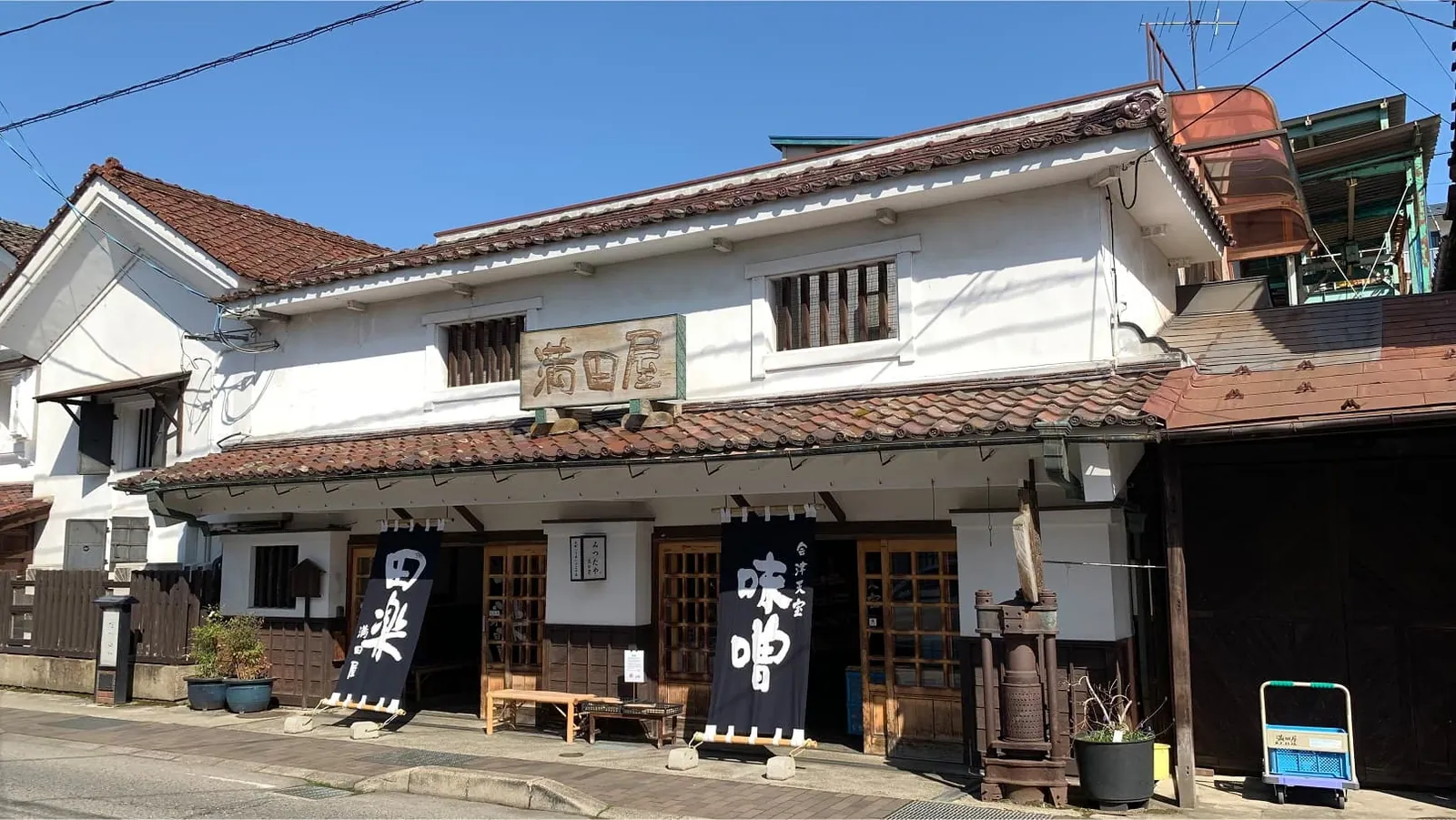
Mitsutaya (Aizu Tempo Jozo)








View details
[PR] Advertise with us: Contact
Suggest a correction
Highlights
This is a long-established miso shop. The origins of Mitsutaya go back to Tenpo 5 (1834).
Today, on this site, you can see an earthen storehouse (dozo) that survived the fires of the Boshin War.
In addition, a miso storehouse built in Meiji 2 (1869) and shop buildings renovated after the start of the Showa era stand side by side.
The interior of the shop has been converted from a miso storehouse, and visitors can taste "miso dengaku," a local cuisine of Aizu. The miso dengaku is made with konnyaku, fried tofu, freshly pounded mochi, shingoro mochi, herring, taro, and other ingredients. Each skewer is brushed with a secret miso sauce (with yuzu, jūnen (sesame), sansho pepper, and more) and grilled one by one over charcoal in an irori hearth.
Mitsutaya also sells Aizu specialties such as miso, edible oil, miso pickles, and Aizu Takada ume (plum).
Mitsutaya began in Tenpo 5 (1834), when its first head, Mitsuda Zennai, started selling salt and producing and retailing miso. Since then, the shop has devoted its efforts to miso production. In Meiji 4 (1871), it received permission from the Production Bureau to manufacture and sell miso on a full scale. It later also produced and sold soy sauce, pickles, rapeseed oil, and sesame oil. Today, the business is divided into Sanzen, a company specializing in miso, and Mitsutaya Co., Ltd., which handles oil pressing and handmade pickles.
In 1972, the shop expanded and renovated its building to open a miso dengaku corner, and it has also worked to attract visitors. It also began producing and selling Aizu Takada ume, contributing to efforts to spread the flavors of Aizu.
The miso dengaku served at Mitsutaya lets you enjoy the deep flavors created by long-cultivated miso-making skills and the traditional miso sauce.
Why not enjoy the famous dengaku in a building that still retains the charm of earlier times?
- Regular holiday
- Please check the official site for the latest holiday schedule.
Wednesday (View each shop's regular holidays) - Accessibility (Details)
- Table seatingAssistance available (check with shop)Service dogs welcome
- Cashless payment (Details)
- PayPay
- Official site
- http://www.mitsutaya.jp/