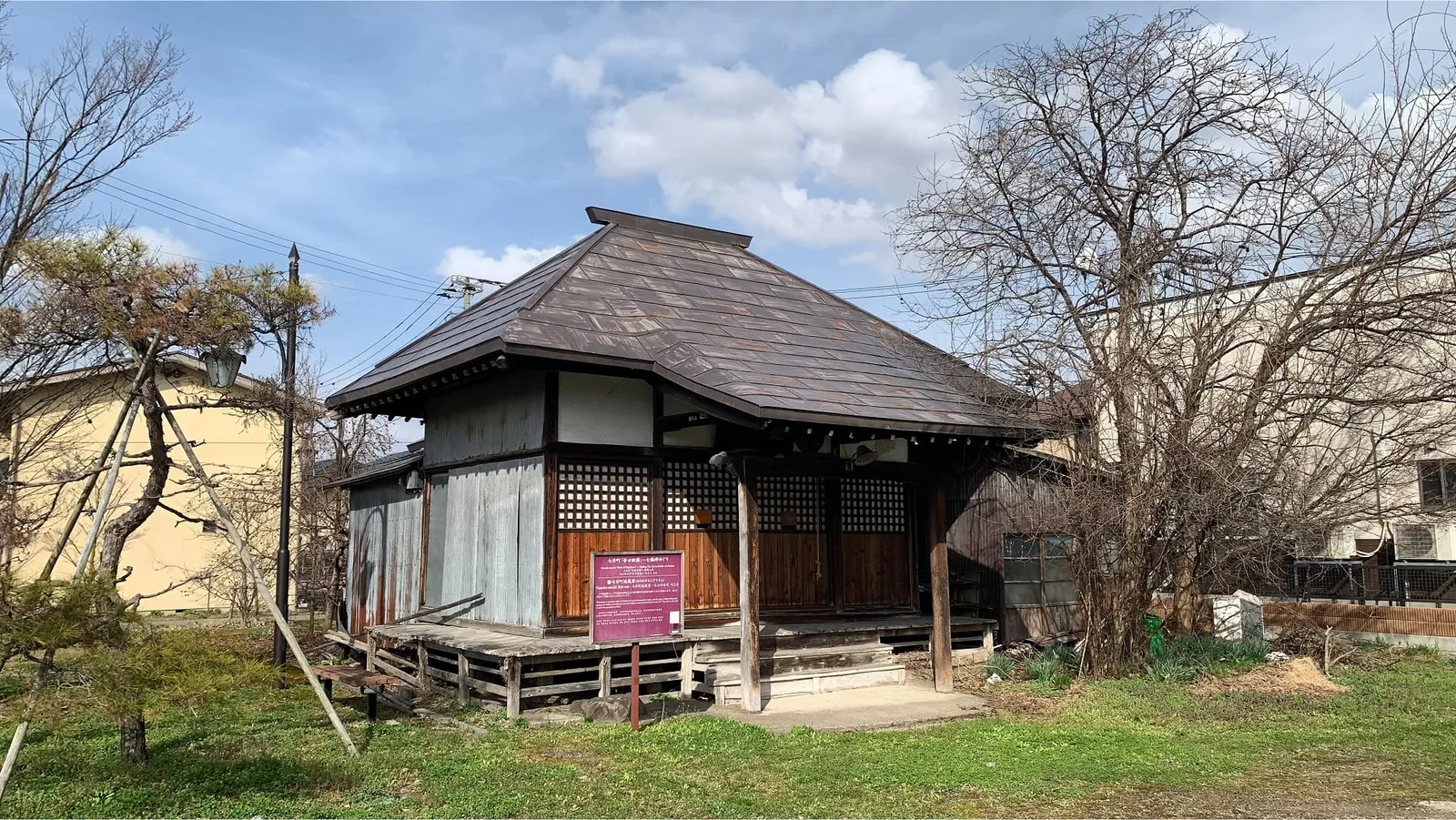
Nanukamachi Jizoson









View details
[PR] Advertise with us: Contact
Suggest a correction
Highlights
Once, a large temple called "Kichijo-in" stood here.
Kichijo-in was founded as a branch temple (matsuji) of Jizai-in, a Shingon sect temple that still stands today in Aizuwakamatsu (2-18 Aioi-cho, Aizuwakamatsu, Fukushima Prefecture).
Kichijo-in was founded in Keicho 6 (1601) by Koshin, a monk from Echigo, and its mountain name was "Chomei-san."
The principal image of Kichijo-in was Jizo Bodhisattva, known as the Kodomo-mamori Jizo-son, a Jizo who prays for the healthy growth of children.
The record of the temple also remains in the "Shinpen Aizu Fudoki" (Aizu Fudoki, New Edition), compiled between Kyowa 3 (1803) and Bunka 6 (1809). The "Aizu Fudoki" was completed in Kanbun 6 (1666) under the name of Hoshina Masayuki, lord of the Aizu Domain, and the "Shinpen Aizu Fudoki" was compiled as a new edition that also included information to supplement it.
"Shinpen Aizu Fudoki, Volume 19, Wakamatsu 5: Shitamachi" describes Kichijo-in and the Jizo hall.
According to that record, the grounds of Kichijo-in measured 24 ken (43.6 meters) east to west and 15.5 ken (28 meters) north to south. The Jizo hall within the grounds housed a Jizo statue measuring 1 shaku 7 sun (about 64.6 cm), and it is also recorded that there was another Jizo outside, measuring 1 shaku 5 sun (about 57 cm).
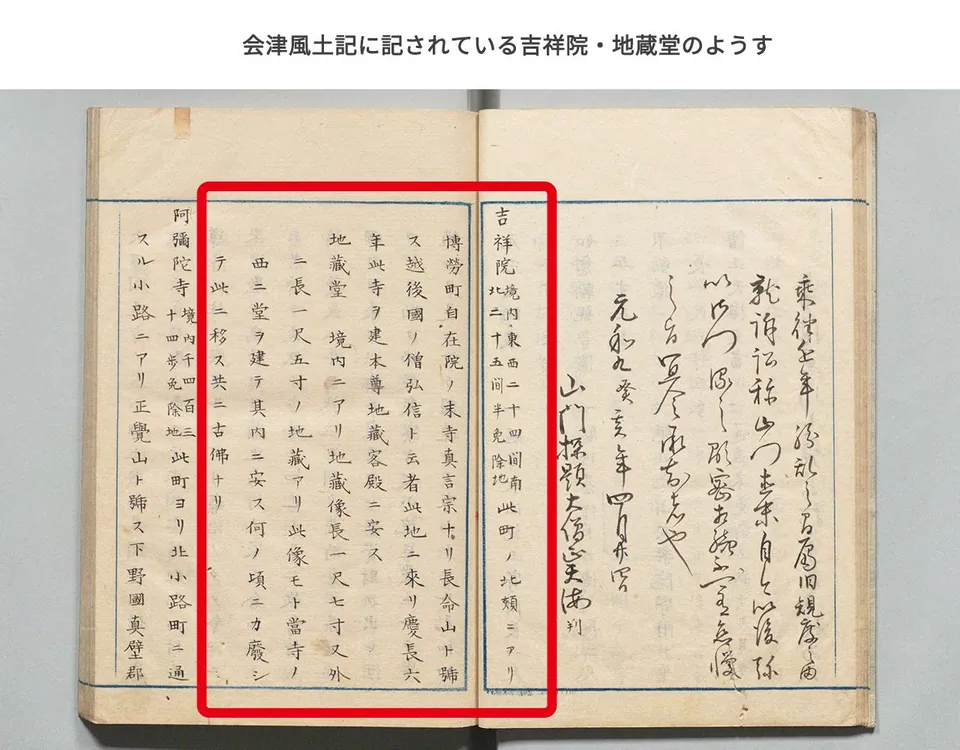 Kichijo-in
Grounds: 24 ken east to west, 15.5 ken north to south. Tax-exempt land.
Located on the north side of this town. A branch temple of Jizai-in, a Shingon sect temple in Bakuro-machi, with the mountain name Chomei-san.
A monk from Echigo Province named Koshin came to this place and built the temple in Keicho 6 (1601), enshrining the principal image, Jizo, in the guest hall.
Jizo Hall
Within the grounds is a Jizo statue of 1 shaku 7 sun. Outside there is also a Jizo 1 shaku 5 sun in length.
This statue was originally enshrined in a hall built to the west of this temple.
At some point the hall fell into disuse, and the statue was moved here.
Both are ancient images of the Buddha.
Today, the main hall of Kichijo-in no longer remains. However, what kind of temple Kichijo-in was can be glimpsed from old pictorial maps and historic maps of the time.
For example, the "Wakamatsu Castle Town Picture Map Screen" (Fukushima Prefectural Museum collection), painted after 1851 by Osuga Kiyomitsu, a town painter, shows Kichijo-in and the Jizo that still remains near Nanukamachi-dori (Nanukamachi Street).
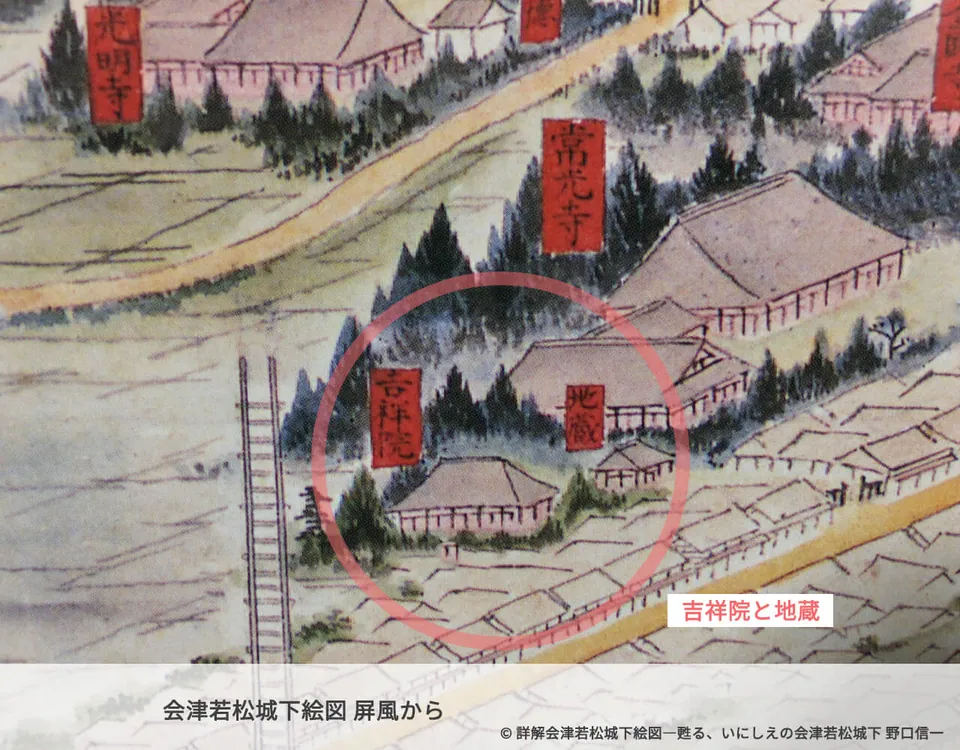 Kichijo-in is depicted. Compared with Joko-ji Temple, which still remains, you can get a sense of the approximate size of the buildings. The Jizo hall that still remains can also be seen.
Also, the "Azuma Ko Akindo Kagami" (Azuma Ko Merchants' Guide), published in Ansei 2 (1855), depicts the castle town of Aizuwakamatsu in a pictorial map.
The Azuma Ko Akindo Kagami is a book of useful travel information compiled and published by a guild (ko) formed by merchants of eastern Japan. It includes maps of certified inns and major castle towns.
Within it is a page titled "Map of Wakamatsu Castle Town, Aizu County, Oshu," which also marks Kichijo-in.
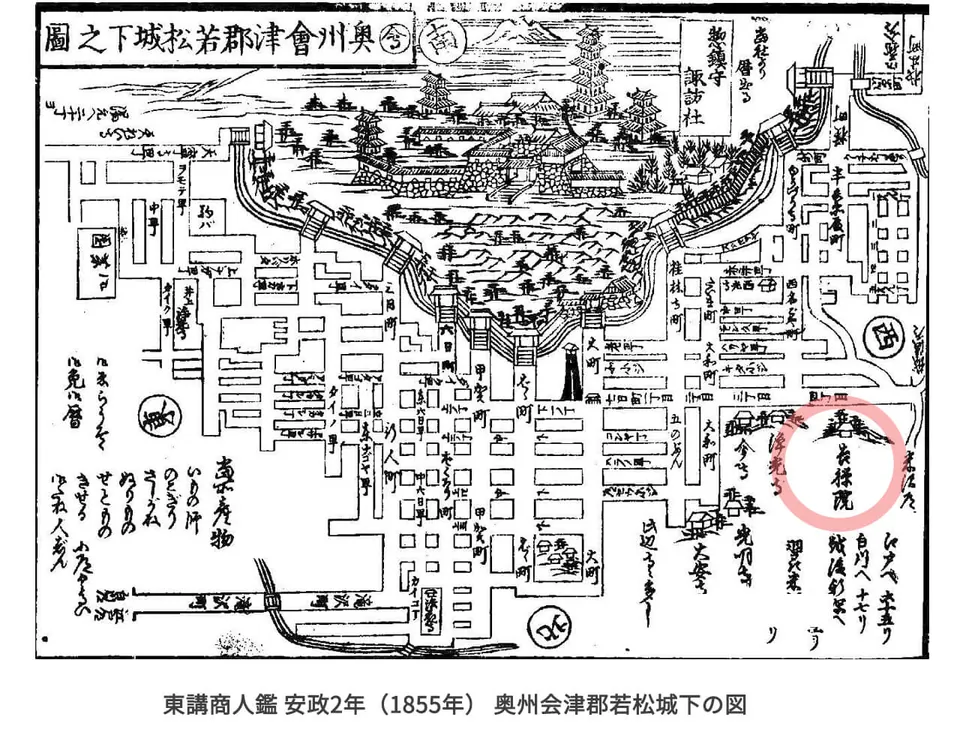 Tsuruga Castle is depicted at the center, and the street running east to west can be seen. Merchants of the time used this map to head toward their destinations.
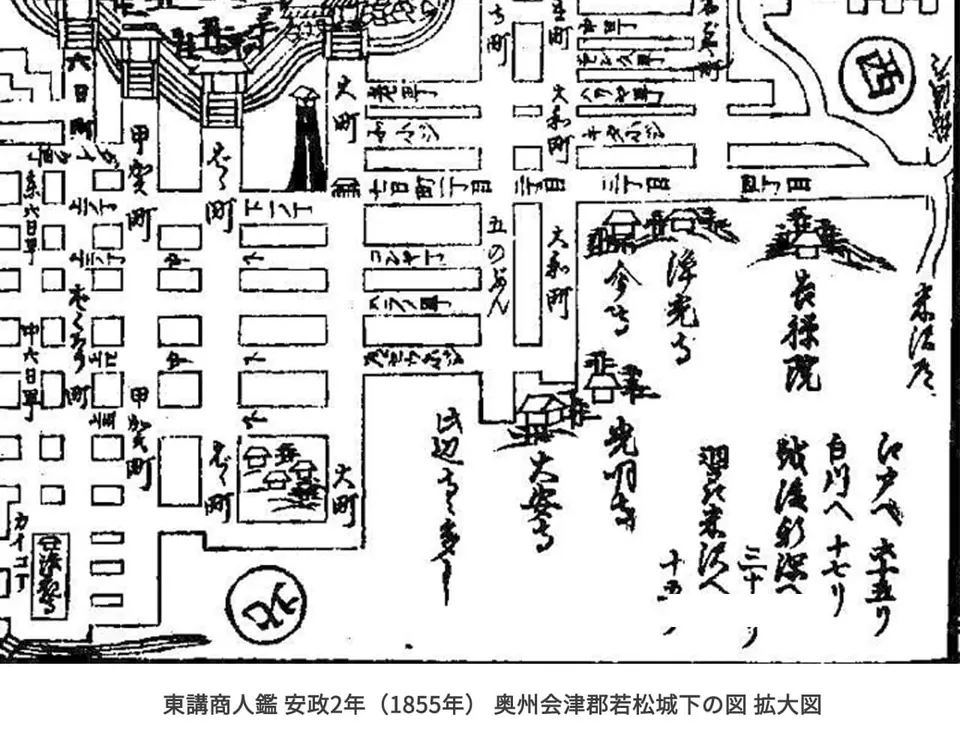 An enlargement of the area around Nanukamachi-dori. Kichijo-in is depicted alongside Joko-ji Temple. Beyond Nanukamachi-dori, the road led to the Yonezawa Kaido, and the post town was also busy.
The Jizo hall that still remains enshrines two Jizo statues, measuring 51.5 cm and 45.5 cm.
It is said that these statues were moved from a hall that once stood west of Kichijo-in.
Later, the name Kichijo-in also remains on the old map "Boshin Wakamatsu Castle Town Detailed Map" (by Kato Choshiro), published in Taisho 5 (1916).
There is also a Shingon sect marker written there, showing that it was a Shingon sect temple.
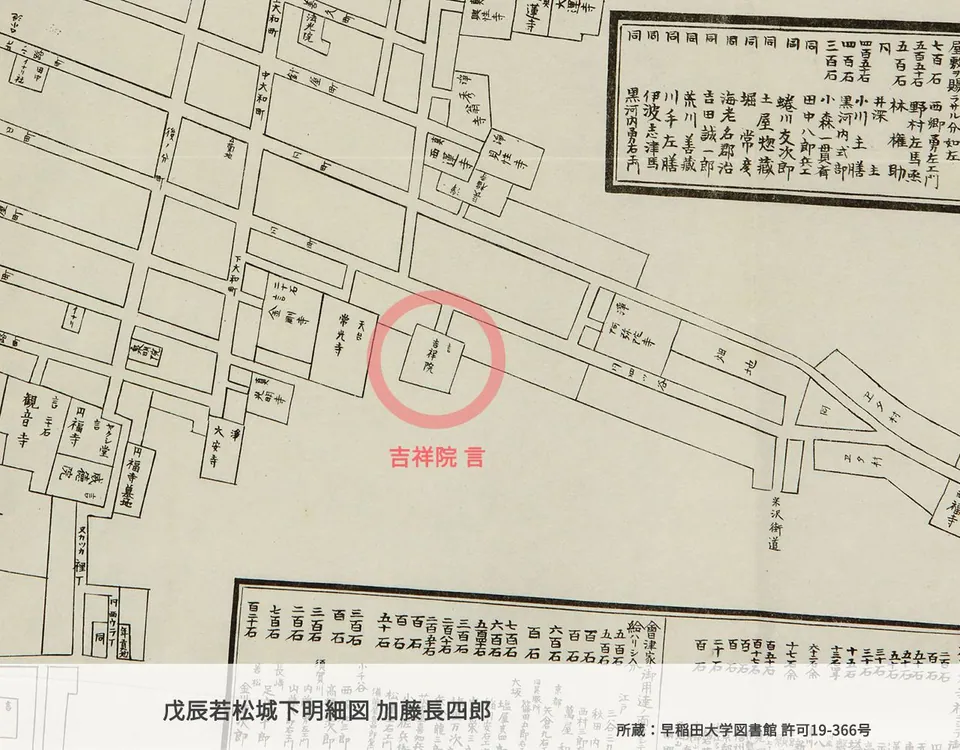 Kichijo-in on the Boshin Wakamatsu Castle Town Detailed Map.
The Jizo of Kichijo-in has watched over the passing of a long history.
When people of today stand before it, they too become part of that long history.
Within the grounds of the present Jizo shrine stands a haiku monument inscribed with Matsuo Basho's verse "Uguisu ya / yanagi no ushiro / yabu no mae" (the bush warbler's song, behind the willow, in front of the thicket).
It is not known when or by whom the monument was erected, but the verse evokes a peaceful scene: the calls of bush warblers ringing out from behind the willow and in front of the thicket.
Excluding its base, the monument is about 60 cm tall, yet it has an indescribable sense of dignity and weight.
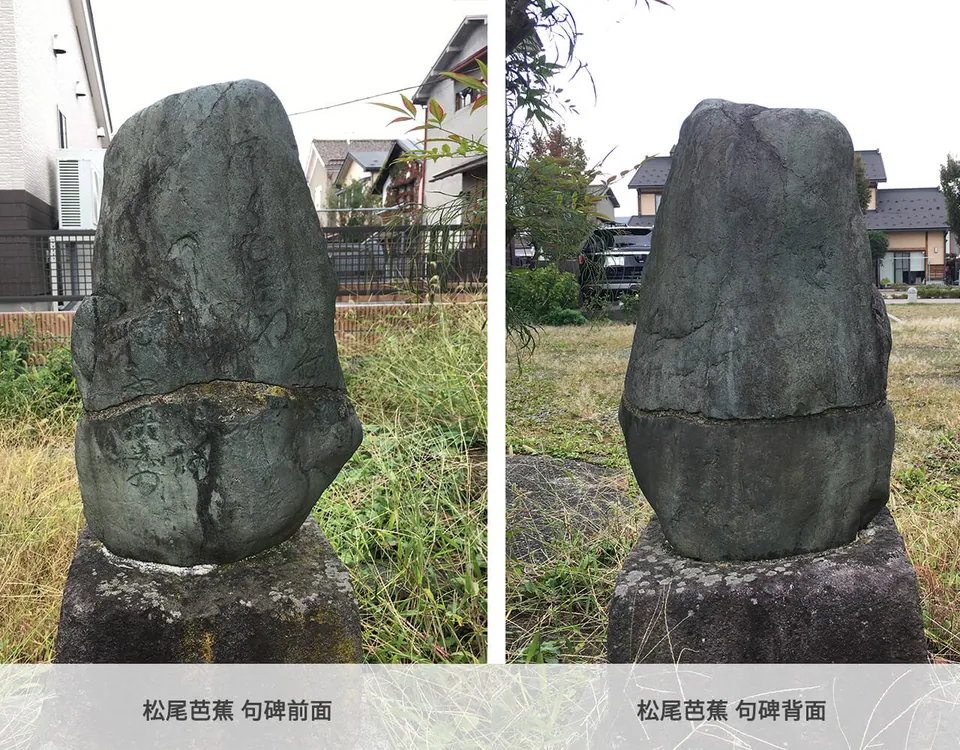 The monument is not very large. Cracks have been repaired, conveying how it has been cherished.
Several other Basho monuments can also be found in this area.
We also recommend the monuments in front of Saifuku-ji (3-34 Nishi-Nanukamachi, Aizuwakamatsu, Fukushima Prefecture) and within the grounds of Amida-ji Temple (4-20 Nanukamachi, Aizuwakamatsu, Fukushima Prefecture).
Please also take a look at the information board in front of the Jizo. This location is one of the stops on the Seven Lucky Gods pilgrimage.
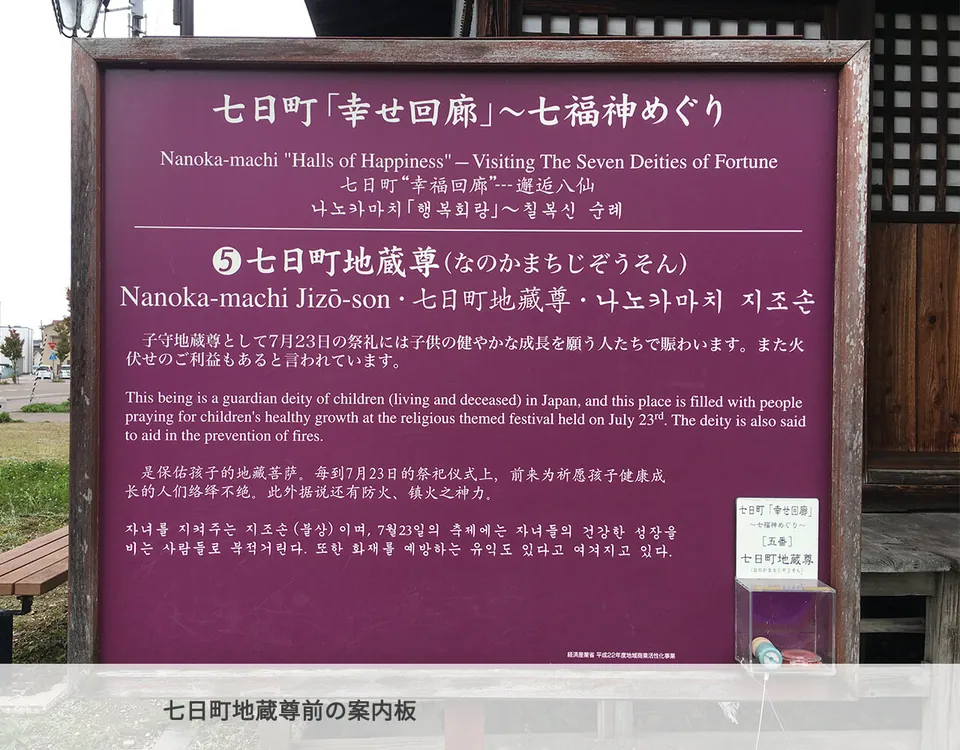 Information board and a Seven Lucky Gods pilgrimage stamp.
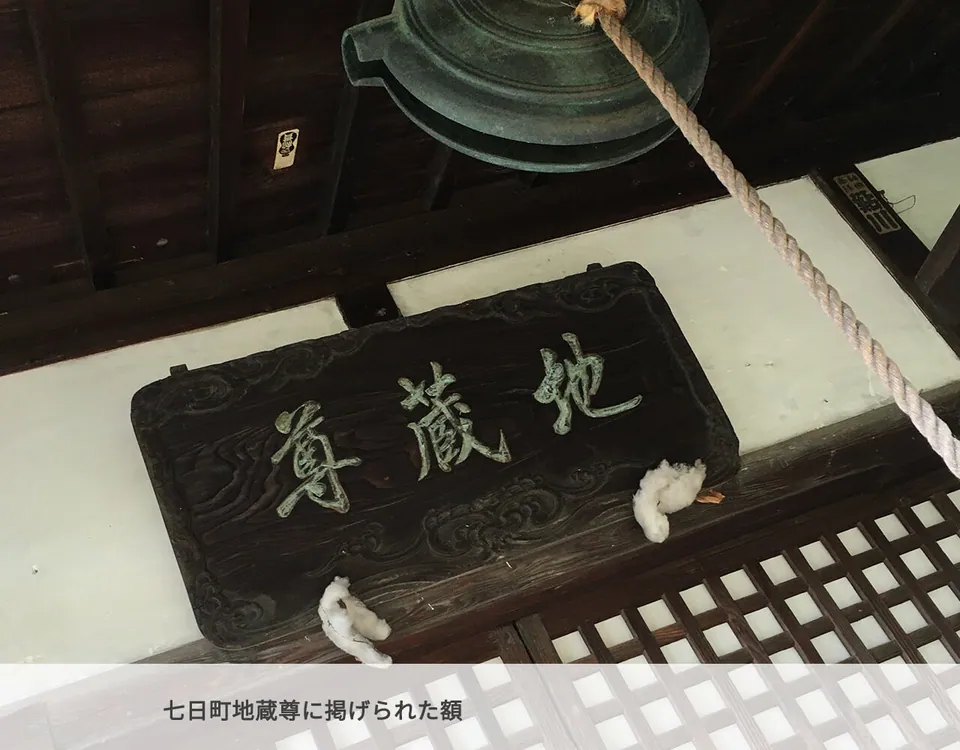 A plaque reading "Jizo-son" is hung.
Kichijo-in was founded as a branch temple (matsuji) of Jizai-in, a Shingon sect temple that still stands today in Aizuwakamatsu (2-18 Aioi-cho, Aizuwakamatsu, Fukushima Prefecture).
Kichijo-in was founded in Keicho 6 (1601) by Koshin, a monk from Echigo, and its mountain name was "Chomei-san."
The principal image of Kichijo-in was Jizo Bodhisattva, known as the Kodomo-mamori Jizo-son, a Jizo who prays for the healthy growth of children.
The record of the temple also remains in the "Shinpen Aizu Fudoki" (Aizu Fudoki, New Edition), compiled between Kyowa 3 (1803) and Bunka 6 (1809). The "Aizu Fudoki" was completed in Kanbun 6 (1666) under the name of Hoshina Masayuki, lord of the Aizu Domain, and the "Shinpen Aizu Fudoki" was compiled as a new edition that also included information to supplement it.
"Shinpen Aizu Fudoki, Volume 19, Wakamatsu 5: Shitamachi" describes Kichijo-in and the Jizo hall.
According to that record, the grounds of Kichijo-in measured 24 ken (43.6 meters) east to west and 15.5 ken (28 meters) north to south. The Jizo hall within the grounds housed a Jizo statue measuring 1 shaku 7 sun (about 64.6 cm), and it is also recorded that there was another Jizo outside, measuring 1 shaku 5 sun (about 57 cm).
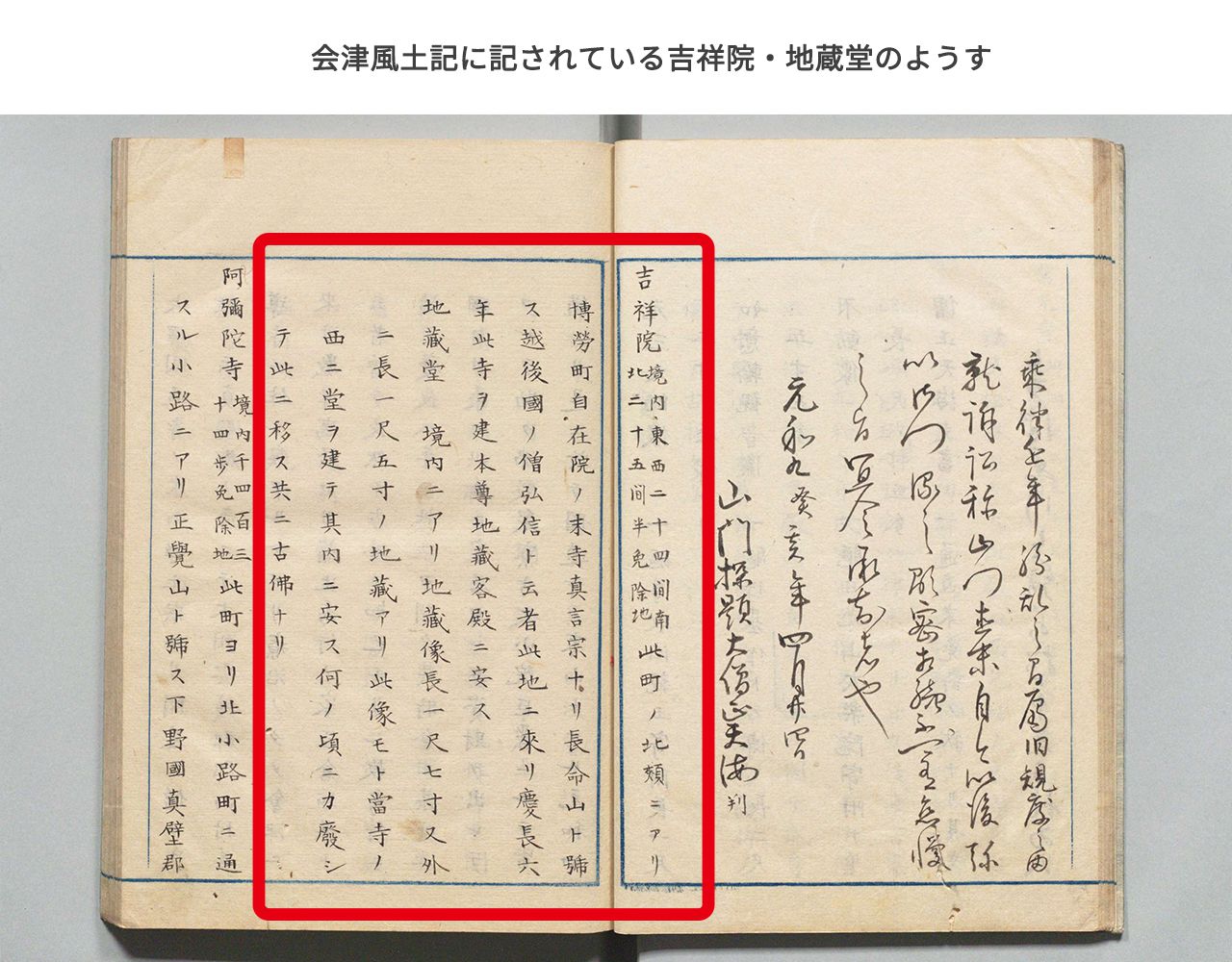 Kichijo-in
Grounds: 24 ken east to west, 15.5 ken north to south. Tax-exempt land.
Located on the north side of this town. A branch temple of Jizai-in, a Shingon sect temple in Bakuro-machi, with the mountain name Chomei-san.
A monk from Echigo Province named Koshin came to this place and built the temple in Keicho 6 (1601), enshrining the principal image, Jizo, in the guest hall.
Jizo Hall
Within the grounds is a Jizo statue of 1 shaku 7 sun. Outside there is also a Jizo 1 shaku 5 sun in length.
This statue was originally enshrined in a hall built to the west of this temple.
At some point the hall fell into disuse, and the statue was moved here.
Both are ancient images of the Buddha.
Today, the main hall of Kichijo-in no longer remains. However, what kind of temple Kichijo-in was can be glimpsed from old pictorial maps and historic maps of the time.
For example, the "Wakamatsu Castle Town Picture Map Screen" (Fukushima Prefectural Museum collection), painted after 1851 by Osuga Kiyomitsu, a town painter, shows Kichijo-in and the Jizo that still remains near Nanukamachi-dori (Nanukamachi Street).
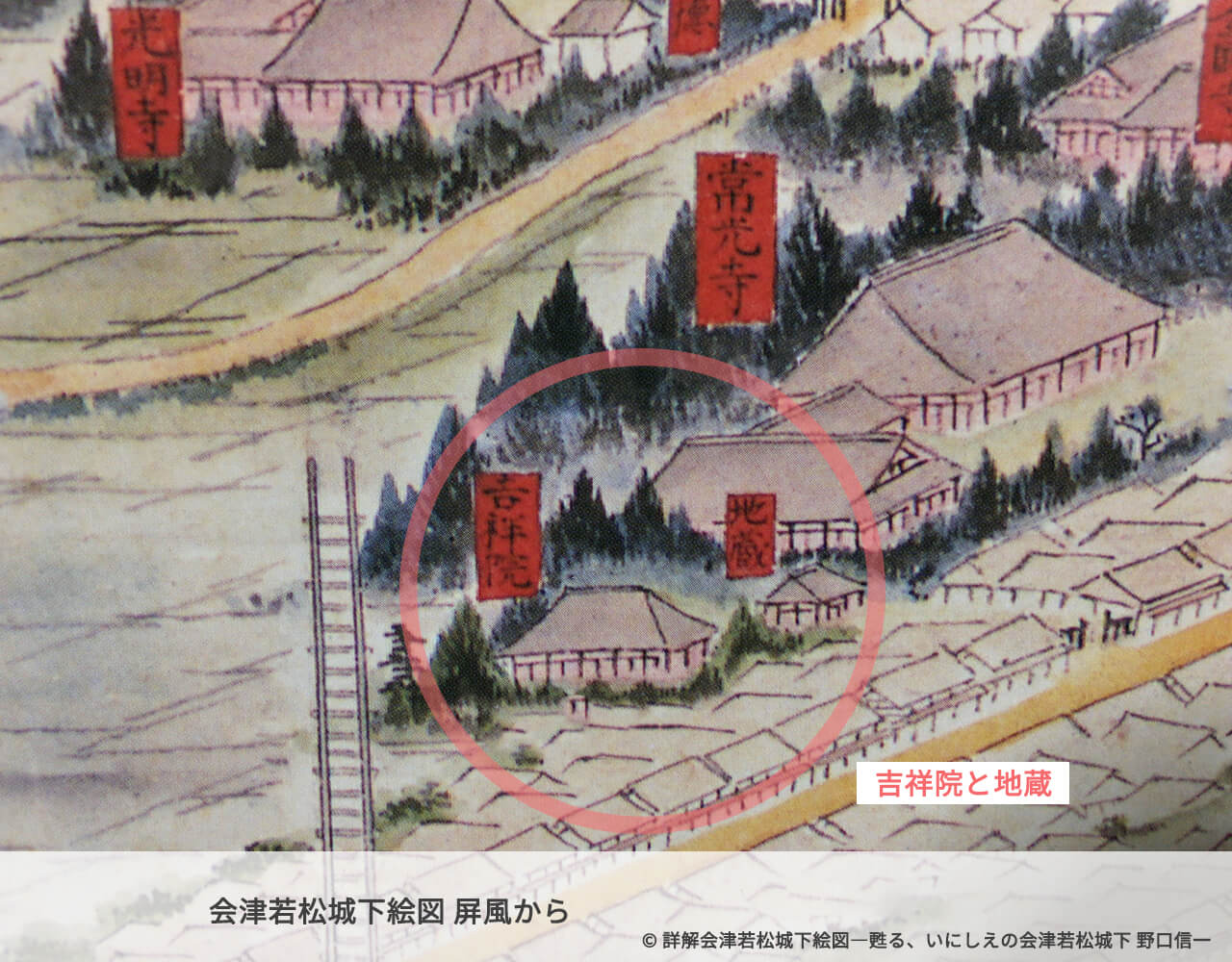 Kichijo-in is depicted. Compared with Joko-ji Temple, which still remains, you can get a sense of the approximate size of the buildings. The Jizo hall that still remains can also be seen.
Also, the "Azuma Ko Akindo Kagami" (Azuma Ko Merchants' Guide), published in Ansei 2 (1855), depicts the castle town of Aizuwakamatsu in a pictorial map.
The Azuma Ko Akindo Kagami is a book of useful travel information compiled and published by a guild (ko) formed by merchants of eastern Japan. It includes maps of certified inns and major castle towns.
Within it is a page titled "Map of Wakamatsu Castle Town, Aizu County, Oshu," which also marks Kichijo-in.
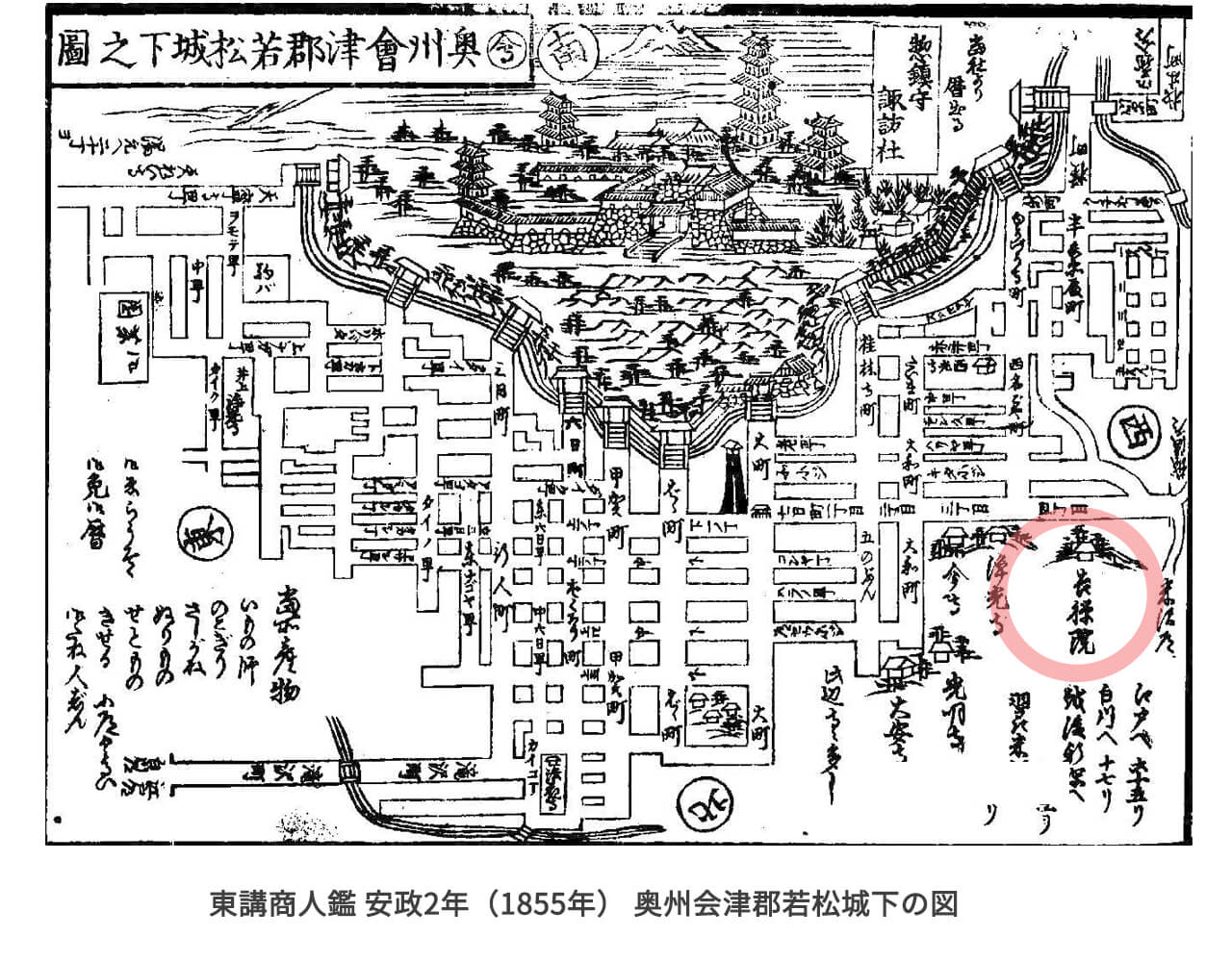 Tsuruga Castle is depicted at the center, and the street running east to west can be seen. Merchants of the time used this map to head toward their destinations.
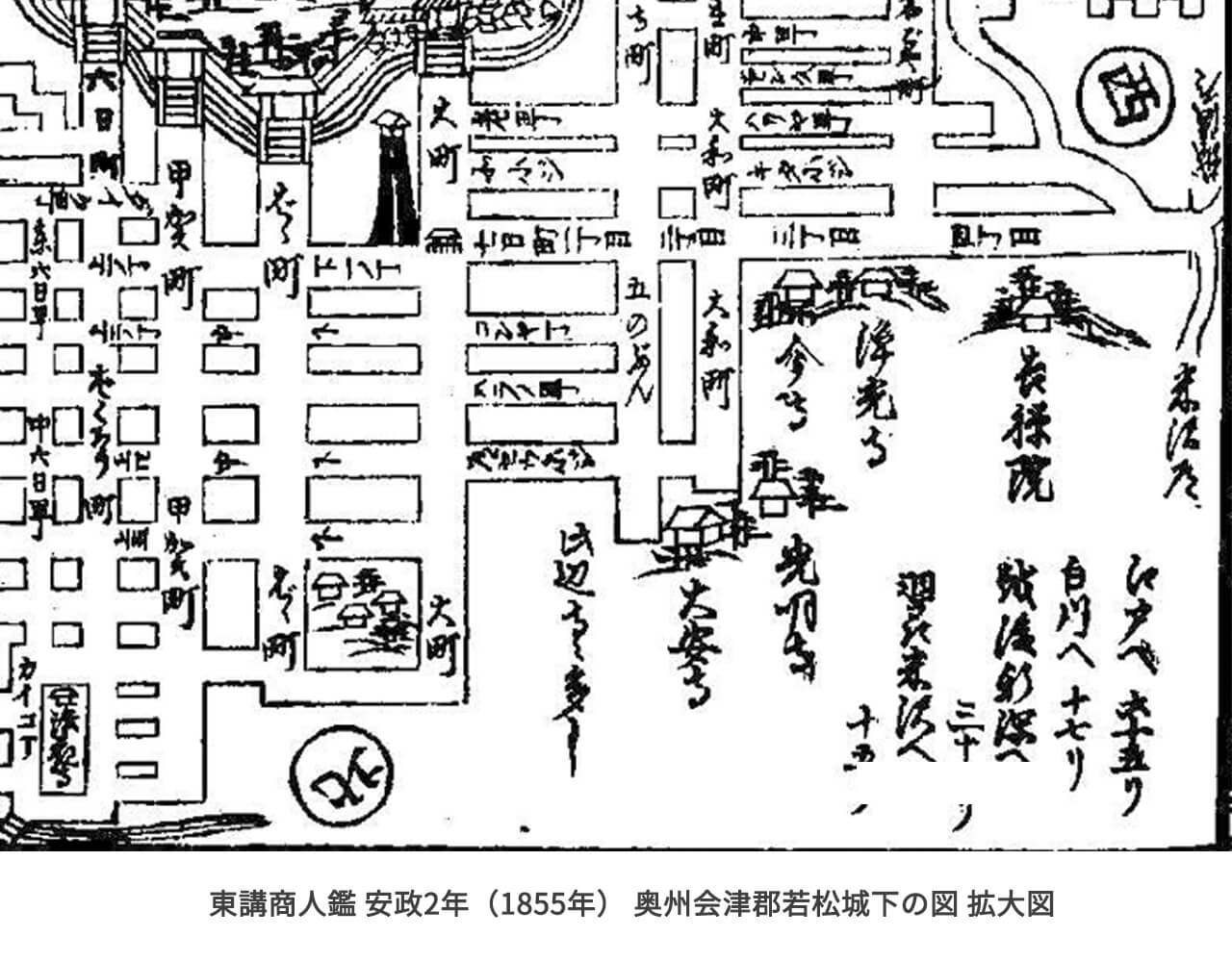 An enlargement of the area around Nanukamachi-dori. Kichijo-in is depicted alongside Joko-ji Temple. Beyond Nanukamachi-dori, the road led to the Yonezawa Kaido, and the post town was also busy.
The Jizo hall that still remains enshrines two Jizo statues, measuring 51.5 cm and 45.5 cm.
It is said that these statues were moved from a hall that once stood west of Kichijo-in.
Later, the name Kichijo-in also remains on the old map "Boshin Wakamatsu Castle Town Detailed Map" (by Kato Choshiro), published in Taisho 5 (1916).
There is also a Shingon sect marker written there, showing that it was a Shingon sect temple.
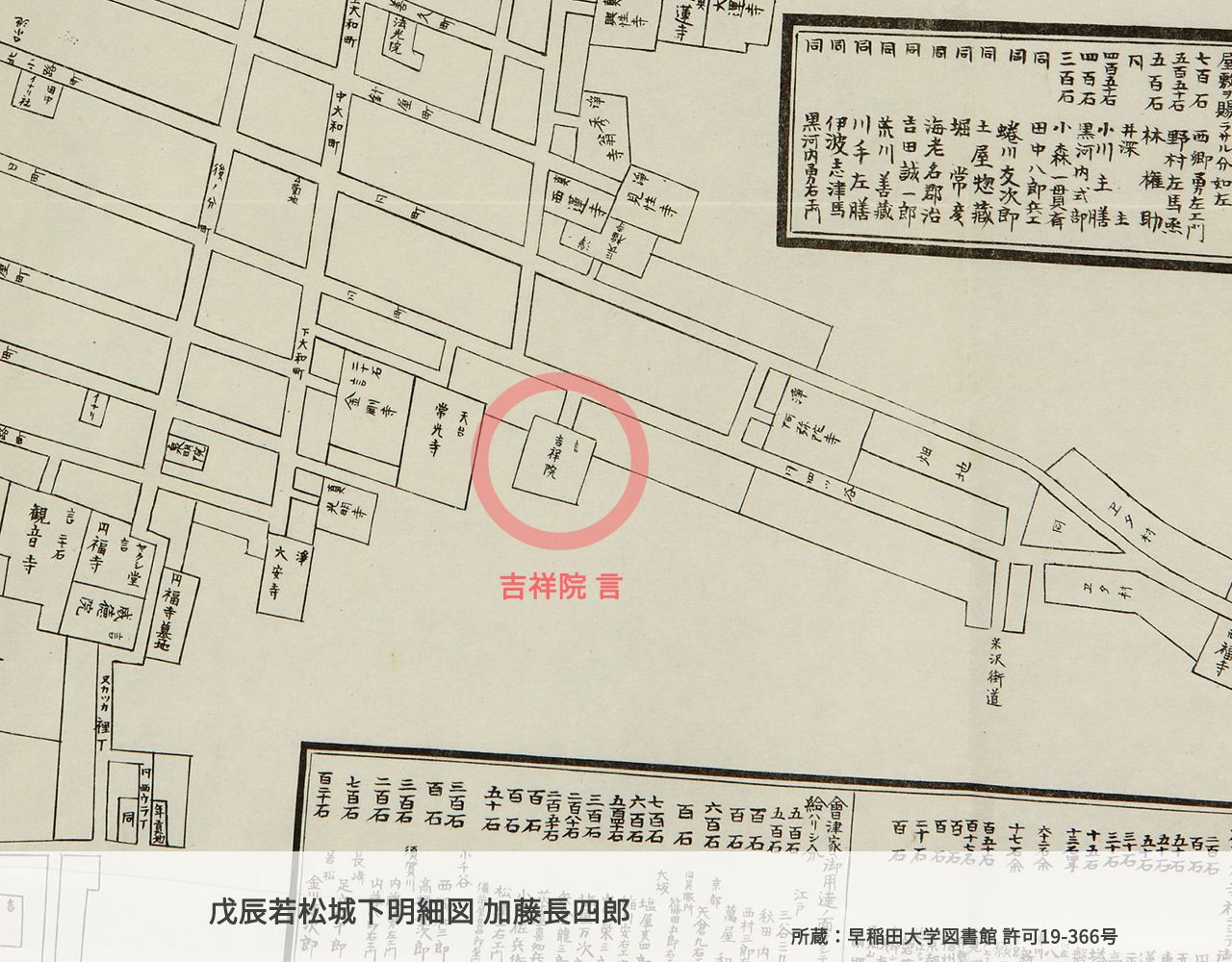 Kichijo-in on the Boshin Wakamatsu Castle Town Detailed Map.
The Jizo of Kichijo-in has watched over the passing of a long history.
When people of today stand before it, they too become part of that long history.
Within the grounds of the present Jizo shrine stands a haiku monument inscribed with Matsuo Basho's verse "Uguisu ya / yanagi no ushiro / yabu no mae" (the bush warbler's song, behind the willow, in front of the thicket).
It is not known when or by whom the monument was erected, but the verse evokes a peaceful scene: the calls of bush warblers ringing out from behind the willow and in front of the thicket.
Excluding its base, the monument is about 60 cm tall, yet it has an indescribable sense of dignity and weight.
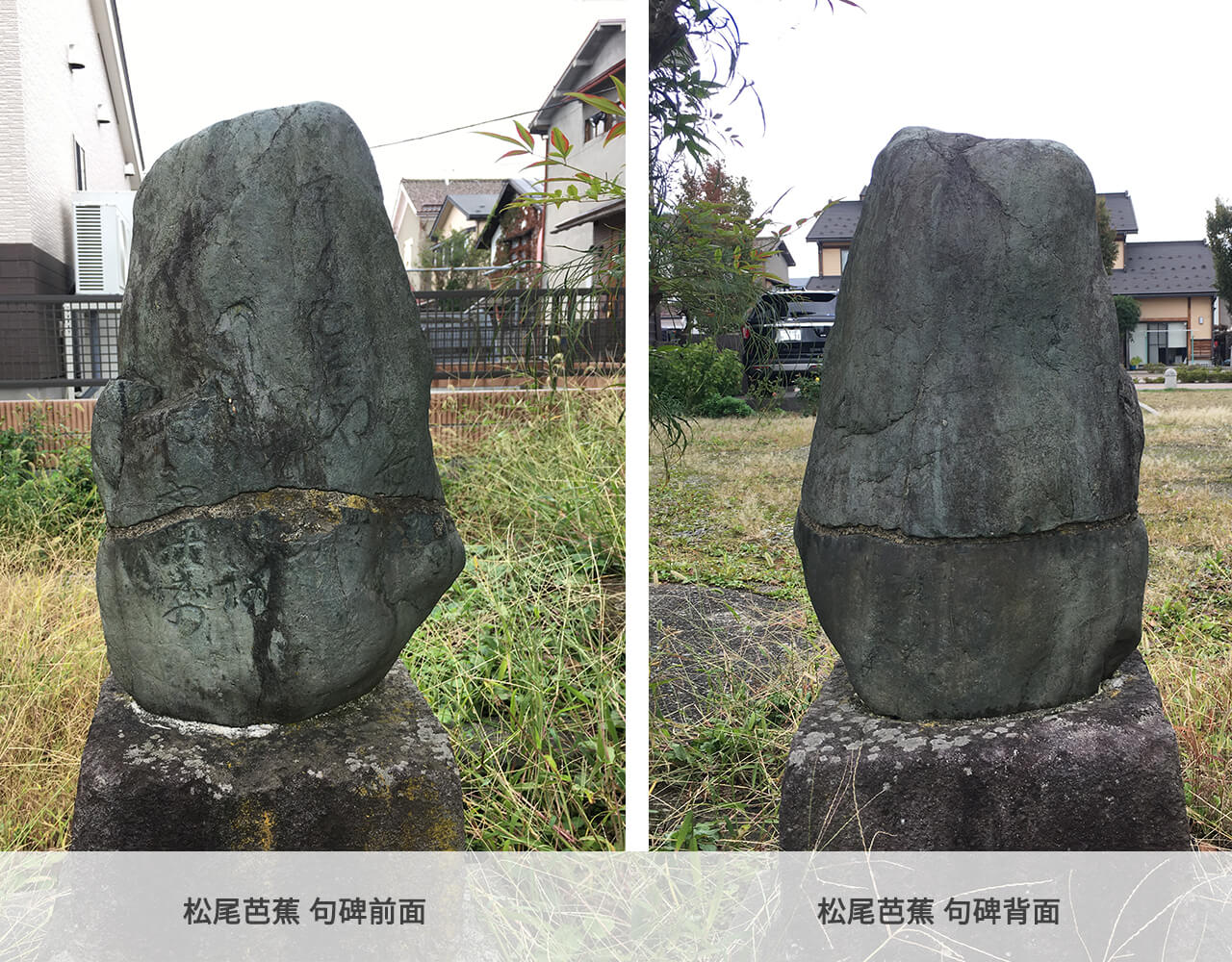 The monument is not very large. Cracks have been repaired, conveying how it has been cherished.
Several other Basho monuments can also be found in this area.
We also recommend the monuments in front of Saifuku-ji (3-34 Nishi-Nanukamachi, Aizuwakamatsu, Fukushima Prefecture) and within the grounds of Amida-ji Temple (4-20 Nanukamachi, Aizuwakamatsu, Fukushima Prefecture).
Please also take a look at the information board in front of the Jizo. This location is one of the stops on the Seven Lucky Gods pilgrimage.
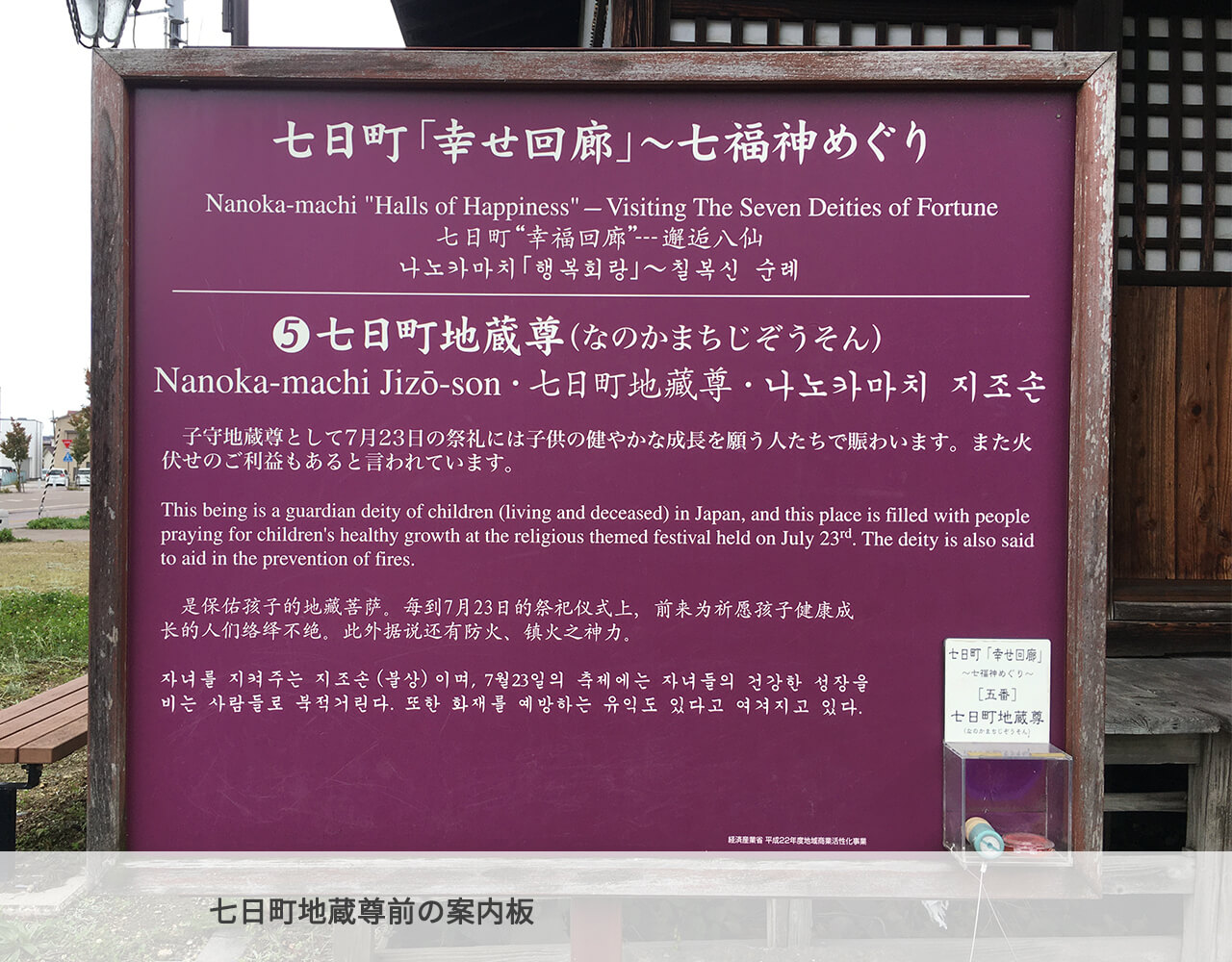 Information board and a Seven Lucky Gods pilgrimage stamp.
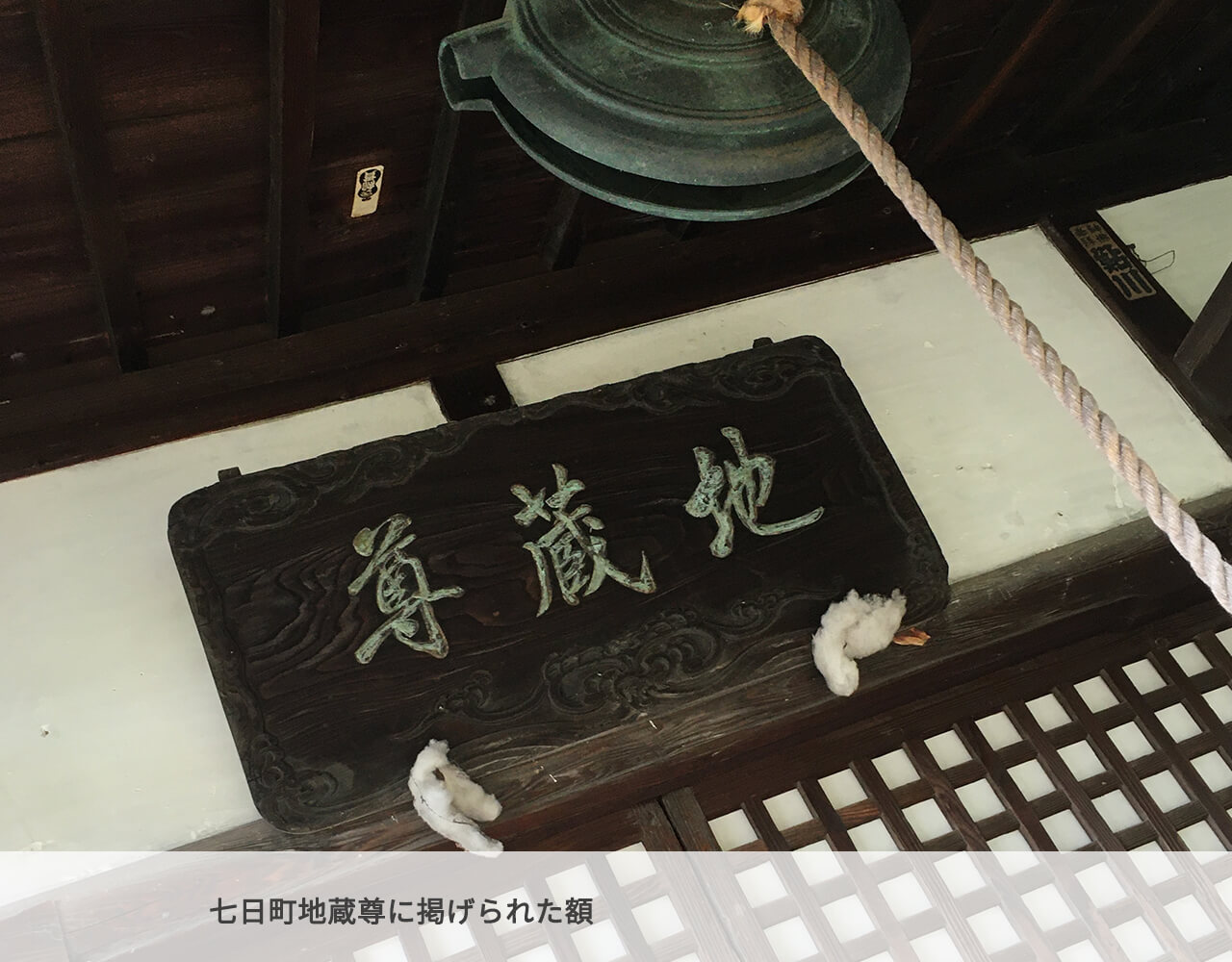 A plaque reading "Jizo-son" is hung.
- Regular holiday
- Please check the official site for the latest holiday schedule.
None (View each shop's regular holidays)