Shimizuya Ryokan Site (Minzanro)








View details
[PR] Advertise with us: Contact
Suggest a correction
Highlights
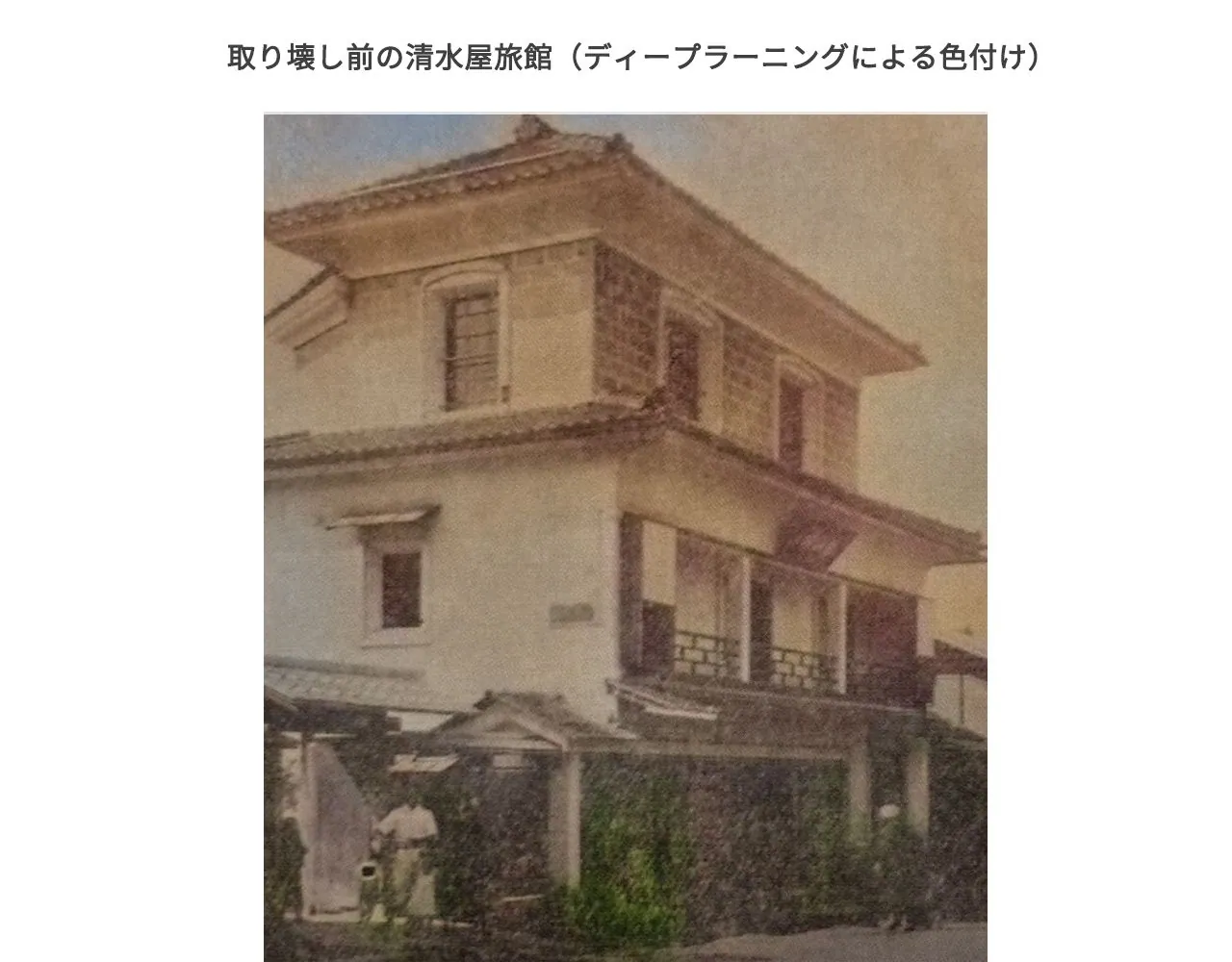
Shimizuya was once an inn located on Nanukamachi-dori.
The building was a three-story wooden structure, and it was a high-standing inn even in its time.
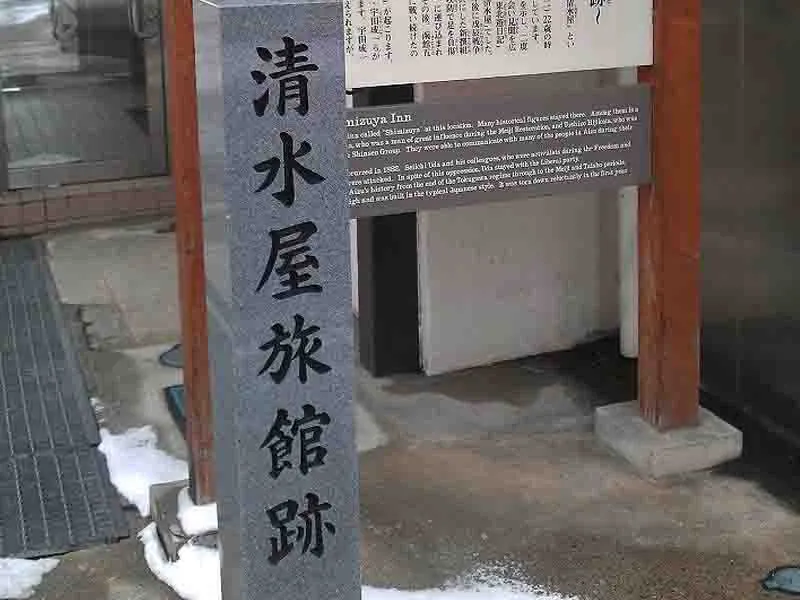 Site of the former Shimizuya RyokanDuring the Edo period, Nanukamachi-dori was a lively street lined with many hatago (inns).
Of the 95 hatago in the castle town of Aizuwakamatsu, it is said that as many as 30 were located in Nanukamachi.
This is because Nanukamachi-dori connected to the Yonezawa Kaido, and its location was ideal for travelers entering and leaving the castle town of Aizuwakamatsu.
Among the many inns operating in Nanukamachi, Shimizuya was a representative example.
Records that confirm this remain.
The "Azuma Koh Akindo Kagami" (Directory of Eastern Merchant Guilds), published in Ansei 2 (1855), lists the Shimizuya Ryokan.
The Azuma Koh Akindo Kagami was a publication issued by a guild (koh) formed by merchants of eastern Japan, and only inns that met certain standards were listed in it.
The fact that Shimizuya was listed shows that it was an inn where merchants handling large sums of money could stay with confidence.
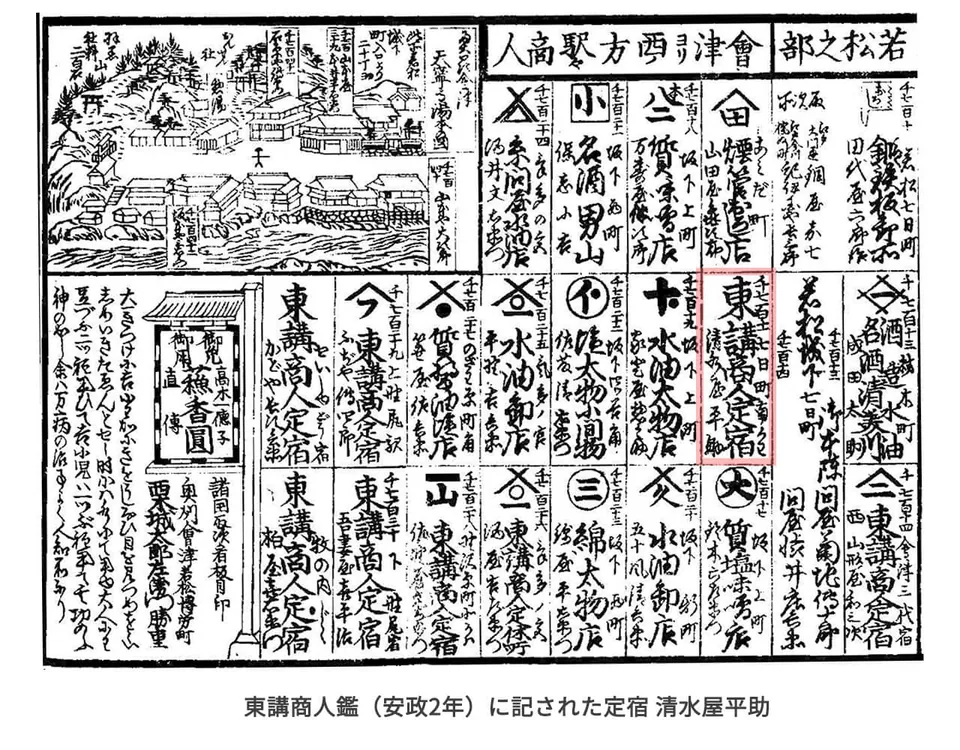 Shimizuya as listed in the Azuma Koh Akindo Kagami. Text reading "Nanukamachi, Regular Lodging of the Eastern Merchant Guild, Shimizuya Heisuke" is visible.
Shimizuya was also designated as a waki-honjin (auxiliary lodging).
A waki-honjin was a facility designated as a backup for the honjin, the lodging used by daimyo and their attendants when the honjin was unavailable.
When a waki-honjin was not used by a daimyo, ordinary commoners could also stay there.
An inn visited by many notable figuresShimizuya Ryokan was visited by many notable figures.
In Kaei 5 (1852), at the end of the Edo period, Yoshida Shoin stayed here during his journey through the Tohoku region.
During this great journey, Shoin visited the domains of the Tohoku region, and when he visited Aizu, he stayed at Shimizuya.
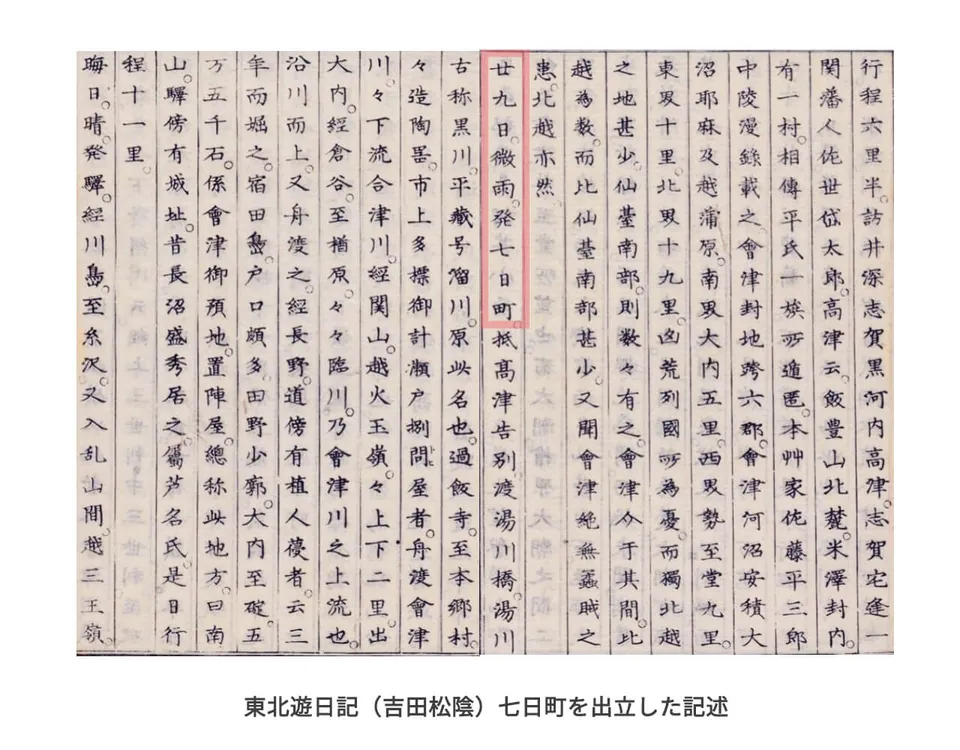 The "Tohoku Yu Nikki" (Travel Diary of Tohoku), recorded by Yoshida Shoin. Shoin wrote, "Departed Nanukamachi in light rain." During the journey, he stopped in Aizu twice. The itinerary was: Edo → Mito → Shirakawa → Aizuwakamatsu → Niigata → Sado → Akita → Hirosaki → Kodomari → Imabetsu → Aomori → Kominato → Morioka → Sendai → Yonezawa → Aizuwakamatsu → Nikko → Ashikaga → Sekiyado → Edo.
In Keio 4 (1868), Hijikata Toshizo, deputy commander of the Shinsengumi, who had been wounded in the Battle of Utsunomiya during the Boshin War, also stayed here.
After the Boshin War, before being escorted to Tokyo, Teru-hime, the elder sister of Katamori Matsudaira, moved from Myokoku-ji Temple (78 Hakaryo, Yawata, Hitotsugi-machi, Aizuwakamatsu City) to Shimizuya. From here, she traveled to the Kishu Domain's Aoyama residence in Tokyo.
During the Meiji era, the Shimizuya Incident took place, in which Uda Seiichi, a figure in the Freedom and People's Rights Movement and a native of Kitakata, was attacked by government authorities.
Shimizuya Ryokan had its main building in Sakaemachi, known as "Shimizuya Kanpekiro."
The branch Shimizuya Ryokan on Nanukamachi-dori was known fondly as "Kaizanro."
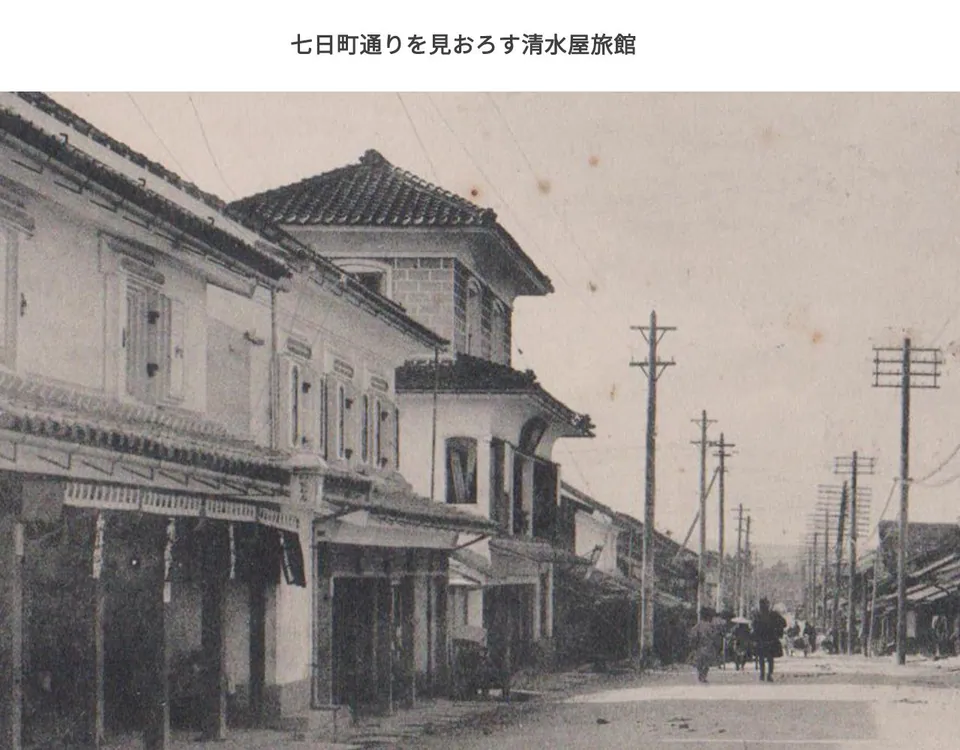 Shimizuya Ryokan facing Nanukamachi-dori. Its distinctive building stood out, as seen here.
Nanukamachi.com Digital Archive: Nanukamachi-dori, Wakamatsu City
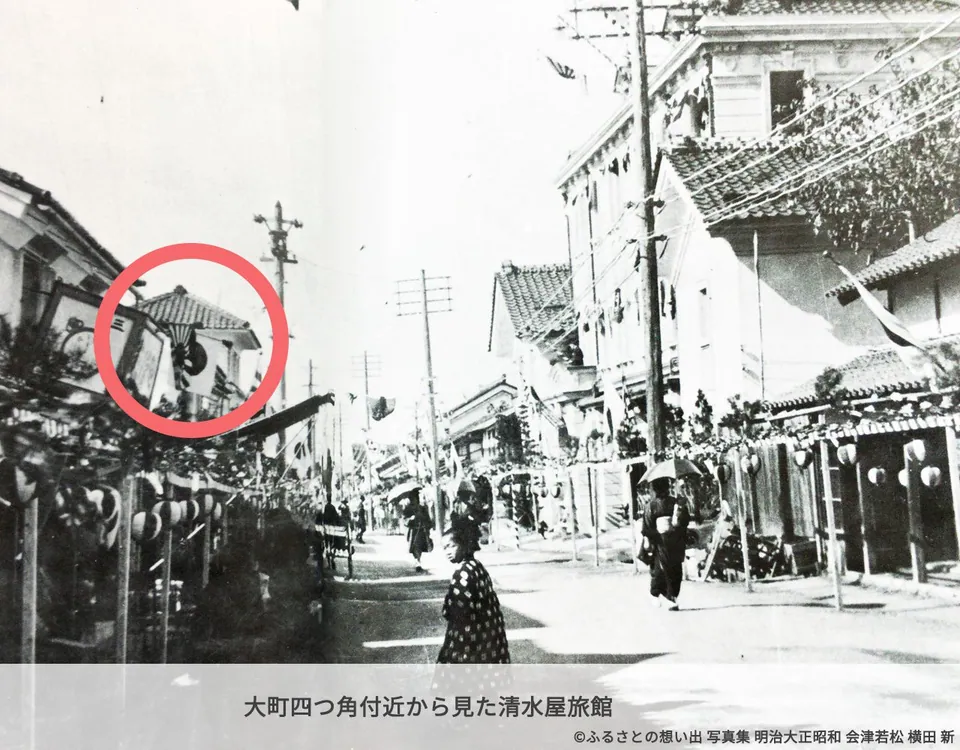 Nanukamachi in the Taisho era, seen from the Omachi crossroads side. On the right are the building and storehouse of Shirokiya Lacquerware Shop. Based on the positions, the building on the left is presumed to be Shimizuya Ryokan, a three-story wooden building.
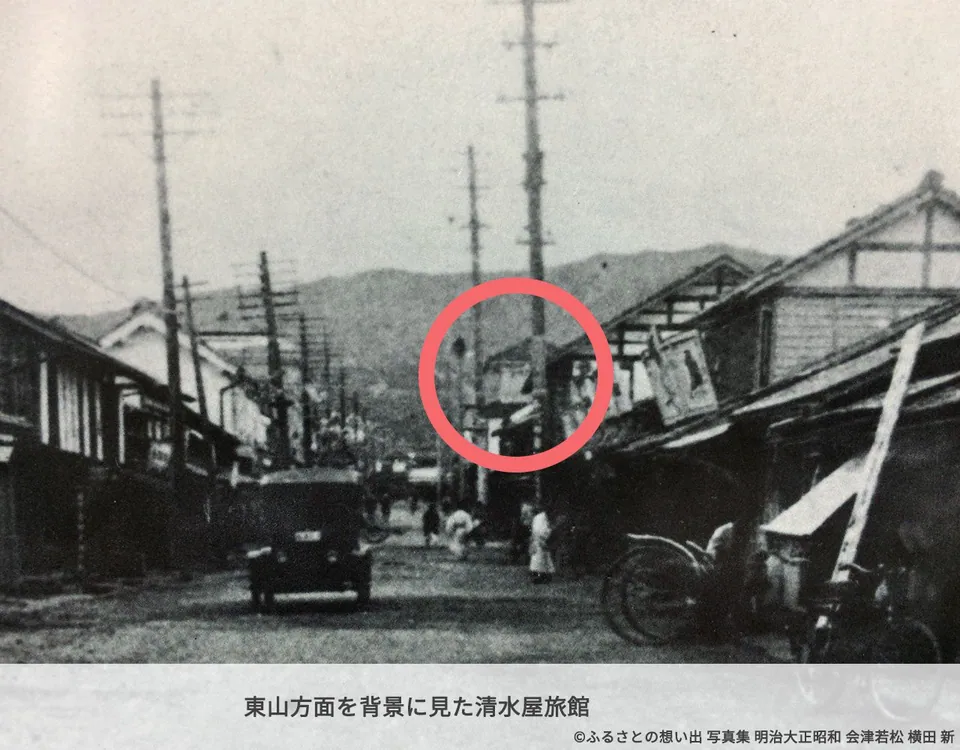 Nanukamachi in the Taisho era, seen from the west. In the distance are the Higashiyama mountains. On the left are the building and storehouse of Shirokiya Lacquerware Shop. Based on the positions, the building on the right is presumed to be Shimizuya Ryokan, a three-story wooden building.
In Taisho 12 (1923), Aizu Kangyo Mujin Co., Ltd. (the predecessor of Daito Mutual Bank, now Daito Bank) acquired the Shimizuya Ryokan and relocated there.
Afterward, the Shimizuya Ryokan was demolished in the early Showa era.
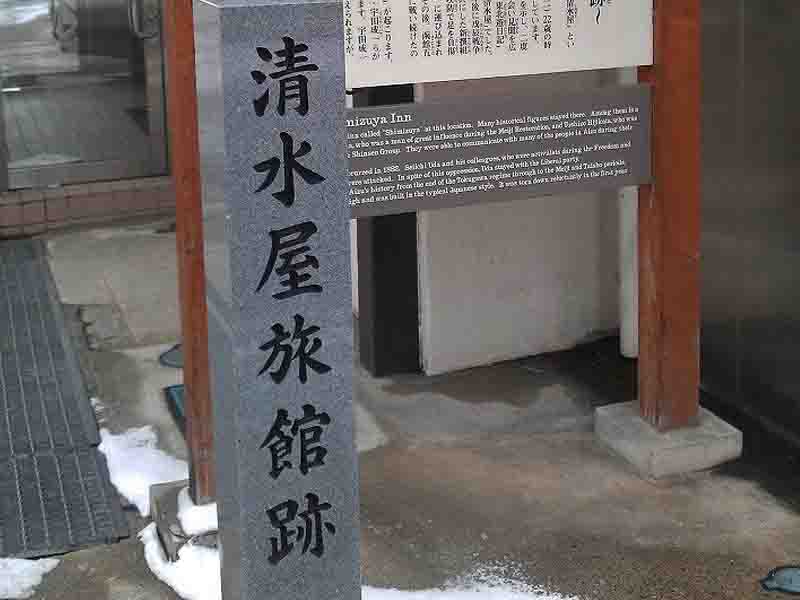
Today, a stone monument and an information board remain at the site, known as the Shimizuya Ryokan Ruins, where visitors can reflect on the past.
The building was a three-story wooden structure, and it was a high-standing inn even in its time.
 Site of the former Shimizuya Ryokan
Of the 95 hatago in the castle town of Aizuwakamatsu, it is said that as many as 30 were located in Nanukamachi.
This is because Nanukamachi-dori connected to the Yonezawa Kaido, and its location was ideal for travelers entering and leaving the castle town of Aizuwakamatsu.
Among the many inns operating in Nanukamachi, Shimizuya was a representative example.
Records that confirm this remain.
The "Azuma Koh Akindo Kagami" (Directory of Eastern Merchant Guilds), published in Ansei 2 (1855), lists the Shimizuya Ryokan.
The Azuma Koh Akindo Kagami was a publication issued by a guild (koh) formed by merchants of eastern Japan, and only inns that met certain standards were listed in it.
The fact that Shimizuya was listed shows that it was an inn where merchants handling large sums of money could stay with confidence.
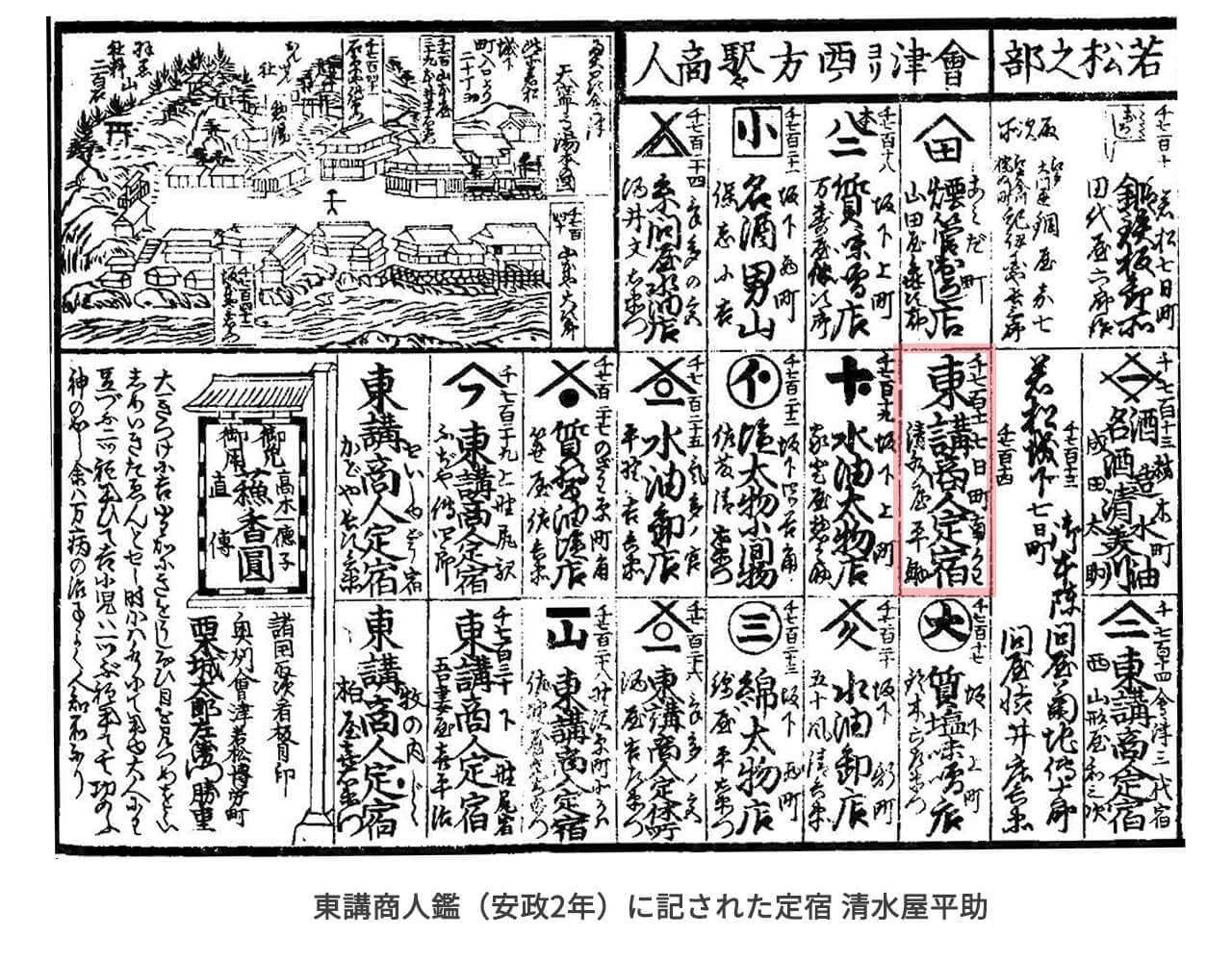 Shimizuya as listed in the Azuma Koh Akindo Kagami. Text reading "Nanukamachi, Regular Lodging of the Eastern Merchant Guild, Shimizuya Heisuke" is visible.
Shimizuya was also designated as a waki-honjin (auxiliary lodging).
A waki-honjin was a facility designated as a backup for the honjin, the lodging used by daimyo and their attendants when the honjin was unavailable.
When a waki-honjin was not used by a daimyo, ordinary commoners could also stay there.
An inn visited by many notable figuresShimizuya Ryokan was visited by many notable figures.
In Kaei 5 (1852), at the end of the Edo period, Yoshida Shoin stayed here during his journey through the Tohoku region.
During this great journey, Shoin visited the domains of the Tohoku region, and when he visited Aizu, he stayed at Shimizuya.
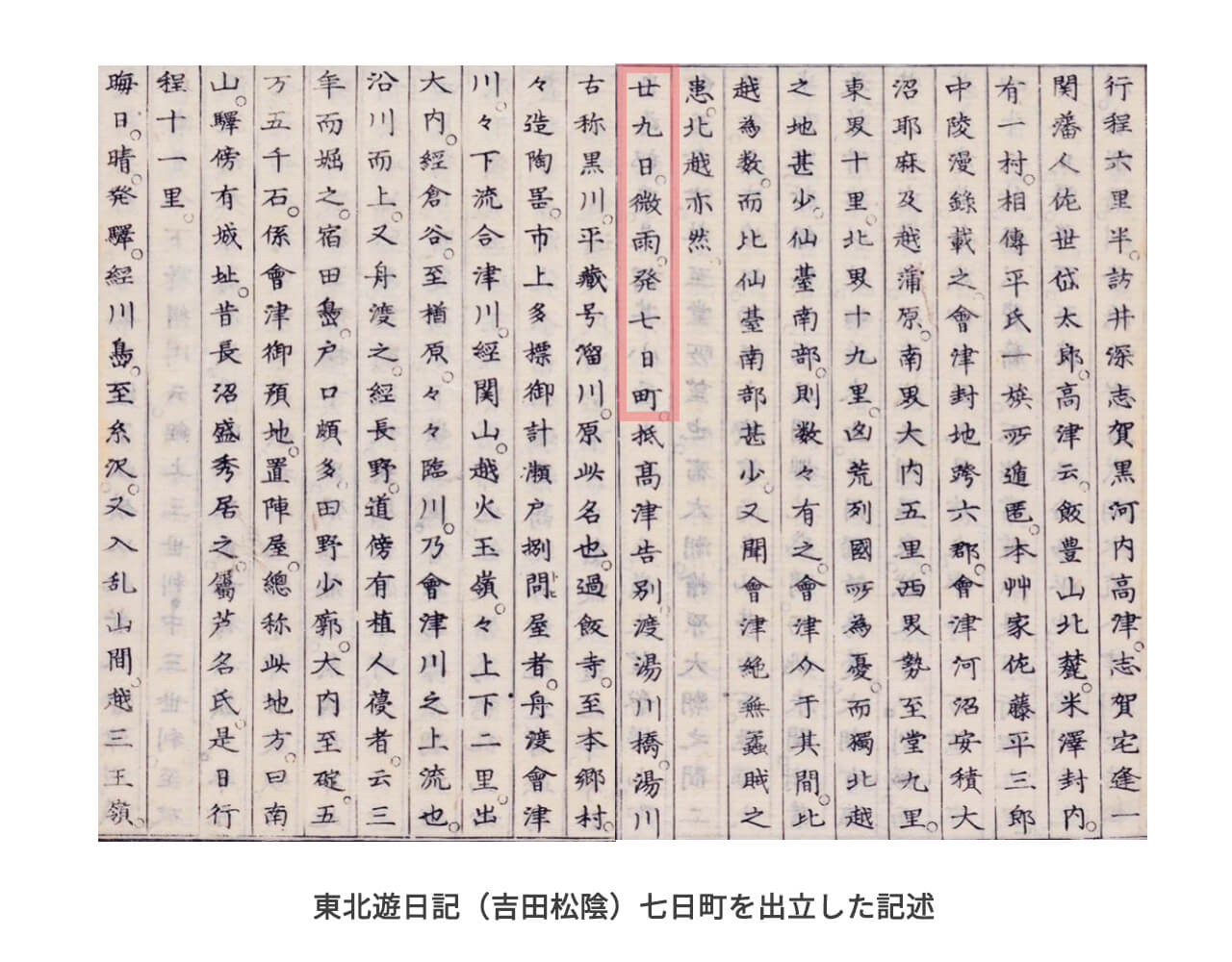 The "Tohoku Yu Nikki" (Travel Diary of Tohoku), recorded by Yoshida Shoin. Shoin wrote, "Departed Nanukamachi in light rain." During the journey, he stopped in Aizu twice. The itinerary was: Edo → Mito → Shirakawa → Aizuwakamatsu → Niigata → Sado → Akita → Hirosaki → Kodomari → Imabetsu → Aomori → Kominato → Morioka → Sendai → Yonezawa → Aizuwakamatsu → Nikko → Ashikaga → Sekiyado → Edo.
In Keio 4 (1868), Hijikata Toshizo, deputy commander of the Shinsengumi, who had been wounded in the Battle of Utsunomiya during the Boshin War, also stayed here.
After the Boshin War, before being escorted to Tokyo, Teru-hime, the elder sister of Katamori Matsudaira, moved from Myokoku-ji Temple (78 Hakaryo, Yawata, Hitotsugi-machi, Aizuwakamatsu City) to Shimizuya. From here, she traveled to the Kishu Domain's Aoyama residence in Tokyo.
During the Meiji era, the Shimizuya Incident took place, in which Uda Seiichi, a figure in the Freedom and People's Rights Movement and a native of Kitakata, was attacked by government authorities.
Shimizuya Ryokan had its main building in Sakaemachi, known as "Shimizuya Kanpekiro."
The branch Shimizuya Ryokan on Nanukamachi-dori was known fondly as "Kaizanro."
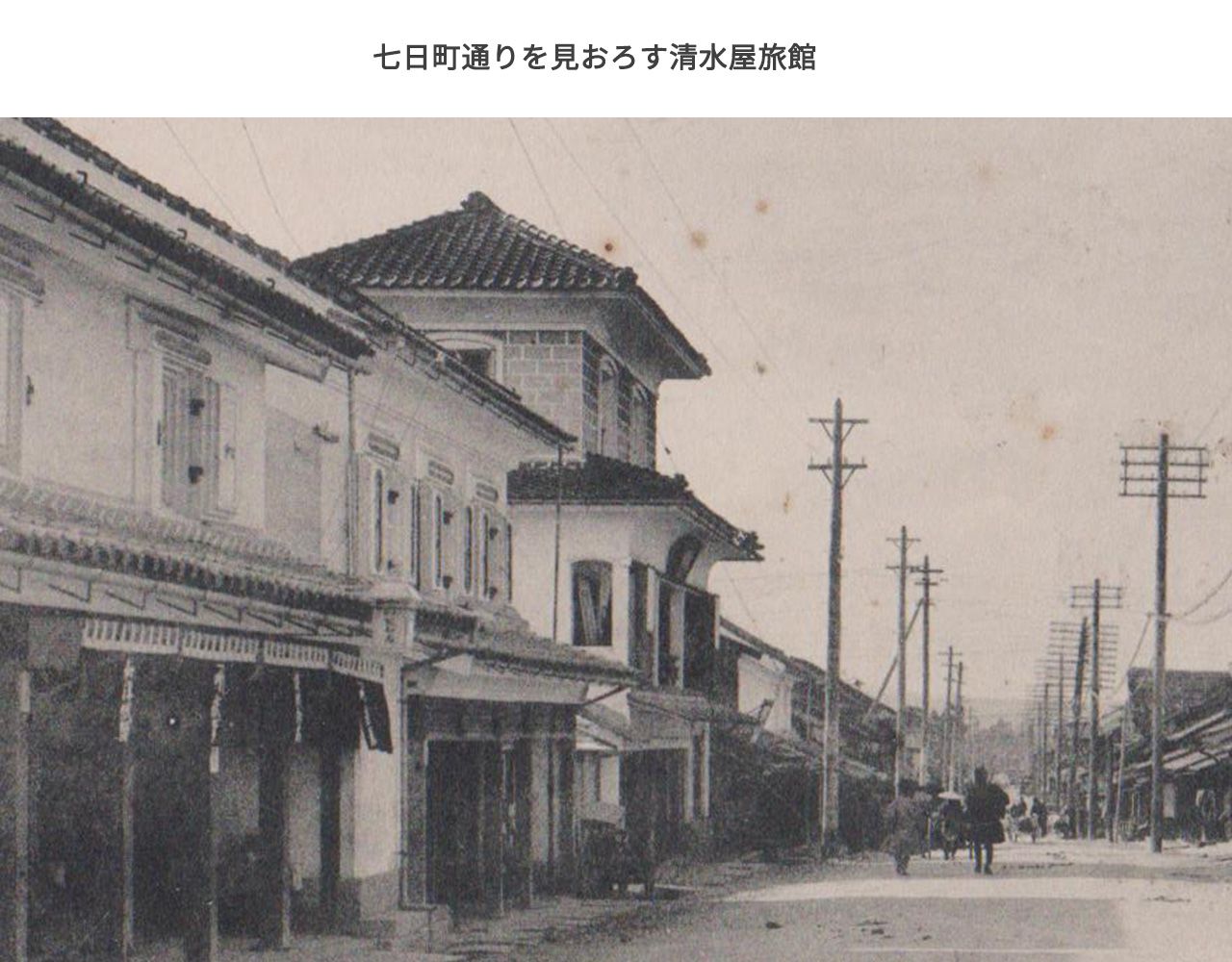 Shimizuya Ryokan facing Nanukamachi-dori. Its distinctive building stood out, as seen here.
Nanukamachi.com Digital Archive: Nanukamachi-dori, Wakamatsu City
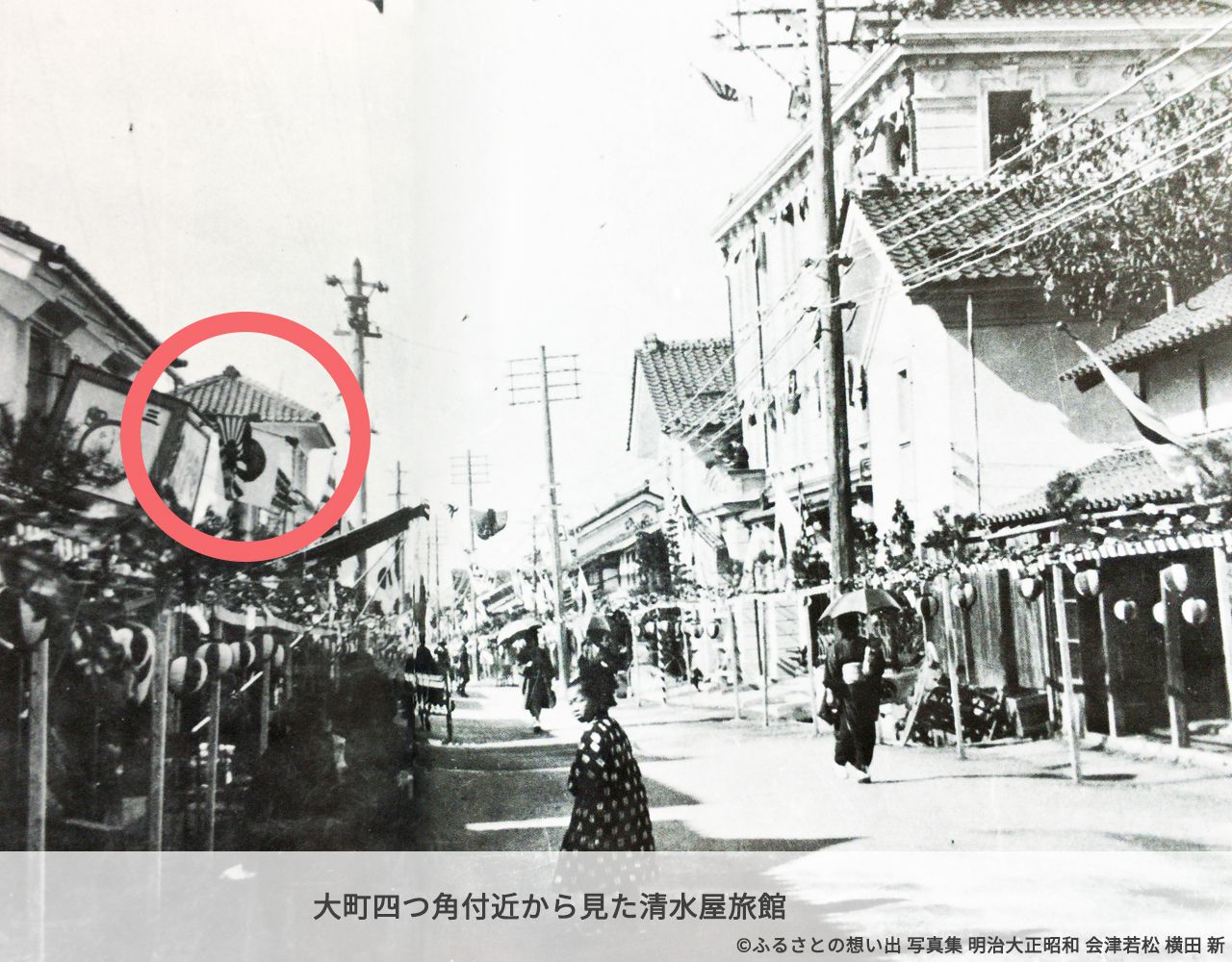 Nanukamachi in the Taisho era, seen from the Omachi crossroads side. On the right are the building and storehouse of Shirokiya Lacquerware Shop. Based on the positions, the building on the left is presumed to be Shimizuya Ryokan, a three-story wooden building.
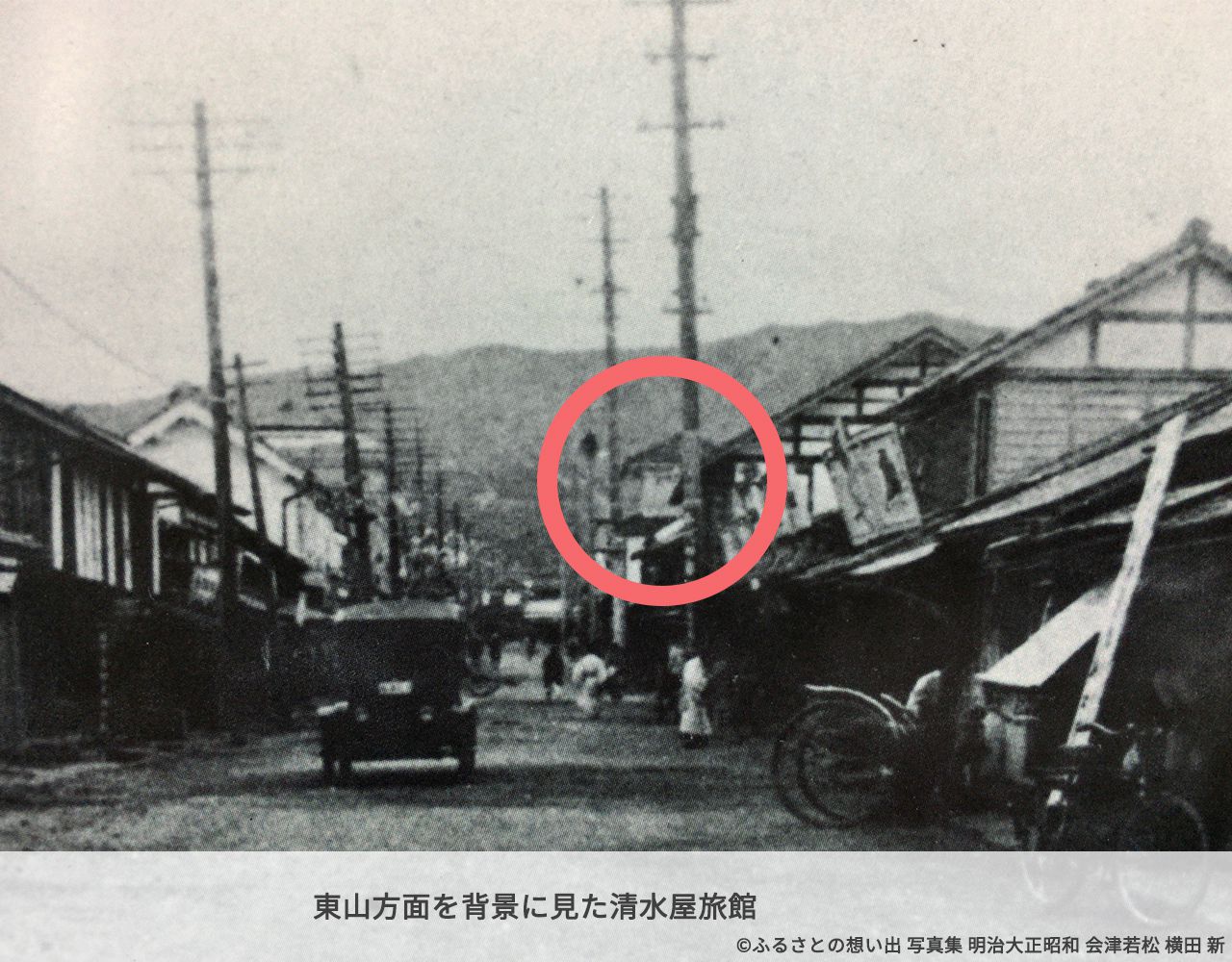 Nanukamachi in the Taisho era, seen from the west. In the distance are the Higashiyama mountains. On the left are the building and storehouse of Shirokiya Lacquerware Shop. Based on the positions, the building on the right is presumed to be Shimizuya Ryokan, a three-story wooden building.
In Taisho 12 (1923), Aizu Kangyo Mujin Co., Ltd. (the predecessor of Daito Mutual Bank, now Daito Bank) acquired the Shimizuya Ryokan and relocated there.
Afterward, the Shimizuya Ryokan was demolished in the early Showa era.
Today, a stone monument and an information board remain at the site, known as the Shimizuya Ryokan Ruins, where visitors can reflect on the past.
- Regular holiday
- Please check the official site for the latest holiday schedule.
None (View each shop's regular holidays)