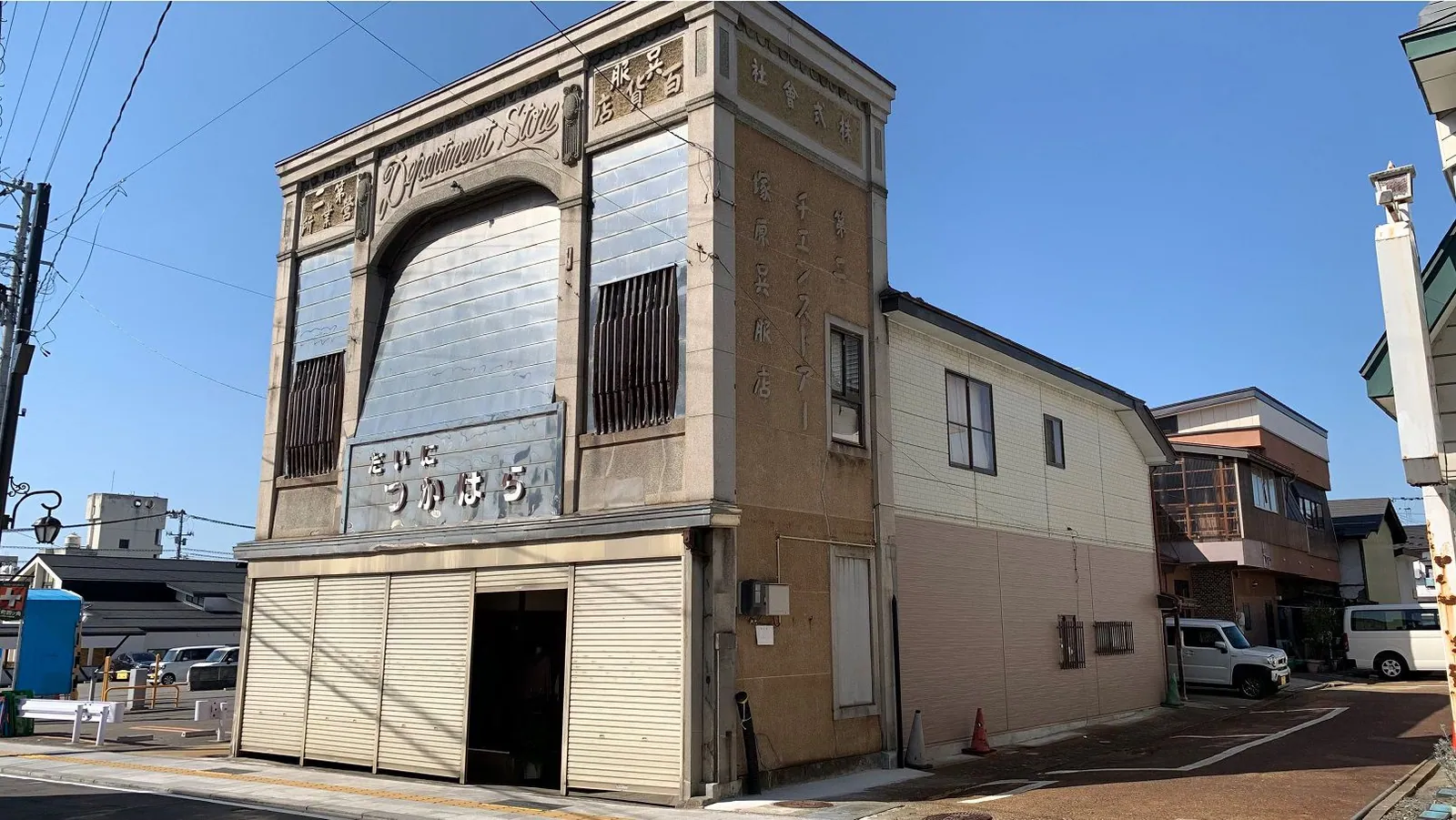
Daini Tsukahara Gofukuten








View details
[PR] Advertise with us: Contact
Suggest a correction
Highlights
Daini Tsukahara Gofukuten was built in Showa 2 (1927) as a building with unique features. It is located a short distance from the main store, which is why it is called "Daini (Second) Tsukahara."
Although the store has now closed, the imposing building can be seen from the street, offering a glimpse of a nostalgic Showa-era atmosphere.
On the front, "Daini Tsukahara" is displayed, and above it, the words "Department Store," "Second Branch," and "Kimono Department Store" are shown.
On the east side, the signs read "Daini Chain Store Tsukahara Gofukuten" and "Co., Ltd.," and on the west side, a carved sign reads "For New Patterns, Come to Tsukahara."
Please take a look at how the building incorporates Western-style architecture that was popular in the early Showa era while still asserting a Japanese character.
Postcards sent to customers from the time when Tsukahara Gofukuten was in business also remain.
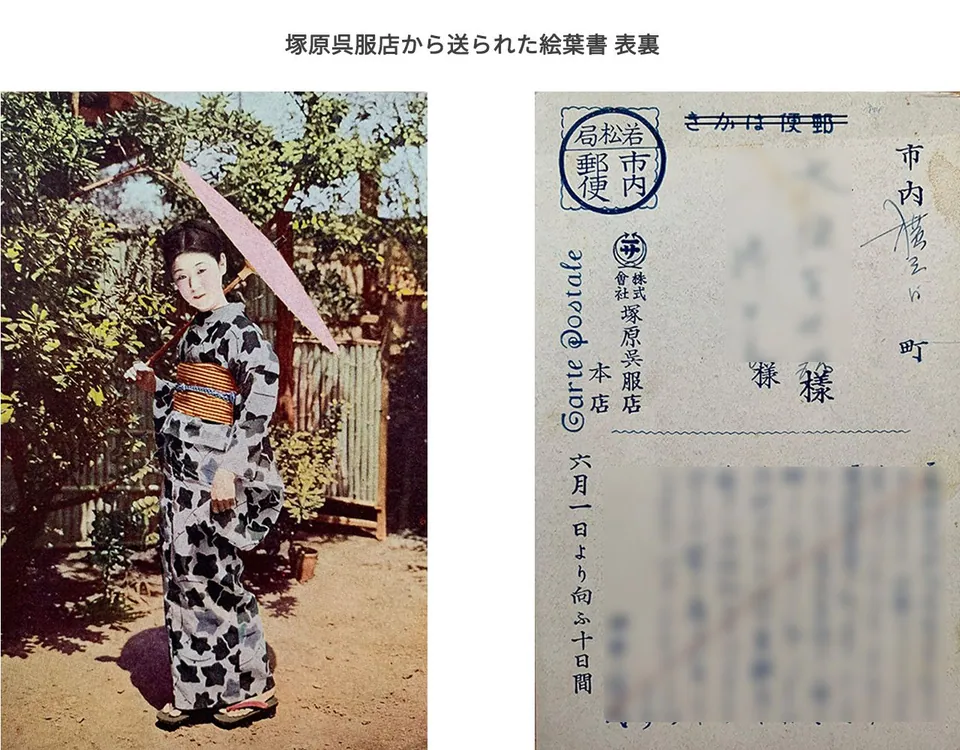 Front and back of a postcard sent from Tsukahara Gofukuten. Based on the postmarks, it is believed to have been sent between Meiji 36 (1903) and Showa 14 (1939). The design is typical of a kimono shop. (The addresses and text have been blurred to protect privacy.)
Although the store has now closed, the imposing building can be seen from the street, offering a glimpse of a nostalgic Showa-era atmosphere.
On the front, "Daini Tsukahara" is displayed, and above it, the words "Department Store," "Second Branch," and "Kimono Department Store" are shown.
On the east side, the signs read "Daini Chain Store Tsukahara Gofukuten" and "Co., Ltd.," and on the west side, a carved sign reads "For New Patterns, Come to Tsukahara."
Please take a look at how the building incorporates Western-style architecture that was popular in the early Showa era while still asserting a Japanese character.
Postcards sent to customers from the time when Tsukahara Gofukuten was in business also remain.
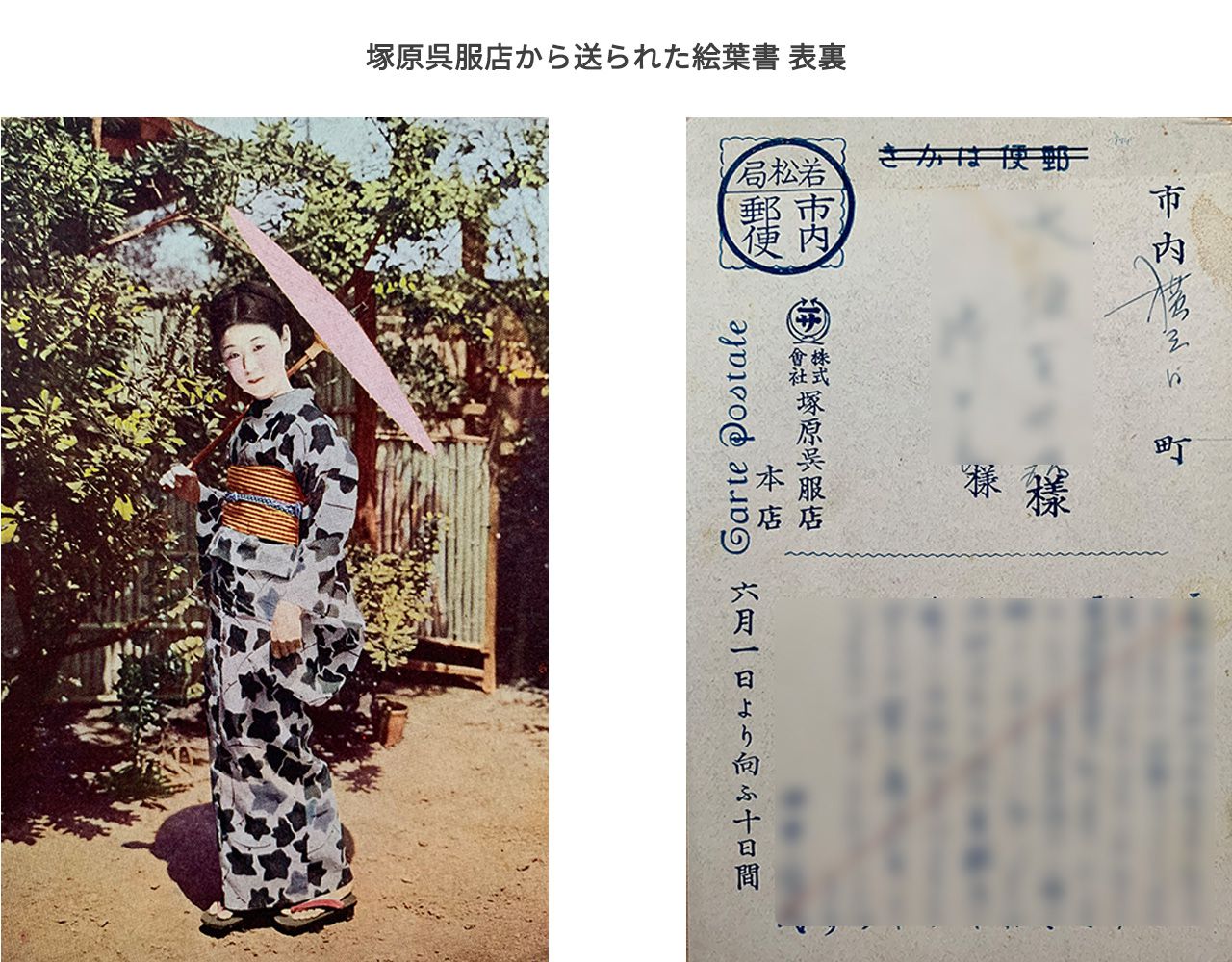 Front and back of a postcard sent from Tsukahara Gofukuten. Based on the postmarks, it is believed to have been sent between Meiji 36 (1903) and Showa 14 (1939). The design is typical of a kimono shop. (The addresses and text have been blurred to protect privacy.)
- Regular holiday
- Please check the official site for the latest holiday schedule.
None (View each shop's regular holidays)