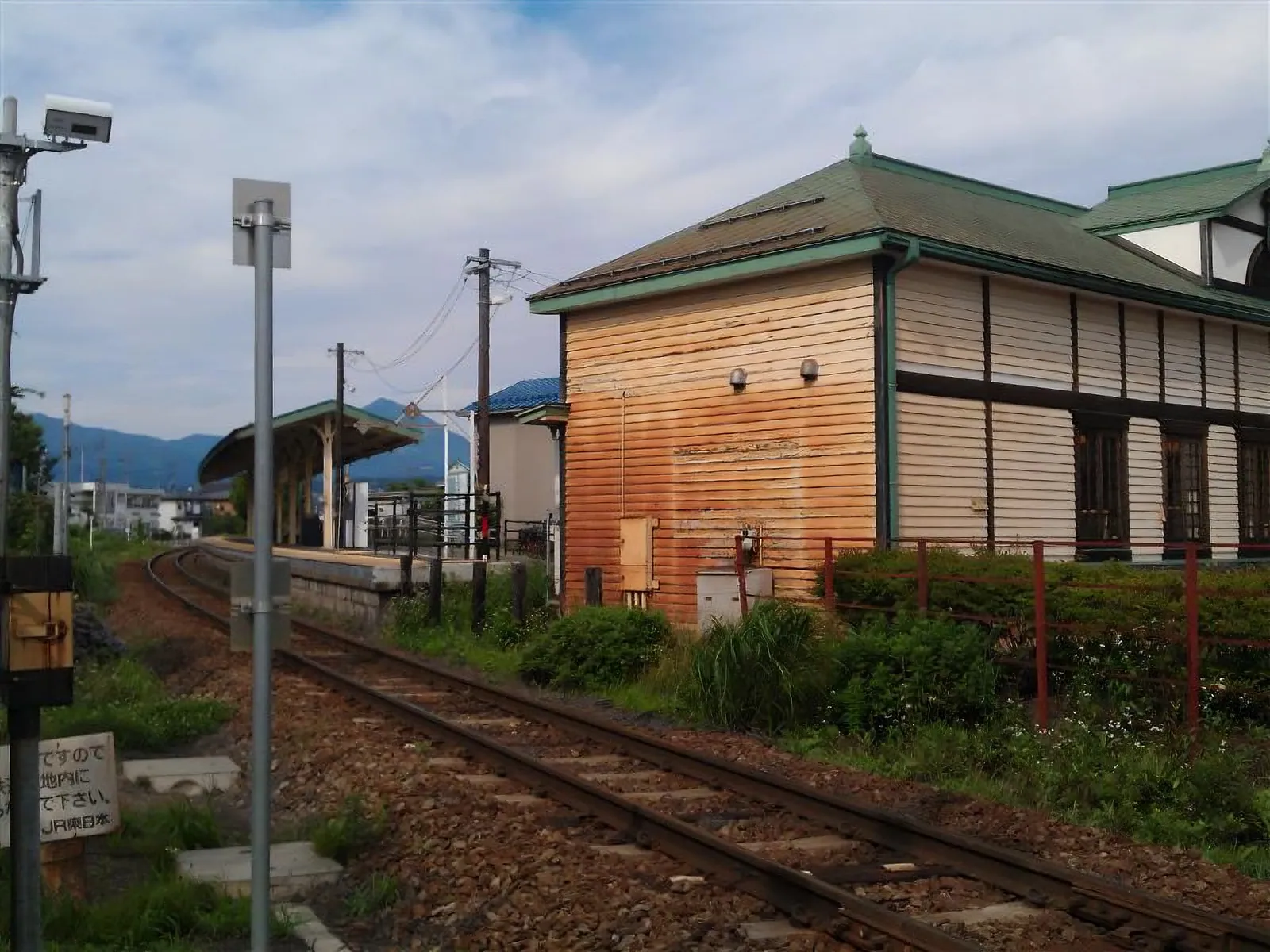
Nanukamachi Station









Highlights
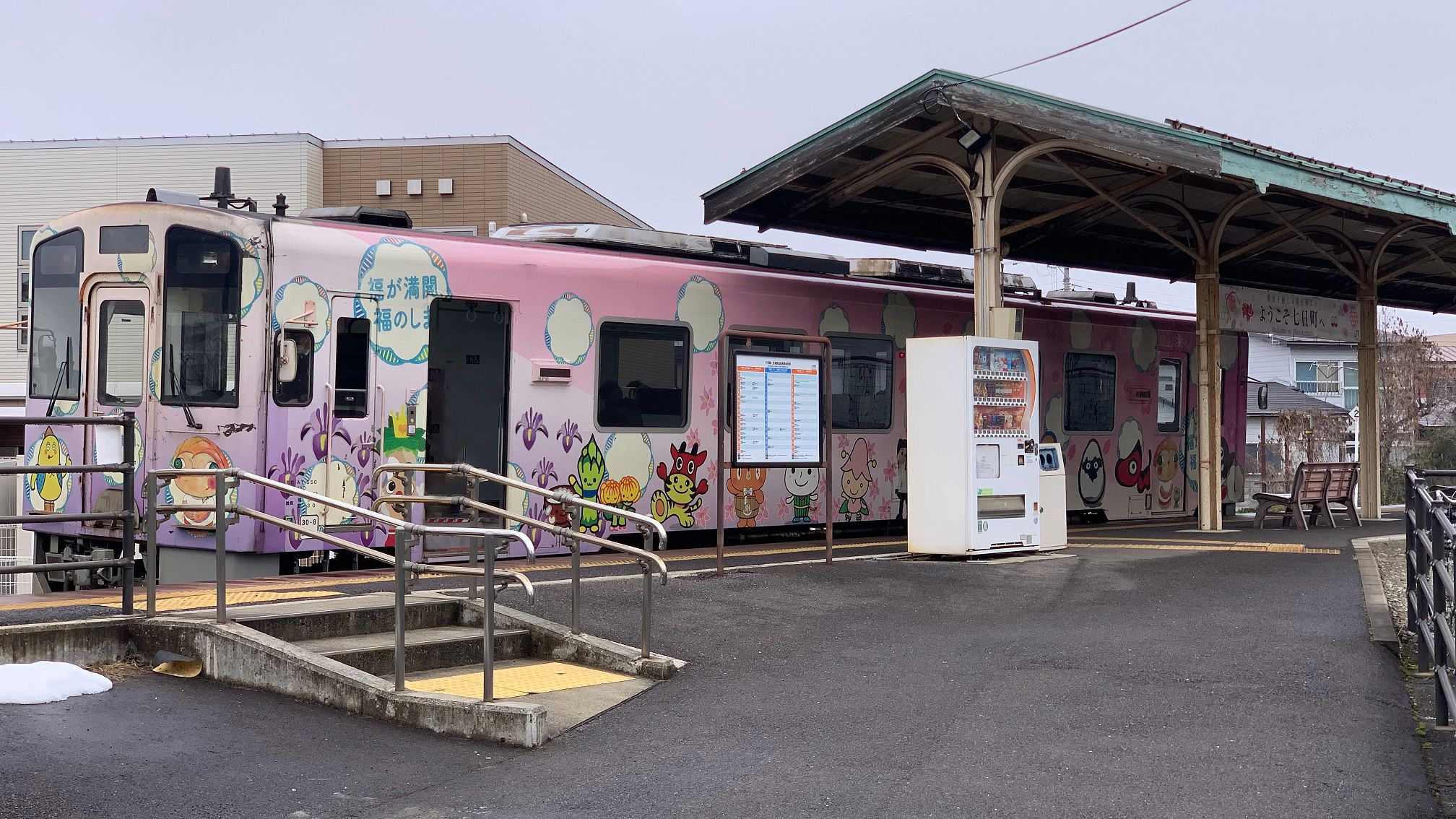 The station platform, with a wrapped train stopped at it
During winter, the station building and the trees around it are illuminated, creating a fantastic scene together with the snowy landscape.
The exterior walls are a bit weathered, but the station brings back memories of Japan's traditional railway stations. You may even hear the local dialect among the crowds.
The station has no coin lockers, but the Nanukamachi Tourist Information Center nearby offers a paid baggage storage service.
The Nanukamachi Station Cafe is located inside the station.
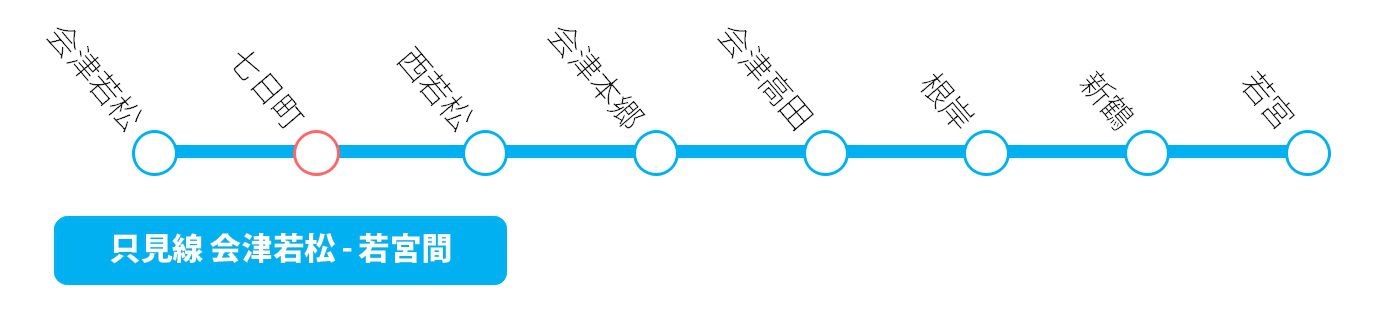 Tadami Line, Aizuwakamatsu - Wakamiya section
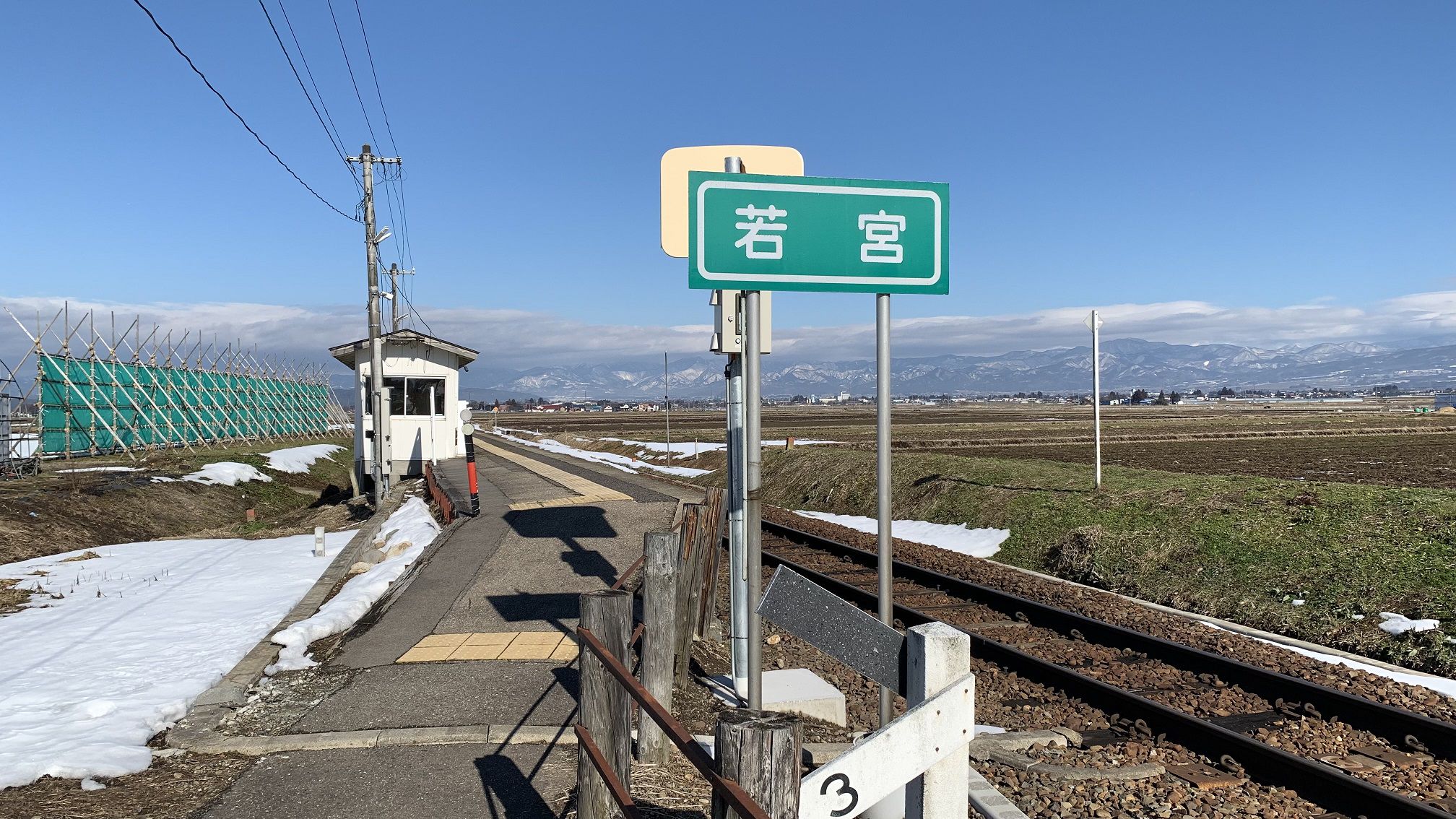 Wakamiya Station, which opened at the same time as Nanukamachi Station
The station's beginnings and the prewar Nanukamachi StationIn 1934, Nanukamachi Station opened together with Wakamiya Station and Negishi Station, but they were established as stops only for gasoline railcars (railcars powered by a gasoline engine).
The line that included Nanukamachi Station was served by gasoline railcars of the type "Kiha 41000." Until then, steam engines had been the mainstream power source for railcars, but vehicles with gasoline engines, which offered higher output and lighter weight, began to appear.
The Railway Ministry (later Japanese National Railways) developed a standard gasoline railcar using mostly domestically produced parts. That was the Kiha 41000.
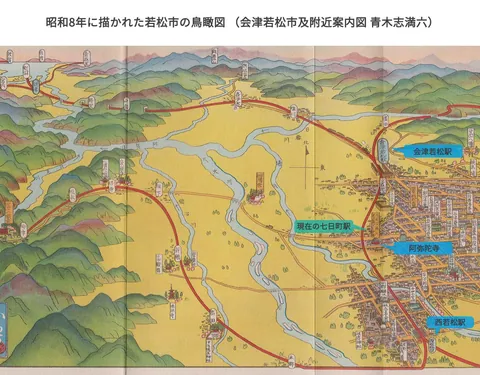
At the same time that Nanukamachi Station was being used only as a stop for gasoline railcars, petitions were being made to upgrade it to a full station with facilities that could also accommodate ordinary trains.
Gasoline railcars did not have strong pulling power, and they usually ran alone or pulled at most one passenger car, so they could serve even stations with short platforms. However, to stop trains pulling many passenger cars or freight, station facilities were required.
However, as the Pacific War worsened, wartime controls caused a shortage of gasoline, the fuel for gasoline railcars.
As a result, gasoline railcar operations were discontinued, and Nanukamachi Station, which had been a stop only for gasoline railcars, was suspended on June 20, 1945. At the same time, the petitions to upgrade it to a full station had to be put on hold under the circumstances of the time.
Postwar development of the stationWhen the Pacific War ended, events began to move again.
On June 20, 1946, the suspended Nanukamachi Station resumed service as trains returned to the station.
At the same time, momentum for petitions to make Nanukamachi Station a full station revived.
On March 13, 1947, a petition was submitted to the national legislature, and records of its deliberation remain.
Petition submitted March 13, 1947
Petition to change Nanukamachi Station to a general station (No. 262)
Petitioners: Kisaemon Takase and 21 others, 1-30 Nanukamachi 1-chome, Wakamatsu City, Fukushima Prefecture
Introducing Diet member: Torakichi Nakano
The purpose of this petition is as follows. Aizuwakamatsu Station in Fukushima Prefecture is located at the northern end of Wakamatsu City, and Nishi-Wakamatsu Station is at the western end. Because of this, passengers from the central part of Wakamatsu City, where the population is largest, face considerable inconvenience. Nanukamachi Station, however, is located between Aizuwakamatsu Station and Nishi-Wakamatsu Station, in the central part of the city, where two-thirds of Wakamatsu's population lives. Until now, Nanukamachi Station has had only two train stops per day and no station facilities. The petitioners therefore ask that Nanukamachi Station be changed to a general station and provided with complete station facilities.
Diet proceedings: House of Representatives, Petition Committee, 92nd Imperial Diet, March 24, 1947
512 Jinnosuke Otsuka
- Chairman Otsuka: Next is agenda item 83, the petition to change Nanukamachi Station to a general station, document No. 262, introduced by Diet member Torakichi Nakano.
513 Kotaro Bando
- Member Bando: The purpose of this petition is as follows. Aizuwakamatsu Station in Fukushima Prefecture is located at the northern end of Wakamatsu City, and Nishi-Wakamatsu Station is at the western end. Because of this, passengers from the central part of Wakamatsu City, where most of the population lives, face considerable inconvenience. Nanukamachi Station, however, is located between Aizuwakamatsu Station and Nishi-Wakamatsu Station, in the central part of the city, where two-thirds of Wakamatsu's population lives. Until now, Nanukamachi Station has had only two train stops per day and no station facilities. The petition asks that Nanukamachi Station be changed to a general station and given complete station facilities. I would like to hear the government's views immediately.
514 Nobuji Okada
- Government representative Okada: The Nanukamachi Station on the Aizu Line opened in June of last year. This station was originally built mainly for passengers of gasoline railcars, so its facilities are not designed to handle passengers of ordinary steam-hauled trains. It currently only stops for commuter and school trains. Under current coal supply conditions, it is difficult to increase the number of train stops for the time being. As for changing it to a general station as requested, we would like to decide after thoroughly investigating the local situation and other factors.
515 Kotaro Bando
- Member Bando: I would like the petition to be adopted.
516 Jinnosuke Otsuka
- Chairman Otsuka: Are there any objections to adopting the petition? [Voices: "No objection."]
517 Jinnosuke Otsuka
- Chairman Otsuka: The petition is adopted.
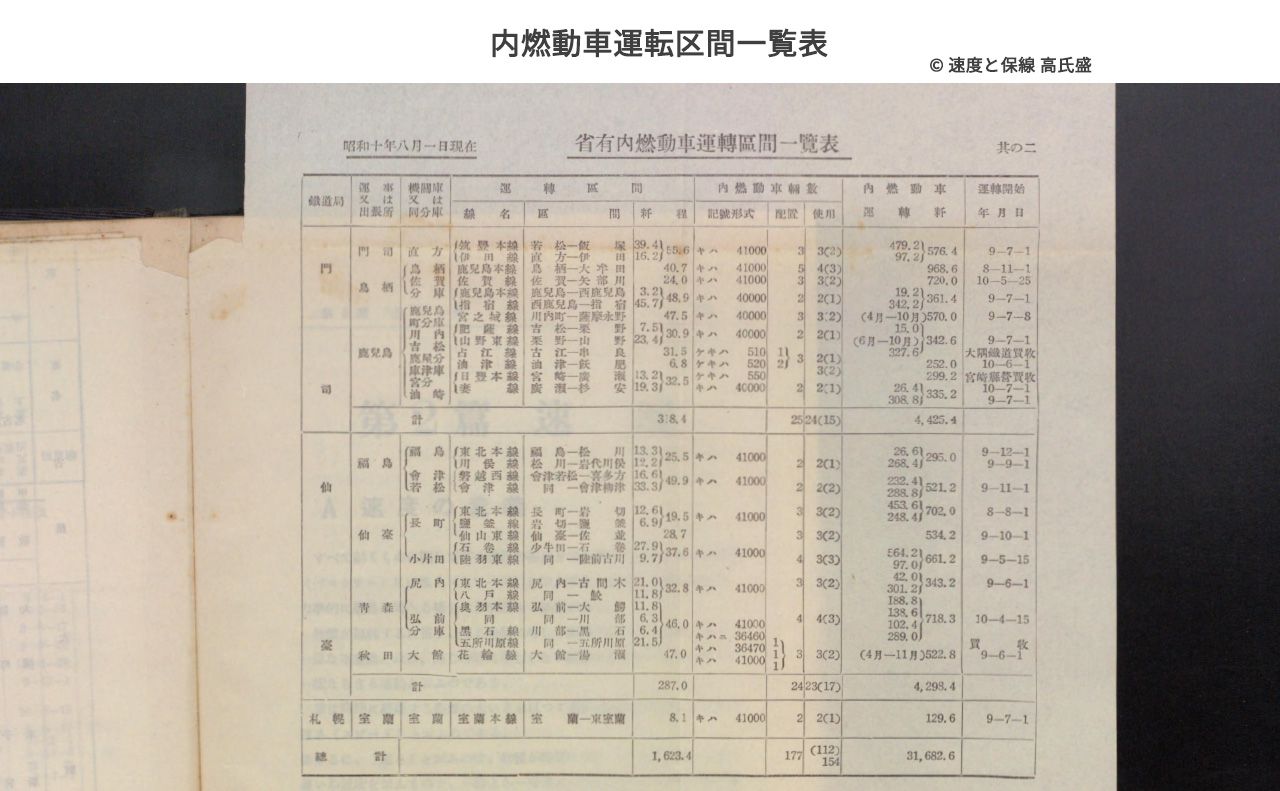 Operating section list for internal combustion railcars, recorded in "Speed and Track Maintenance" by Taka Mori, published in 1936.
According to this list, as of August 1, 1935, four third-class gasoline railcars "Kiha 41000" were allocated to the Aizu Line Aizuwakamatsu - Yanaizu section, and three of them were in use.
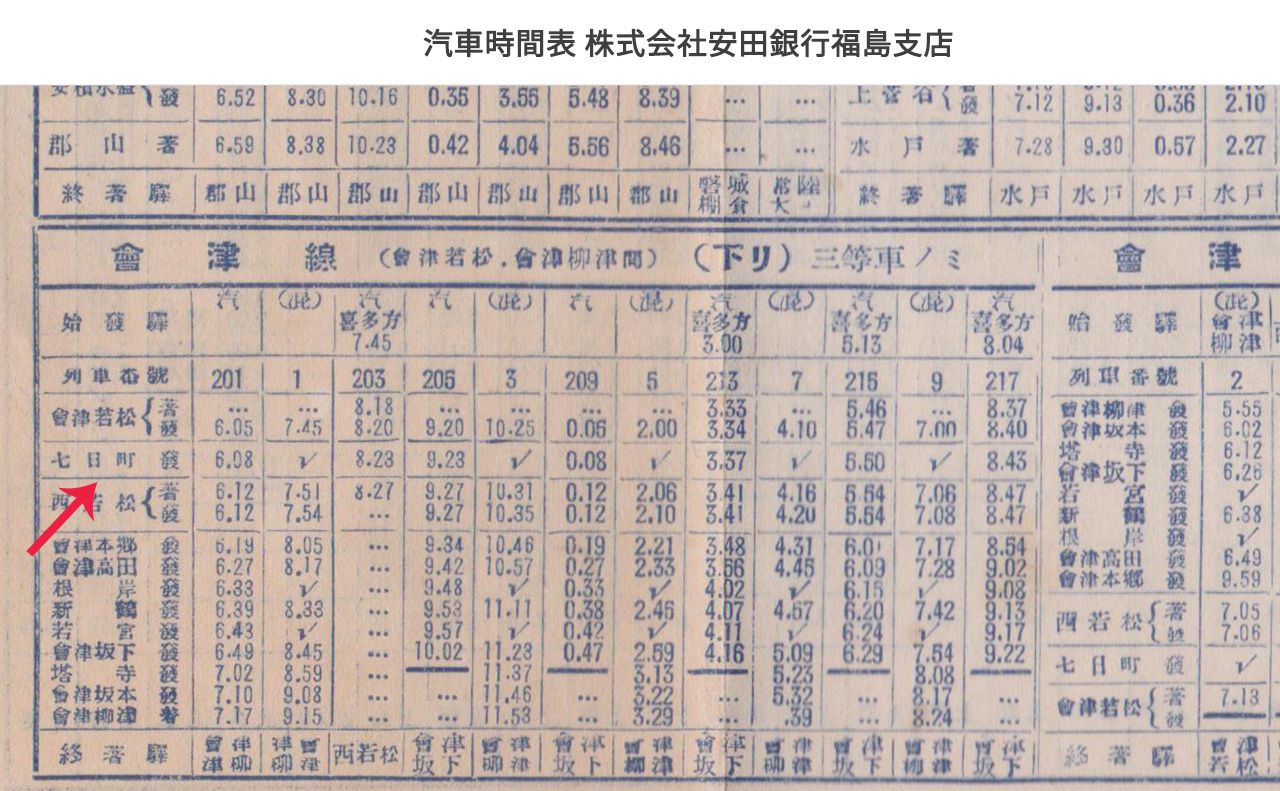 Train timetable published in 1935.
The notation "Kiha" in the timetable stands for the gasoline railcar type "Kiha," and Nanukamachi Station is listed as a station where only third-class gasoline railcars (Kiha) stop.
Negishi and Wakamiya stations, which opened around the same time as Nanukamachi Station, are also listed as stops for Kiha railcars only.
Images of the Fukushima Prefecture timetable from that time, including the Aizu Line and Banetsu-Seisen Line, can be viewed in the Nanukamachi.com Digital Archive.
Nanukamachi.com Digital Archive: Train Timetable, Yasuda Bank Ltd., Fukushima Branch
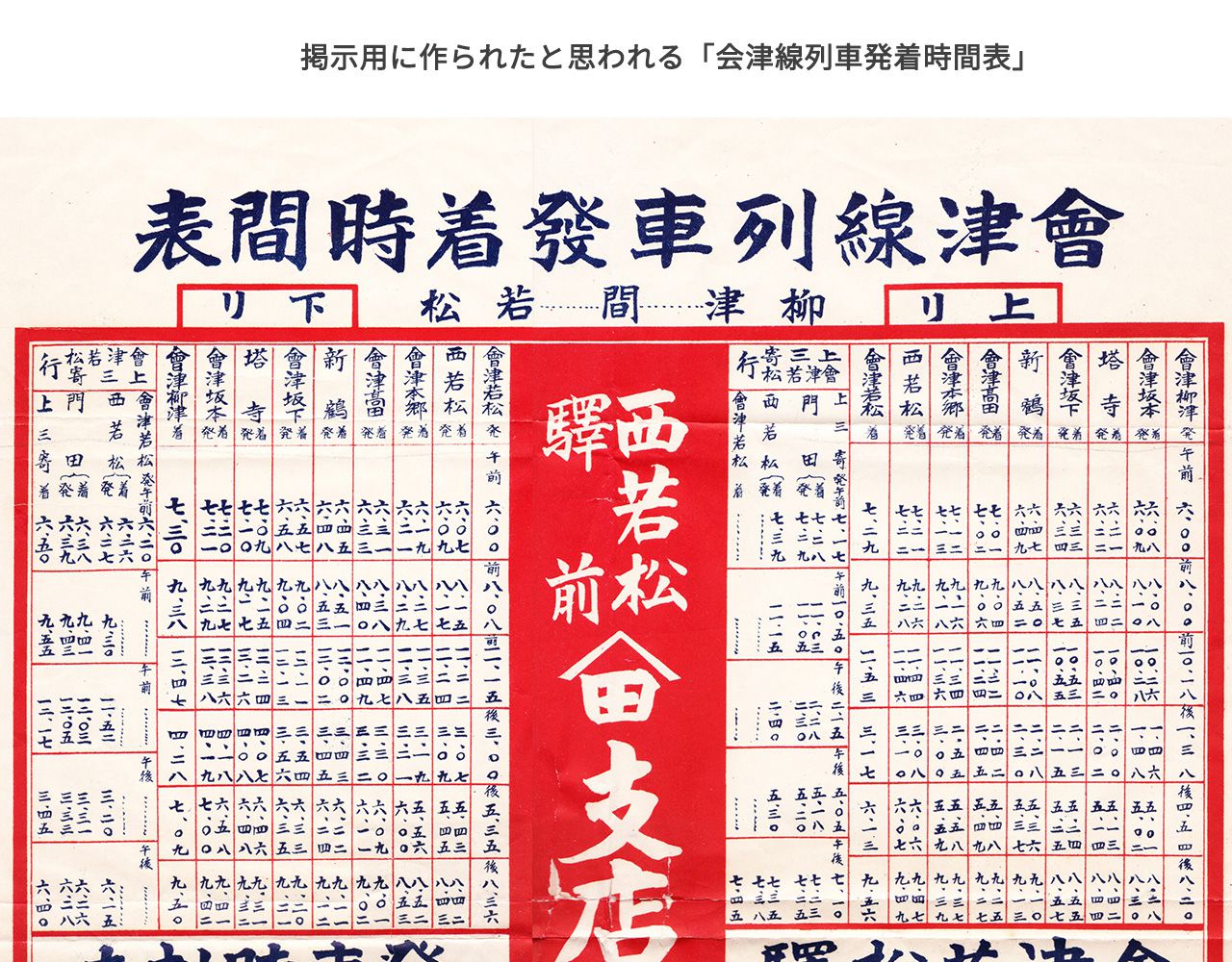
Aizu Line train timetable created for public display. Size: 53 cm high x 39 cm wide.
This is from a time when Nanukamachi Station did not yet exist between "Aizuwakamatsu" and "Nishi-Wakamatsu." Considering that the Aizu Line opened in 1926 and Nanukamachi Station opened in 1934, it is believed to have been made in between.
It conveys the hopes that people placed in the railway at that time.
The full image can be viewed in the Nanukamachi.com Digital Archive.
Nanukamachi.com Digital Archive: Aizu Line Train Timetable
Open image
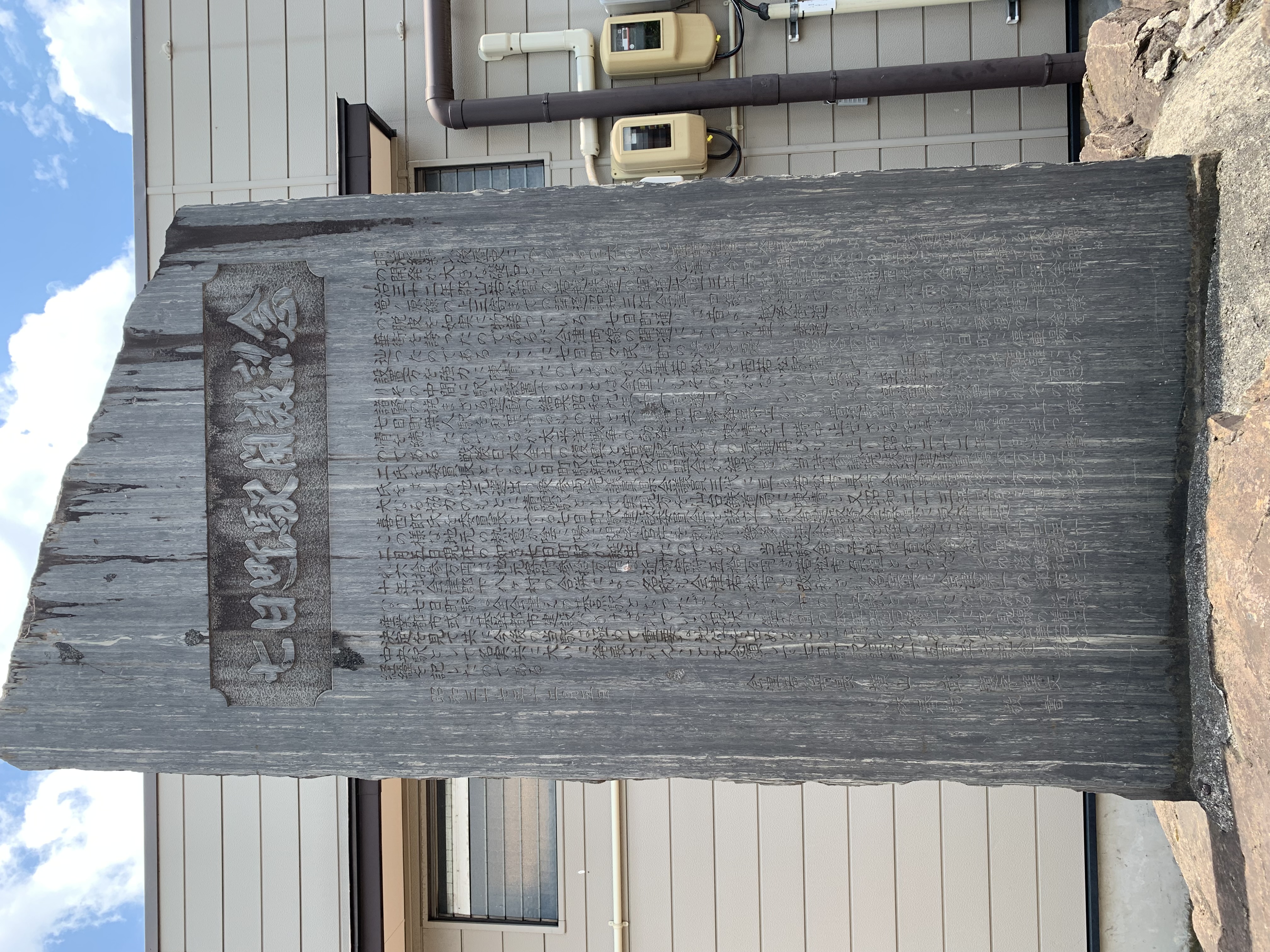
The base of this memorial stone was once the base of the Aizu Shindo Monument, which stood at the Omachi crossroads.
The Nanukamachi Station Opening Memorial Stone, watching over Nanukamachi Station. Erected on December 5, 1962, to commemorate the 15th anniversary of the station's opening. Its base is the base of the former Aizu Shindo Monument.
Open image
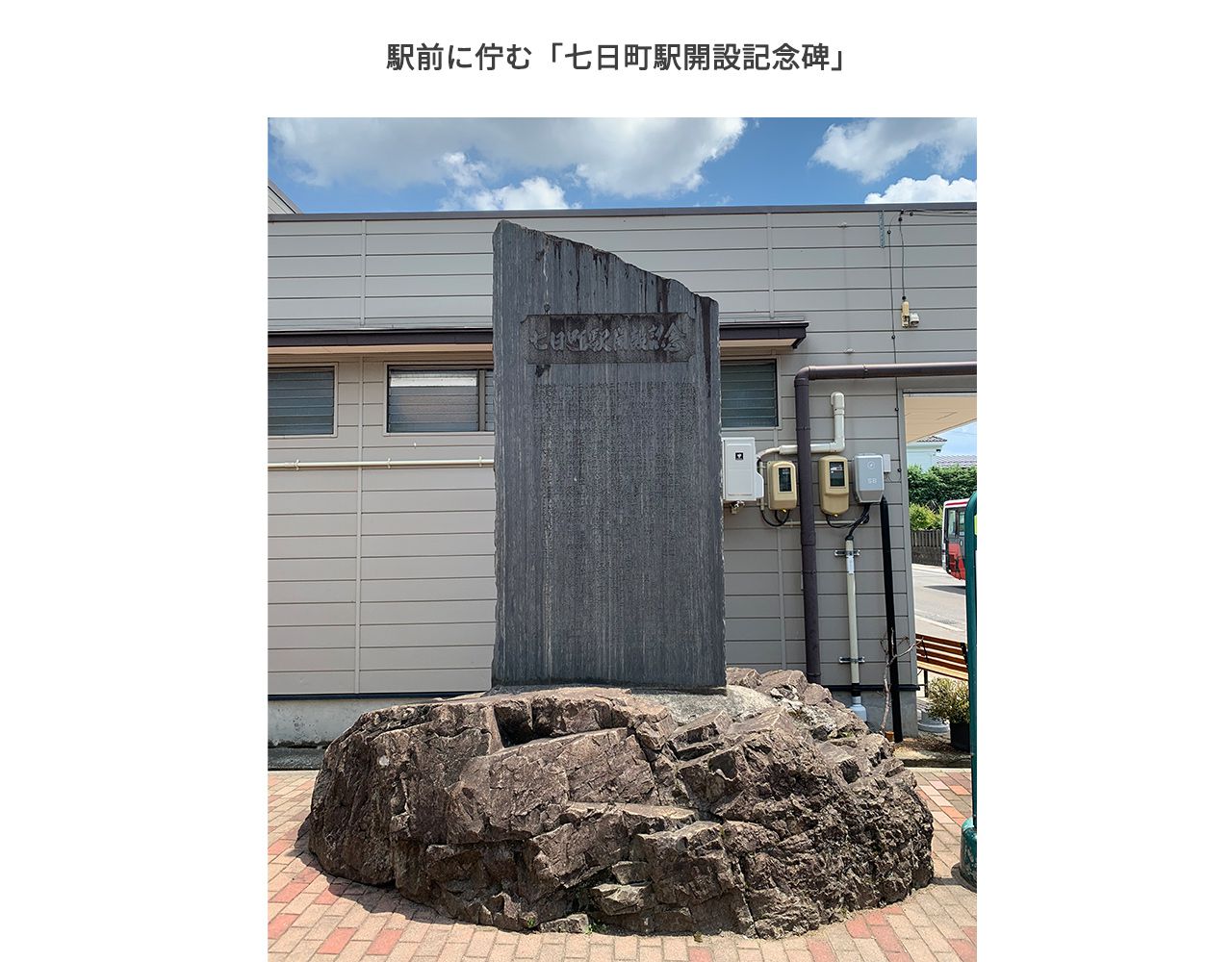
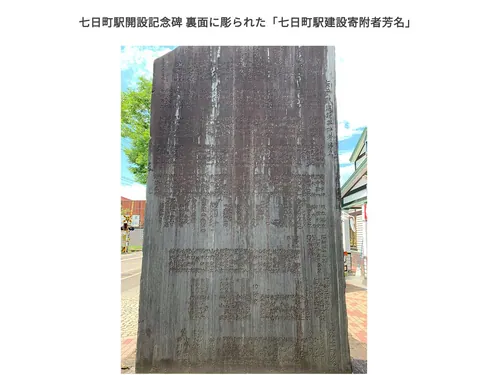
 (Click the image to view the high-resolution version. 3.32 MB)
Commemoration of the Opening of Nanukamachi Station
From the Meiji Restoration onward, the development of Japan's culture, industry, and economy has rested on a foundation of transport networks built with railway facilities, and this was truly the cornerstone.
The glorious history of Aizu, which has reached its present form, is likewise the same.
Meiji 32(1899): Opening of the Iwaki-Etsu Railway between Koriyama and Wakamatsu
Taisho 3(1914): Full opening of the Banetsu-Seisen Line between Wakamatsu and Niitsu
Showa 2(1927): Opening of the Aizu Takinohara Line to Kaminyoi
Showa 3(1928): Opening of the Aizu Kawaguchi Line to Yanaizu, which clearly marks this city's transformation into a modern urban center
Nanukamachi-dori had long flourished as an important point on the Echigo Highway and boasted the busiest shopping street in Wakamatsu. However, once the two Aizu lines opened, trains passed straight through, and the street declined year by year.
The townspeople of Nanukamachi, worried about the future of their town, strongly petitioned the relevant authorities for a station in Nanukamachi. However, the distance between Aizuwakamatsu Station and Nishi-Wakamatsu Station is only 3.1 km (3 km 1 bu; 3.1 km = 3 km + one-tenth of a km), and there was no precedent in Japan for placing a station in between, so realizing it was extremely difficult.
However, thanks to the tireless efforts of public-spirited volunteers, in November 1934 a stop for gasoline cars only was finally established. Afterward, the number of people using the unstaffed Nanukamachi Station grew year by year, and momentum to upgrade it to a general station rose again. Petitions continued, but with the outbreak of the Pacific War, they had to be suspended for the time being.
With Japan as a whole recovering after the war and momentum for a general station reviving, in January 1947 the Nanukamachi Station Establishment Promotion League, chaired by Kenji Shibukawa, was formed. With strong cooperation from many people, including Mr. Hashimoto, then a Railway Construction Official of the House of Councillors, the local members of both houses of the Diet, prefectural assembly members, and three generations of Wakamatsu City mayors and city council members, they petitioned the Sendai Railway Bureau to establish the station as a station built on request.
In May 1948, the Nanukamachi Station Construction Committee, chaired by Mr. Kobayashi, was also established, and its members devoted themselves to raising funds for the station building.
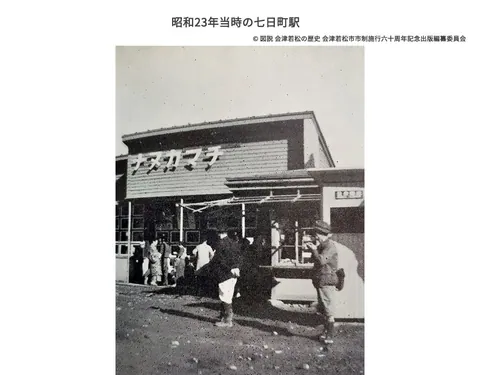
The enthusiasm of local residents stimulated the relevant government agencies in various ways, and after many twists and turns, the Nanukamachi Station of today was finally born on December 5, 1948.
The station building budget at the time was about 1.3 million yen (1,300,000 yen), of which 630,000 yen came from local donations, 300,000 yen from donations from nearby villages, and 500,000 yen was borne by Wakamatsu City.
Later, in 1955, the name was changed to Aizuwakamatsu City with the merger of the villages of Shimo-Hachigamura in Kita-Aizu District. It became a city that was truly first in Aizu, and Nanukamachi Station became the base station for all of Aizu as well as the central station of the city.
Considering the current emphasis on building industrial and core cities, and that construction of the Yagan Line and the Tadami Line has been decided this year, it is clear that the station will hold an extremely important position in the future. Hoping for its great development as the central station of Aizuwakamatsu, this record was written to commemorate the 15th anniversary of Nanukamachi Station's opening.
December 5, 1962
Takeshi Yokoyama※1, Mayor of Aizuwakamatsu City, wrote the title and text
Calligraphy by Mr. Kobayashi
※1Takeshi Yokoyama (1906 - 1971), Mayor of Aizuwakamatsu City. He worked hard to rebuild Tsuruga Castle, and a bronze statue of him stands near the castle keep.
The decline of the station and the road to revivalIn 1950, the Comprehensive National Land Development Act was enforced, and due to the influence of the Korean War that broke out around the same time, Japan's economy developed. To make up for the shortage of electric power, hydroelectric development of the Tadami River began. Nanukamachi Station became busy as the entrance and exit for transport to these construction sites. (Nanukamachi.com Digital Archive: Hydroelectric Development of the Tadami River)
However, from around 1955, as the construction work related to the power development was completed, the crowds at Nanukamachi Station also disappeared.
After that, Nanukamachi-dori came to be seen not just as a passing point but as a center of town development and an important place.
Just as Nanukamachi-dori was succeeding in escaping from a street of shuttered shops and creating a new townscape, the atmosphere of Nanukamachi Station, then an unstaffed station, was not considered good.
To brighten the atmosphere of the station to match the townscape, the Nanukamachi-dori Council first petitioned JR East to station staff at the station. After persistent negotiations, although the station did not become staffed, it became possible to lease the station building.
Then, with the Nanukamachi-dori Council taking the lead and with financial support from Fukushima Prefecture and Aizuwakamatsu City, the station building was renovated into a Western-style building in the Taisho romantic style. At the same time, an antenna shop for Aizu regional specialties was set up inside. As a result, the station has changed dramatically into the starting point for sightseeing on Nanukamachi-dori and a symbol of the street, which it remains today.
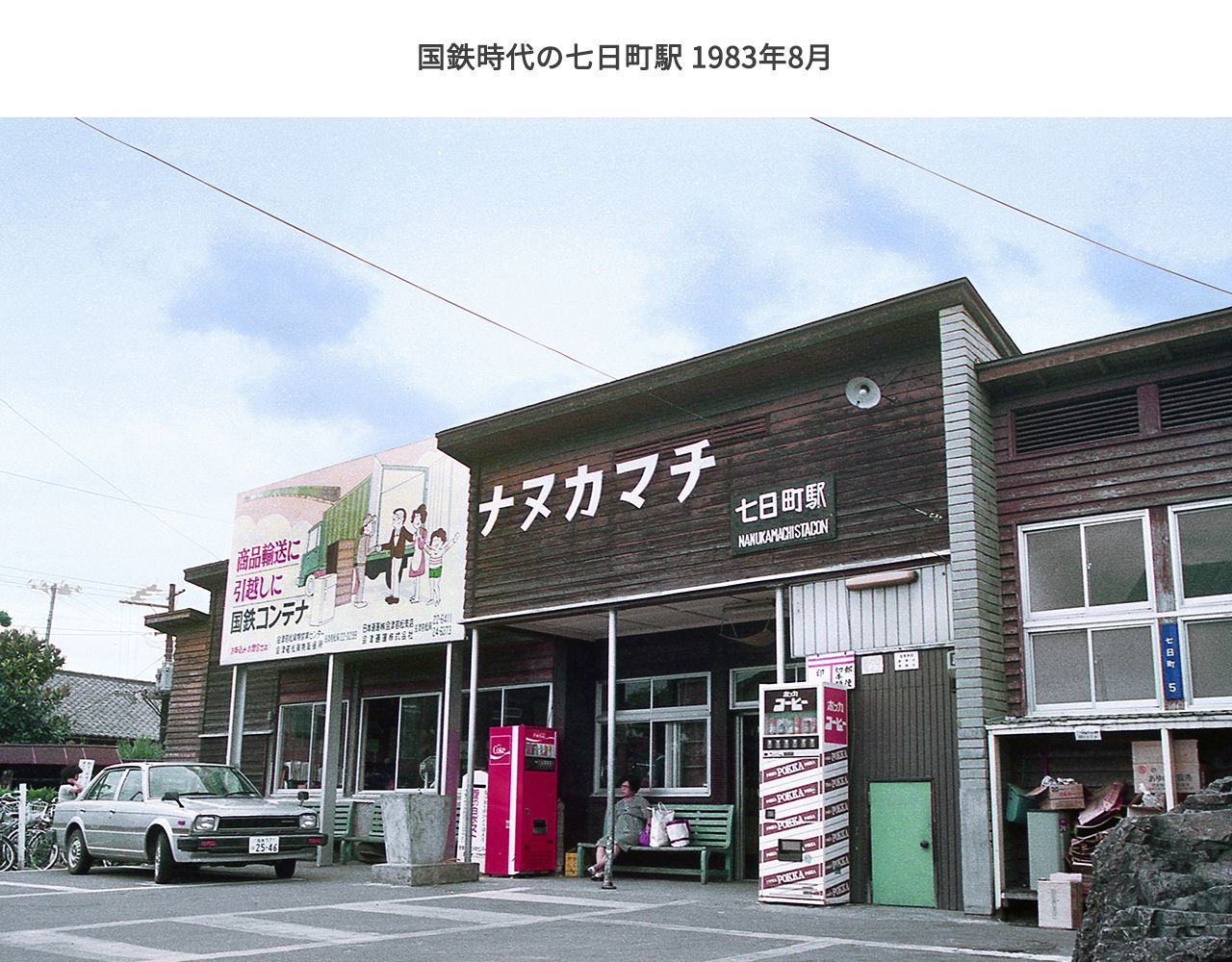
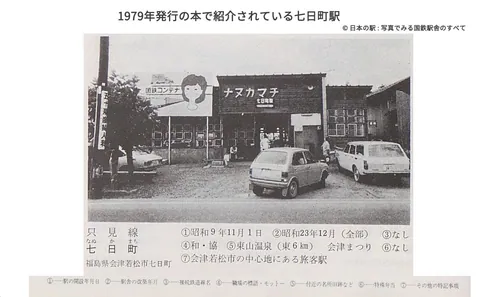
Nanukamachi Station in the Japan National Railways era. Photographed in August 1983. At the lower right, the foundation stone of the Nanukamachi Station Opening Memorial Stone, which still remains, can be seen. The cars, vending machines, JNR container signboards, and clothing also convey the atmosphere of that time.
Thumbnails switch the image.
Open image
-
1899
Wakamatsu Station (now Aizuwakamatsu Station), the starting point, opens as a station of the Iwaki-Etsu Railway.※1
-
1926
The JNR Aizu Line between Aizuwakamatsu and Aizu-Bange opens. Nishi-Wakamatsu, Aizu-Hongo, Aizu-Takada, Niitsuru, and Aizu-Bange stations open.
-
1934
Nanukamachi Station※2 opens on the Aizu Line as a stop for gasoline railcars only. Negishi and Wakamiya stations open at the same time.
-
1945
Service at Nanukamachi Station and Wakamiya Station is suspended.※3
-
1946
Service at Nanukamachi Station and Wakamiya Station resumes.※4
-
1947
The Nanukamachi Station Establishment Promotion League is formed.※5
-
1948
The Nanukamachi Station Construction Committee is established.※6
-
1948
Nanukamachi Station is upgraded to a general station.
-
1954
Begins handling small parcels and freight.※7
-
1962
The Nanukamachi Station Opening Memorial Stone is erected to commemorate the 15th anniversary of the station's opening.※8
-
1984
Becomes an unstaffed station.
-
1987
Becomes a JR East station following the division and privatization of JNR.
-
2002
The station building is renovated, and a station cafe is added.
-
2026
The station cafe is greatly renovated and expanded, reopening in April. At the same time, operation of the cafe is entrusted to NH Dining System Co., Ltd., of Minato City, Tokyo.
※2 November 1, 1934.
※3 June 20, 1945.
※4 June 20, 1946.
※5 January 1947.
※6 May 1948.
※7 February 3, 1954.
※8 December 5, 1962.
Column: Runaway freight car incident involving hay and straw mats at Nanukamachi Station
A November 1962 publication, "Sharyo to Denki" (Railway Vehicles and Electricity), edited by the Sharyo Denki Kyokai (Railway Vehicle and Electric Association), records the details of a runaway freight car accident at the neighboring Nishi-Wakamatsu Station, which also affected Nanukamachi Station.
Runaway caused by poor brake adjustment on a freight car
On August 18, at 9:32 a.m., an accident occurred on the upward No. 2 track within Nishi-Wakamatsu Station, under the Sendai Bureau's Aizu Line. A worker pushed a gravel-loaded freight car (Toki 17540) by hand from the gravel yard of the Miyashita main house, intending to temporarily place it 147 meters toward Aizuwakamatsu. After traveling about 80 meters (estimated speed 5–6 km/h), the worker tried to stop the car with its brake, but because the braking effect was weak and the car did not slow down, he pressed the brake lever harder (the lever's pawl was lowered to the second notch from the bottom). The car still could not be stopped, and at about 9:32 it broke through No. 23 derailer and ran off the premises.
The worker kept pressing the brake. Near the 2,600-meter point, a fireman of the Aizu Line control office (off duty) noticed the car, jumped aboard, and the two of them pressed the lever together. The pawl lowered only to the first notch from the bottom, and the freight car showed no sign of stopping. After advancing about 500 meters more, a track maintenance worker (off duty) also jumped aboard, and the car entered Nanukamachi Station at an estimated 15–16 km/h.
Meanwhile, the crossing signal operator at Nishi-Wakamatsu Station's No. 2 Choume level crossing, who had spotted the runaway, immediately reported it to the duty station master. The station master urgently notified the neighboring Nanukamachi Station and Aizuwakamatsu Station.
At Nanukamachi Station, hay and straw mats had been placed on the tracks to bring the car to a halt, and staff were standing by. At the 1,200-meter point (within Nanukamachi Station premises), the car finally came to a natural stop at about 9:44 a.m.
As a result, Train No. 415, departing from Aizuwakamatsu, was delayed by 9 minutes and 30 seconds.
The cause was recognized as poor brake adjustment (adjusted near the outer lever rather than at the designated point in the central area) and the duty station master's failure to supervise the worker's hand-shunting operation.
The car's previous inspections were a general inspection in December 1960 at Morioka Works, a designated replacement in April 1962 at the Toyama district, and a repair on July 17 at the district given in the source.
List of related materials for this article
- Schematic diagrams of gasoline railcars, edited by the Locomotive Engineering Society (1935) info:ndljp/pid/1226854
- 92nd Imperial Diet, House of Representatives, Petition Committee, No. 4, March 24, 1947 (1935) minId=009211944X00419470324
- Imperial Diet Gazette, First Period, Vol. 54 (92nd Imperial Diet, House of Representatives, Part 2), edited by the Shakai Mondai Shiryo Kenkyukai (1979) info:ndljp/pid/11934293
- Unyu to Keizai (Transport and Economy), Vol. 14, No. 4, Institute of Transport Economics (1954) info:ndljp/pid/2637364
- Nihon no Eki: Shashin de Miru Kokutetsu Ekisha no Subete (Japanese Stations: All JNR Station Buildings in Photographs), Takeshobo (1979) info:ndljp/pid/12065005
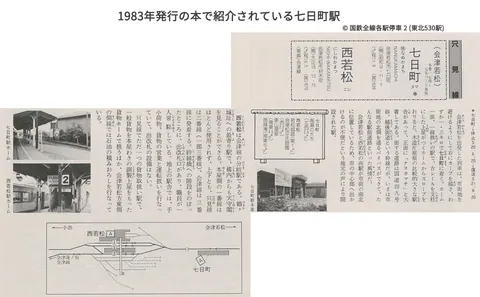
- Kokutetsu Zensen Kakueki Teisha 2 (Tohoku, 530 Stations), edited by Shunzo Miyawaki and Katsumasa Harada (1983) info:ndljp/pid/12068752
- Parking
- There is a free parking lot for the station cafe beside the pachinko jumbo parking lot next to the Nanukamachi station.
- Regular holiday
- Please check the official site for the latest holiday schedule.
None (View each shop's regular holidays)